1. Home
  2. Computing
  3. Emerging Tech
  4. Web
  5. News

Twisted photons may give the speed of fiber optics with the conveniences of Wi-Fi

Add as a preferred source on Google

Fiber optic lines are among the fastest and most efficient means of data transfer available to the consumer public. The main problem with fiber optic lines is the simple fact that running those lines can be expensive and difficult to implement. This has led to a situation where fiber optic internet is only available in a handful of cities, and even there can prove too expensive for many people with access to fiber optics.

Engadget reports that scientists may have found a way to remove those expensive cables while maintaining the high speeds that make fiber optics such an attractive option for so many people.  Researchers at Glasgow University have discovered a way to “twist” photons, allowing them to store large amounts of data while avoiding interference from the air. By passing the photons through a special hologram, similar to the ones found on credit cards, the researchers were able to give the photons “optical angular momentum,” which allows them to store information beyond ones and zeroes.

Recommended Videos

The team tested this new method by transferring data across 1.6 kilometers (about a mile) in Germany, making sure to test the technology in an urban setting, where buildings and other facets of city life could potentially interfere with the transfer of data. Previous studies had indicated this was possible, but it was unclear how they would work in an urban environment.

Dr. Martin Lavery, head of the Structured Photonics Research Group at University of Glasgow, said that he believes this method may lead to the creation of wireless transfer that “can potentially give us the bandwidth of fibre, but without the requirement for physical cabling.”

For now, however, there are plenty of questions that need to be answered before this becomes a commercially viable alternative to fiber optics. For starters, the team needs to ensure that the process can still function in inclement weather conditions such as snow or rain storms. Still, if it proves viable, then it could drastically reduce our dependency on fiber cables, allowing businesses and consumers to have high-quality internet speeds at lower prices than are currently available. Perhaps more importantly, it could serve as a way to provide high-speed internet access to rural areas, many of which are forced to rely on dial-up or other slow connections.

Eric Brackett
Former Digital Trends Contributor
Google’s new Magic Pointer Play Store listing reveals a Gemini shortcut built for Googlebooks
The unannounced app turns the cursor into a contextual AI tool for search, image creation, and shopping
Plant, Text, Business Card

Google has quietly published a new Play Store listing for Magic Pointer, an unannounced app built for Googlebooks. Updated on July 10, the app turns the cursor into a Gemini shortcut that can act on whatever a user selects on screen.

Magic Pointer can send an image to Lens, generate a related image, or surface a shopping action without forcing users to open a separate chatbot. Regular Android devices currently show as incompatible, so the listing offers an early preview rather than a broad release.

Read more
You can stop using AI, but this new report says you probably can’t escape it
A UK survey found that most people feel AI exposure is unavoidable, raising harder questions about consent, privacy, and whether opting out is still realistic
AI Chatbots

More people are trying to use less AI, but avoiding it altogether may already be impossible.

A survey of 2,055 UK adults found that 42% deliberately limit how much AI they use. Another 70% said avoiding AI exposure would be difficult or impossible, even when they actively wanted less of it.

Read more
The face on an AI interviewer may matter as much as the decision it makes
Researchers found that race and gender matching changed how fairly rejected applicants viewed an automated interview, even though everyone received the same outcome
File, Computer Hardware, Electronics

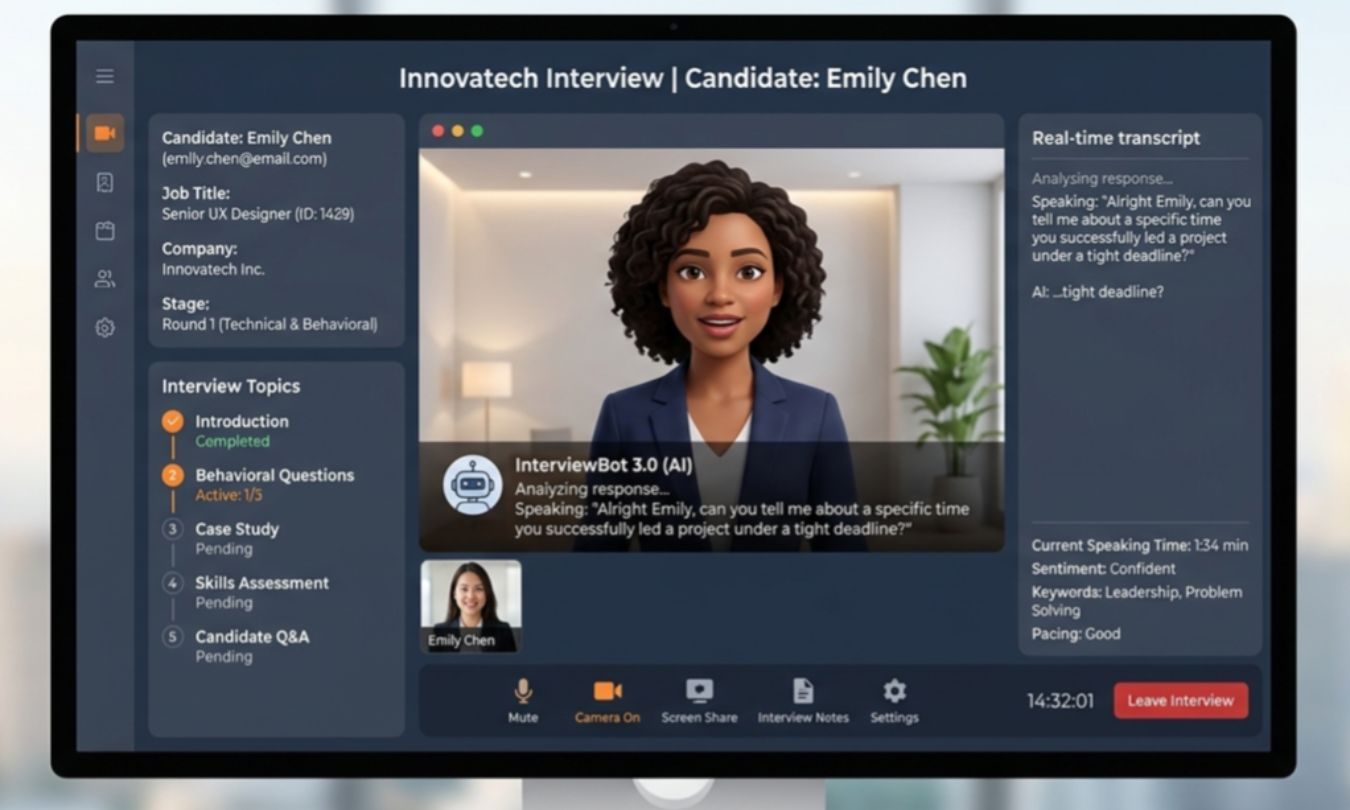
An AI hiring system can treat every applicant the same and still leave some people feeling targeted. Researchers found that rejected candidates judged an automated interview differently depending on the race and gender of the avatar delivering the result.

Around 220 participants completed a simulated interview for a fictional customer support role with one of four photorealistic AI avatars. Everyone was rejected, yet perceptions of fairness shifted with the interviewer’s appearance. An algorithm audit could miss that reaction because candidates don’t experience the system as raw code. They experience a face asking questions and judging their answers.

Read more