1. Home
  2. Emerging Tech
  3. Health & Fitness
  4. Music
  5. News

Man plays piano with a bionic hand better than Skywalker slays with a lightsaber

Add as a preferred source on Google

Are you one of those folks, stuck in the past, who thinks that having no hands means that you’re not eligible for a career as a pianist? Researchers at the Georgia Institute of Technology are here to send your judgmental ass back to the 20th century where you belong! They have developed a smart new prosthesis, driven by ultrasound, which allows amputees to tinkle the ivories with a bionic hand equipped with impressively agile prosthetic fingers. It was recently used by a musician who lost part of his right arm to play the piano for the first time since his accident five years ago.

“In a nutshell, our technology allows amputees to gain full control of their prosthetic hand in a dexterous and intuitive manner, including finger-by-finger control,” Gil Weinberg, the Georgia Tech College of Design professor who leads the project, told Digital Trends. “The accuracy and sensitivity of our novel ultrasonic sensor and machine learning algorithms allow amputees to perform sophisticated tasks such as playing the piano. For the first time, amputees can now control fine motor skills in their prosthetic hands in a manner that is not possible with current EMG technology.”

Recommended Videos

As you can see from the video below, the technology was loosely inspired by Luke Skywalker’s bionic hand as received following his battle with Darth Vader in The Empire Strikes Back. In this case, however, no movie-style illusions were needed to pull off the effect, however.

Georgia Tech's Luke Skywalker Hand

While amputees don’t have their physical hands, their nerves still communicate with their forearm muscles, which are mapped to operate their “phantom fingers” as if they still existed. When individuals attempt to move these phantom fingers, it is possible to sense the muscles that represent said movements using ultrasound. “Unlike myoelectric arms that use EMG to sense electric activity in the muscles, we actually look at the trajectory and speed of the muscle movements, which allows for finger-by-finger control,” Weinberg continued. “Such dexterous control can be used for intuitive fine motor skills gestures for a wide variety of operations — from bathing, grooming and feeding to the highly expressive activity of piano playing.”

Next, he says the team is working hard to miniaturize and improve power consumption for the ultrasound sensor so that it could become more easily wearable and possibly commercialized. Heck, if they work at lightspeed, they might even be able to work out some kind of tie-in to coincide with the next Star Wars movie.

Luke Dormehl
I'm a UK-based tech writer covering Cool Tech at Digital Trends. I've also written for Fast Company, Wired, the Guardian…
Polar is yet another AI browser, but it goes beyond just automating the mundane web chores
Polar wants to turn your browser into an AI-powered productivity tool
Polar AI browser

The AI browser race is entering a new phase. After spending much of 2025 trying to reinvent web search with built-in chatbots, startups are increasingly shifting their attention toward browser agents that can automate repetitive work instead of simply answering questions. The latest company to embrace that transition is Polar, a startup founded by former Perplexity engineer Kevin Zhang, which has raised $5.7 million in seed funding led by Madrona.

Unlike the first generation of AI browsers that targeted everyday consumers, Polar is designed specifically for knowledge workers. Its premise is straightforward: instead of replacing Google Search, the browser aims to eliminate repetitive tasks that professionals perform across dozens of browser tabs every day.

Read more
I use ChatGPT Pro everyday, and these 3 features keep me subscribed
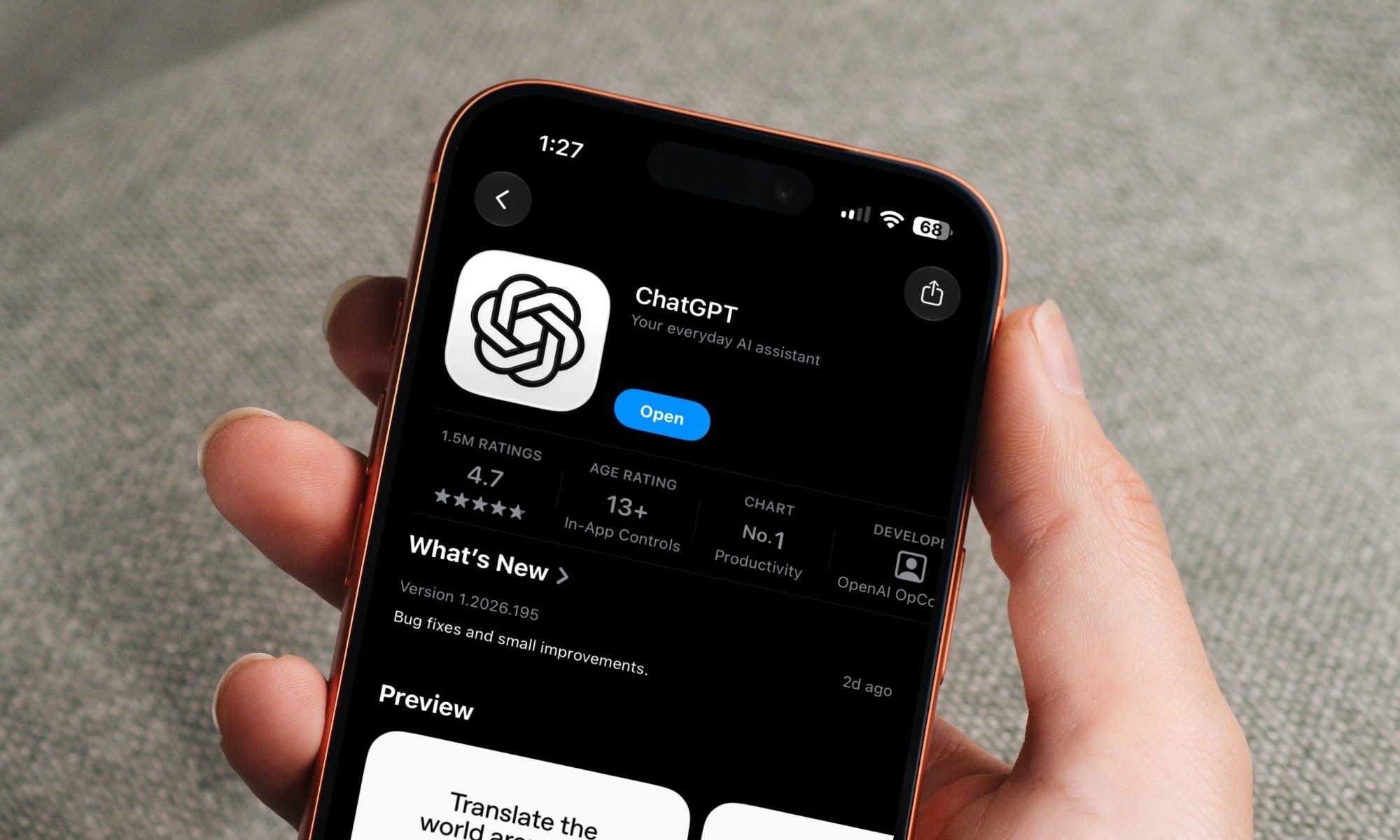
ChatGPT on iPhone

I've used ChatGPT for years, but for the longest time, I never felt the need to pay for it. Instead, I subscribed to Claude Pro because it fit my workflow better. Between regular chat and Cowork, it gave me everything I needed in one place, so paying for another AI subscription didn't make sense.

That changed when OpenAI introduced ChatGPT Work. I was curious enough to give ChatGPT Pro a proper shot, expecting to test one new feature and move on. Instead, I ended up using it far more than I expected. The more I relied on it in my day-to-day work, the more I realized it offered a few things I didn't want to give up. Those are the three features that have kept me happily subscribed ever since.

Read more
The music industry wants AI slop kicked off the charts, and it finally has a plan
Universal, Sony, and Warner are pushing global charts to block AI slop songs.
Spotify music player

I've caught myself bopping along to a new viral quite a few times, only to realize that it was created using artificial intelligence. Turns out the labels are just as fed up with this as I am.

So what exactly are labels asking for?

Read more