1. Home
  2. Computing
  3. News

Intel wants to bring you faster Wi-Fi in the next couple of years

Add as a preferred source on Google

We’ve got more and more devices these days that rely on Wi-Fi, whether they’re cellphones, laptops, or something in between. With the increase of all these new technological tools, the need for more reliable and faster wireless networks has become very important. But a solution to this problem does appear to be coming down the pipeline. Intel recently made an announcement that it is readying new chips for what will be the next generation of Wi-Fi.

In 2018, Intel is going to make its home Wi-Fi portfolio larger with its new 802.11ax chips. With these new chips comes a whole host of upgrades and improvements from the predecessor, 802.11ac. The 802.11ax chips should be able to offer up to 40 percent higher peak data rates for an individual device, which means a change from 433Mbps to 600Mbps. On more dense or congested networks, the average throughput per user should improve by at least four times. This is accomplished, in part, by sending the data out to designated devices, as opposed to covering an entire area with an abundance of signals.

Recommended Videos

In addition to that, the battery life of client devices is going to be extended with these new 802.11ax chips, while at the same time increasing network efficiency. These improvements are going to be very useful for households with an increasing number of connected devices. Intel says it will begin shipping 802.11ax chips sometime this year. It will be some time before we’re connecting to the internet on much faster Wi-Fi, however.

The Wi-Fi Alliance told The Verge that they don’t expect to see mass adoption of the new chips until next year in 2019. This is mainly because product certification does not begin until next year, and according to a spokesperson, certification “is typically an inflection point toward broader industry adoption.”

Even when certification for 802.11ax arrives in 2019, it will still be a little while before we will be able to take advantage of it. It will take some time before certified products are on the shelves. You’ll also probably have to replace some of your devices for ones that will support the new Wi-Fi standard.


Stephen Jordan
Former Digital Trends Contributor
Stephen is a freelance writer and blogger, as well as an aspiring screenwriter. Working in front of a computer and digesting…
Samsung’s new OLED laptop panels just got a lot brighter, and they’ll last longer too
1,600 nits peak brightness, deeper blacks, and double the lifespan, all in one panel.
Samsung Display OLED laptop

A month after showing off its brightest smartphone displays, Samsung Display is turning up the brightness dial on laptop screens. The company confirmed today that it has begun supplying a new tandem OLED panel for laptops that meets VESA's brand-new DisplayHDR True Black 1400 certification, the toughest brightness bar OLED panels have had to clear so far. If you ever felt that your laptop display looks washed out outdoors, this update is aimed squarely at you.

What advancements does True Black 1400 bring to the table?

Read more
The Mac Pro nearly received an M3 Extreme chip twice as powerful as M3 Ultra
High production costs likely killed Apple’s M3 Extreme plans
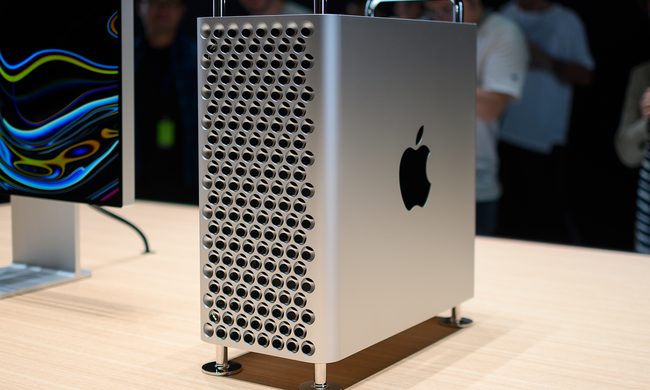
Apple's Mac Pro on a table at a press event.

Apple discontinued the Mac Pro earlier this year, ending a 20-year run for a computer that once represented the very best of the company’s desktop lineup. However, Apple reportedly had much bigger plans for the machine before ultimately replacing it with the Mac Studio.

According to Bloomberg’s Mark Gurman, Apple developed an M3 Extreme chip that could have offered twice as many CPU and GPU cores as the M3 Ultra. The processor was intended to sit above the Ultra tier and could have finally given the Mac Pro the performance advantage it badly needed. Apple eventually abandoned the chip due to concerns over production costs and limited demand for such an expensive machine.

Read more
Hidden prompts can secretly rewrite an AI’s memory, and researchers say that’s a serious problem
Researchers discover AI attack that rewrites an assistant's long-term memory
Chatbot on a smartphone.

Large language models are getting better at remembering us. Whether it's your preferred writing style, recurring tasks, shopping habits or project deadlines, AI assistants are increasingly storing long-term memories to make future conversations feel more personal and useful. But according to new research, that same feature could become one of AI's biggest security vulnerabilities.

Researchers from New Mexico State University have demonstrated a new attack called GhostWriter, capable of secretly planting false memories inside AI agents. Rather than stealing information outright, the attack manipulates what an AI remembers, potentially causing it to make dangerous decisions long after the original attack has taken place.

Read more