  1. Home
  2. Cars
  3. Business
  4. News

Uber extends an olive branch to Waymo as it settles trade secret lawsuit

Add as a preferred source on Google

One of the greatest tech lawsuits of the 21st century has come to a close. Ridesharing giant Uber recently reached a settlement deal with Waymo, Google’s sister company in charge of developing autonomous technology for cars. Waymo sued Uber a year ago to prove its rival stole intellectual property through one of its employees, Anthony Levandowski.

CNBC reports Uber agreed to pay Waymo a 0.34-percent equity stake. Investors value Uber at about $72 billion, meaning Waymo will receive approximately $245 million. The decision ends a year-old legal conflict that could have lasted for many more months.

Recommended Videos

Uber proposed the settlement to end the costly and time-consuming lawsuit and avoid a potentially embarrassing jury verdict. CEO Dara Khosrowshahi stressed it’s not an admission of wrongdoing, though he regrets how his predecessors (namely founder and former CEO Travis Kalanick) handled the lawsuit.

“We agree that Uber’s acquisition of Otto could and should have been handled differently,” he wrote, addressing Alphabet and referring to the company Levandowski founded. “We do not believe that any trade secrets made their way from Waymo to Uber, nor do we believe that Uber has used any of Waymo’s proprietary information in its self-driving technology.”

The lawsuit focused on 14,000 digital files Levandowski allegedly downloaded before leaving his position at Google in January 2016. He founded Otto the following May and sold the company to Uber in August. Waymo’s lawyers argued it was a clever cover-up to poach Levandowski; Uber planned on buying Otto — along with Waymo’s allegedly stolen files — before the firm even existed.

“While I cannot erase the past, I can commit, on behalf of every Uber employee, that we will learn from it,” Khosrowshahi concluded.

With the lawsuit behind it, Uber will continue to work on developing and deploying its self-driving technology. Its reputation has taken a hit but it remains one of the leaders in the field. The ride-sharing firm operates pilot programs in Pennsylvania and in Arizona, and its fleet of over 200 self-driving prototypes has racked up more than two million miles on public roads. Last year, Uber pledged to purchase “tens of thousands” of Volvo SUVs between 2019 and 2021 and convert them into autonomous cars.

Ronan Glon
Ronan Glon is an American automotive and tech journalist based in southern France. As a long-time contributor to Digital…
This sleek Chinese EV pairs supercar styling with three AI brains
The Xpeng L03 is an AI supercomputer disguised as a stylish family SUV
Xpeng L03

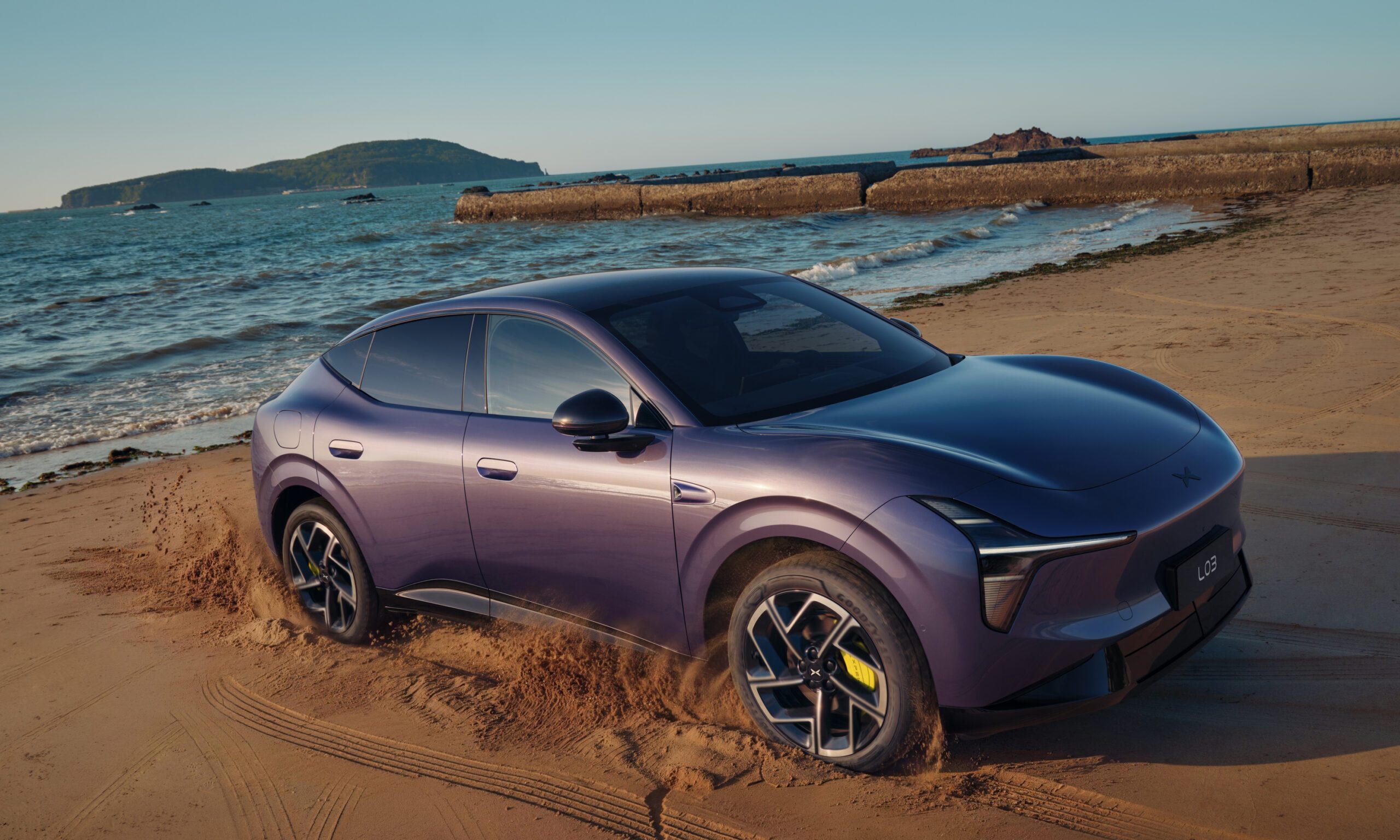
Xpeng’s latest electric vehicle carries enough processing power to make the term "smart car" actually sound more realistic than it actually is. The new Xpeng L03 debuted simultaneously in Europe and China on July 16, with the company presenting it across 65 markets. Available as a fully electric vehicle and an L03 Power X range-extender, the coupe-SUV is Xpeng’s most internationally focused model so far. Market-specific prices and sales dates remain unannounced.

Three AI chips and Google Maps built right in

Read more
A new sodium battery posts wild four-minute charging numbers, but don’t expect it in an EV yet
The breakthrough could improve fast charging and battery life, but the study hasn’t demonstrated those results in a production-sized pack
EV Charger

A new sodium-metal battery has posted a charging number that makes today’s EVs look painfully slow. In laboratory testing, the cell operated at a 15C rate, equivalent to completing a charge or discharge in roughly four minutes.

That doesn’t mean researchers plugged in an electric car and watched it fill up before the driver finished buying coffee. The result came from a small experimental cell using a new quasi-solid electrolyte, while the larger pouch-cell prototype delivered far less dramatic performance.

Read more
The Apple Car may be dead, but it became the foundation of Apple Intelligence
A decade of work on a canceled car project reportedly laid the groundwork for Apple Intelligence.
Apple Intelligence in Apple Car

The Apple Car may have never left the garage, but it apparently gave birth to Apple's AI ambitions. According to Bloomberg's Mark Gurman, Apple's canceled autonomous vehicle project, one that consumed more than a decade of work and over $10 billion before being scrapped in 2024, ended up laying the technological foundation for Apple Intelligence. In a rather ironic twist, one of Apple's most expensive failures may also become one of its most important long-term investments.

The Apple Car forced Apple to think like an AI company

Read more