  1. Home
  2. Cars
  3. News

Ohio governor says you ‘have to take risks’ as state welcomes driverless cars

Add as a preferred source on Google

Many questions may still be unanswered over the fatality of an Arizona pedestrian after being hit by one of Uber’s self-driving cars in March, but that hasn’t stopped Ohio Governor John Kasich from issuing an executive order making it the latest state to allow the testing of such vehicles on its public roads.

Kasich gave the go ahead for trials of autonomous vehicles on the state’s roads on Wednesday, May 9. Other states that allow self-driving cars on their streets include California, Pennsylvania, Florida, Michigan, and, as we already mentioned, Arizona.

Recommended Videos

Similar to Arizona and, more recently, California, companies will have the option to put their autonomous cars on Ohio’s roads without a safety driver behind the wheel, though in this case a licensed operator will be required to monitor the car remotely and must have the means to take over if its technology malfunctions, Bloomberg reported. Waymo is already conducting tests with remote safety drivers in Arizona, and recently applied to do the same in California.

Kaisch has set up a body called DriveOhio to which any accidents must be reported. DriveOhio will also work to bring public and private sectors together in a bid to advance the development and deployment of smart mobility and autonomous and connected vehicles, according to its website.

Despite concerns over safety following the Arizona tragedy, Kaisch appears determined to push Ohio as a hub for driverless-vehicle technology and testing in the hope that it could lead to inward investment and job creation in the state. According to Bloomberg, the governor said he felt a sense of anger when he heard about Uber choosing Pittsburgh as a base for developing and testing its autonomous technology, asking his colleagues repeatedly, “What are we doing here?”

Kaisch described the Uber accident in which 49-year-old Elaine Herzberg died as “terrible,” but on the subject of testing the technology on public roads, he said, “You’ll always have to take risks.”

It’s not clear when tests will start in Ohio. It depends entirely on which companies view the opportunity as useful as they move forward with the development of their respective autonomous technologies.

Trevor Mogg
Contributing Editor
Not so many moons ago, Trevor moved from one tea-loving island nation that drives on the left (Britain) to another (Japan)…
Volvo is rolling out Apple Music to over 2 million cars with a simple OTA update
Your Volvo may soon get Apple Music without needing CarPlay
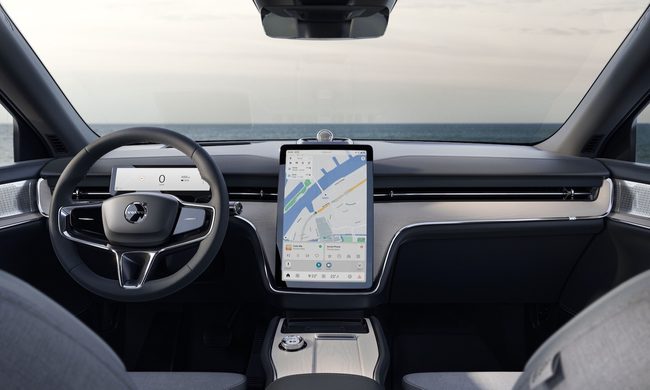
Interior view of the 2024 Volvo EX90.

The line between your smartphone and your car continues to blur. Volvo has announced that it is rolling out an over-the-air software update that brings Apple Music directly to the infotainment systems of more than 2 million vehicles worldwide. Instead of relying on Apple CarPlay or plugging in an iPhone, eligible drivers will be able to stream music natively from their car's built-in system, making Apple Music another integrated feature of Volvo's software experience.

The update is arriving for a wide range of Volvo models, including the EX90, ES90, XC90, S90, V90, XC60, S60, V60, XC40, EX40 and EC40, covering model year 2020 onwards. Availability, however, may vary depending on the vehicle.

Read more
Chery’s latest EV packs flagship tech for the price of a base Tesla, but you can’t buy it
Here's everything packed into Exeed's 2027 Exlantix ES, from its 27-sensor autonomous driving suite to its 860 km range, all starting under $31,000.
Car, Transportation, Vehicle

Chery's premium arm just dropped a sedan that makes you wonder why American EVs cost twice as much for half the tech.

Exeed's 2027 Exlantix ES ships with a driver-assist system called Falcon 700. It is built around an Nvidia Orin-Y chip and a genuinely stacked sensor suite.

Read more
A new AI model wants self-driving cars to think before they swerve
Forget guessing games, this self-driving AI actually shows its work.
Self driving car

Self-driving cars have gotten pretty good at driving. The harder problem is teaching them to drive safely in situations nobody planned for. We have heard horror stories of self-driving cars, behaving erratically in emergency situations, often times delaying first responders from reaching the scene.

A team at Seoul National University, led by professor Jun Won Choi from the Department of Electrical and Computer Engineering, thinks they have cracked part of that puzzle with a new AI model called SafeDrive. The research was recently selected as a highlight paper at CVPR 2026, a distinction that goes only to roughly 3% of all submissions.

Read more