The technology that powers Amazon’s Kindle is coming to your bumper — at least if you live in California and are willing to pay a not-insignificant amount of money for it. The Golden State launched a pilot program in its capital of Sacramento to test a digital license plate that ambitiously promises to streamline the lives of motorists, help businesses reach more clients, and possibly keep fellow drivers entertained.
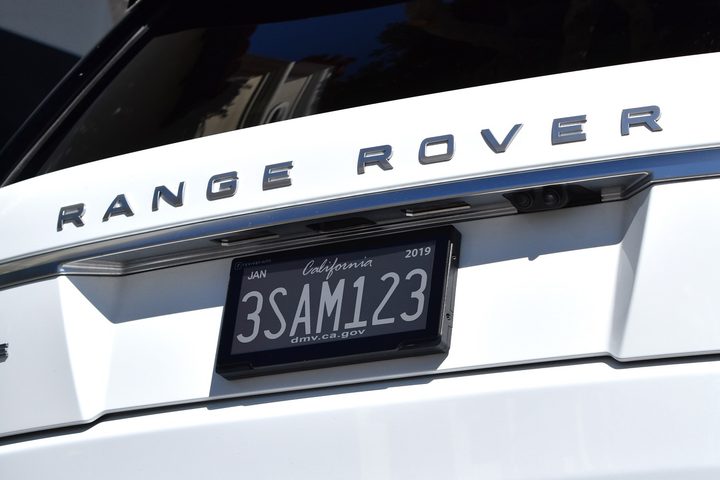
The device looks like a large, license plate-sized tablet. It is, in a way, except it’s not touch-sensitive. It’s equipped with its own battery and computer chip, and it looks just like a standard-issue California plate in its most basic configuration. The vehicle’s registration number appears front and center, along with information about when the car’s registration expires, California’s script logo, and a link to the DMV’s website. Users can change the color of the font or the background and display short messages directly below the registration number. If the car is parked, they can also move the registration number to a corner and display a much larger message, like an advertisement.
The Sacramento Bee reports digital license plates could let motorists renew their registration without having to place a sticker on their car’s rear license plate. Police officials can also use the license plate to track a stolen car, though this becomes a moot point if the thief removes the plate and tosses it in a ditch.
As you’d expect, the technology isn’t cheap. Reviver Auto, the California-based company that designed and manufactures the plates, charges $699 for the device. That figure doesn’t include the cost of installation and the $7 monthly fee users need to pay. Motorists must purchase the plates from authorized dealerships; they’re not available through the DMV like standard-issue license plates.
To date, 11 new car dealerships have signed up to sell the digital license plate. One is in Sacramento, three are in the San Francisco area, and the rest are located in or near Los Angeles. Arizona will soon approve use of the plates as part of a pilot program. There’s no word yet on when (or if) other states will allow the technology on their roads.
Reviver Auto founder Neville Boston acknowledges the technology is expensive, but he argues it’s an investment that makes sense for certain users. Speaking to the Sacramento Bee, he explained that companies and local governments will look into the technology to manage their fleet of vehicles. It could also attract businesses who want to use the plate as their own mini billboard. And Sacramento officials purchased 24 digital license plates as part of a pilot program designed to prepare for real-world testing of autonomous cars.
“The city envisions using this technology as a way to help the deployment of autonomous cars. If we can actually have a platform for us to see where the cars are operating, how they’re operating, and get reports back about vehicle miles traveled and locations, and we can actually geo-fence certain areas and restrict them to certain areas of the city; that’s how we envision using this plate,” explained Louis Stewart, the city’s chief innovation officer.
On the other side of the globe, Dubai launched a similar pilot program in a bid to make life easier for drivers.