In September of 2018, Apple pulled back the curtain on the new iteration of its popular smartwatch, the Apple Watch Series 4. The Series 3 was a superb device — it spent 2018 on top of our list of the best smartwatches — so what could Apple possibly do to best it? A few things, as it turns out. You can no longer buy the Series 4 directly from Apple, but it has a number of features (some subtle, some astounding) that make it worth tracking down on third-party sellers. But it’s still not a cheap gadget, so if you already own a Series 3, you may wonder whether the upgrade is worth it. Let’s break down the differences between the two models.
Specs
| Apple Watch Series 4 |
Apple Watch Series 3 |
|
| Display size | 40mm (44mm w/ cellular) | 38mm (42mm w/ cellular) |
| Resolution |
324 x 394 pixels (368 x 448 w/ cellular)
|
272 x 340 pixels (312 x 390 w/ cellular) |
| Touchscreen | LTPO OLED Retina display w/ Force Touch | OLED Retina display w/ Force Touch |
| Wireless interface | Bluetooth 5.0, Wi-Fi 802.11b/g/n, LTE and UMTS | Bluetooth 4.2, Wi-Fi 802.11b/g/n, LTE and UMTS |
| Depth | 10.7mm | 11.4mm |
| Accelerometer | Yes | Yes |
| Gyroscope | Yes | Yes |
| Altimeter | Yes | Yes |
| Ambient light sensor | Yes | Yes |
| Optical heart rate | Yes | Yes |
| GPS | Yes | Yes |
| Water resistant | Yes | Yes |
| Battery life | 18 hours | 18 hours |
| Price | From $330 | From $199 |
| Availability | Apple |
Design and display
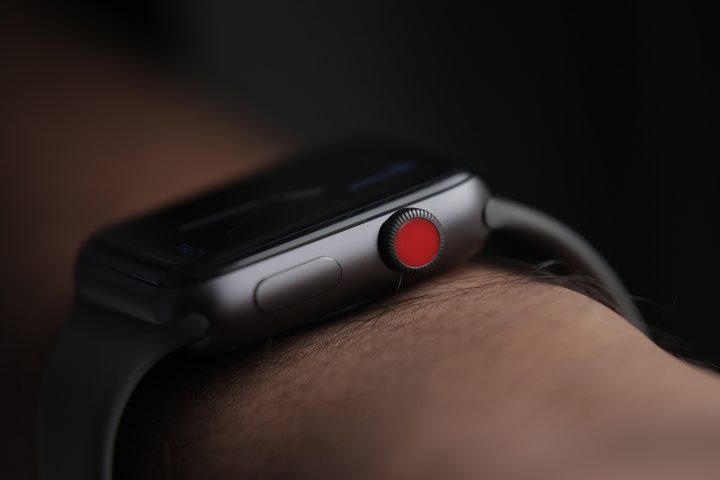
The Series 3 was a familiar face for anyone who had one of the previous models, with the most notable difference being a colored dot on the crown. It was also just a tiny bit thicker than its predecessors.
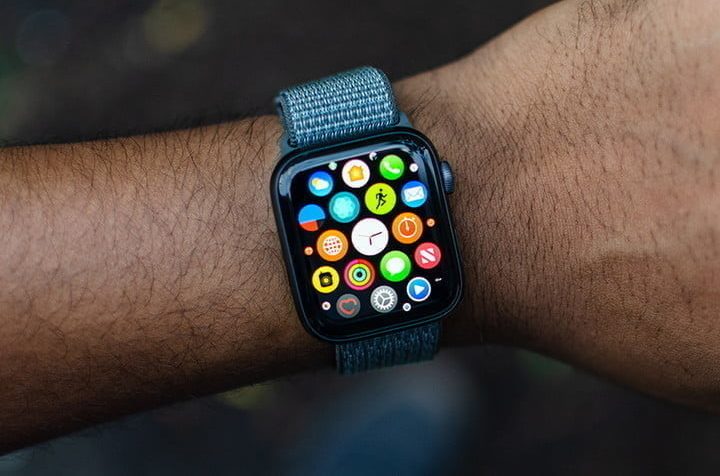
The Series 4 sports a seamless edge-to-edge display, and Apple boasts that it is more than 30% larger than the Series 3. This is in keeping with the trend in mobile devices of purging bezels once and for all, and it makes for a sleek device.
The Series 3 expanded the functionality of the Apple Watch by adding cellular support, and the Series 4 builds on this with an improvement in form: The watch has a back made of black ceramic and sapphire, which Apple claims will allow radio waves to flow with less resistance, improving reception. The Series 4 also rocks a speaker that is 50% louder than the previous generation’s. These factors combine to make a smartwatch that should be much better for making calls on the go — although whether this makes the Apple Watch a legitimate smartphone replacement is still up in the air.
A small but welcome touch is the addition of haptic feedback to the Series 4’s crown. As users scroll through screens, the watch will reward them with a comforting click.
Winner: Apple Watch Series 4
Fitness and health-tracking features
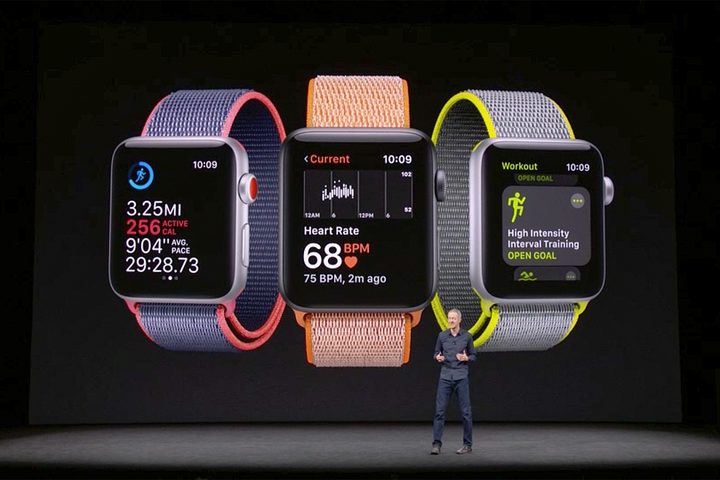
The Series 3 was already a great fitness tracker. In our review, we described it as “clear, concise, informative, and encouraging, and with many different modes to suit the majority of people.” We also noted that “heart-rate monitoring is easy, and there are varied tracking options for walking, running, cycling, swimming, and more.”
The Series 4 pushes the design to new heights with the addition of an electrocardiogram (ECG) sensor. When a user places their finger on the crown, the watch creates a “closed circuit” and can measure the rhythm of the user’s heart. It’s a major addition for customers worried about their heart health, and according to Apple it is the first ECG sensor available over the counter. Apple secured approval from the Food and Drug Administration for the Series 4 to be considered a legitimate medical device.
Another boon to the Series 4’s health tracking is the ability to detect when the user has fallen over. If the user remains on the ground for a minute, the watch can even place a call to emergency services, a miraculous feature for people who live alone and need assistance.
Winner: Apple Watch Series 4
Battery life
With all these new features, one may wonder if the battery life has taken a hit. Apple hasn’t extended the battery life, but it has at least maintained it. Like its predecessor, the Series 4 will get 18-hour “all-day” battery life, although Apple did bump the outdoor workout battery life to six hours. However, it’s fair to say the Apple Watch still has one of the shorter battery lives out there, and neither watch really excels in this regard.
Winner: Tie
Pricing and availability
The circle of wearable life continues, and with the arrival of the even newer Apple Watch Series 5, Apple has dropped the starting price of the Series 3 to $199. The arrival of the Series 5 has meant the end of the Series 4 though, and Apple has discontinued the watch from its range. However, if you want to pick one up, you still can by checking third-party websites — though you’re likely to have to settle for a renewed model, rather than a new one. But that does mean you get a decent discount, so it’s not all bad. The Apple Watch Series 3 is definitely the easier of the two to find though.
Overall winner: Apple Watch Series 4
If you’re strapped for cash, the Apple Watch Series 3 remains a lovely device, and you’d certainly be fine sticking with it (or picking it up at the new, lower price). But for those who don’t balk at the Apple Watch Series 4’s slightly higher price tag and reduced availability, it is undoubtedly the better of these two, a bold evolution of what was already the premier device on the market. Its new health-tracking features are unparalleled and a great addition for anyone concerned about their vitals.
However, looking more broadly, the Apple Watch Series 4 isn’t that much cheaper than the Apple Watch Series 5 — so if you’re happy to spend over $300 on a smartwatch, you might as well make it the best one around.