1. Home
  2. Emerging Tech
  3. News

Make the most of your compost by transforming it into 3D printing filament

Add as a preferred source on Google
This student start-up turns your food waste into high quality bio-plastic

We’ve previously written about the role that 3D printing can play in the future of food, but could additive manufacturing also have a part to play in disposing of food waste? Indeed it can, claim the brains behind a startup called Genecis, made up of graduates from Canada’s University of Toronto Scarborough. With this ambition in mind, they have developed a way to transform today’s restaurant food waste into tomorrow’s biodegradable plastics — useful for everything from creating packaging to 3D printing filament.

Recommended Videos

“Genecis uses biology to convert organic waste into higher value materials,” Luna Yu, founder and CEO of Genecis, told Digital Trends. “The first product line is PHA (polyhydroxyalkanoates) biopolymers, which is used in combination with PLA to make 3D printing filaments. It is also used to make high-end flexible packaging and containers. In addition, PHAs makes a tougher and less brittle 3D printing filament. The end product is 100 percent biodegradable, and can be mixed with a variety of colors. Currently, all PHAs are made from expensive food crops such as corn, sugar cane, and canola. Genecis has developed a novel technology that produces PHAs from mixed food waste, dramatically reducing the production costs.”

The core of Genecis’ technology involves what Yu describes as “special recipes of bacteria.” These assemble materials automatically at rapid speeds in a way that can be used to produce rare chemicals or materials which are expensive to create chemically.
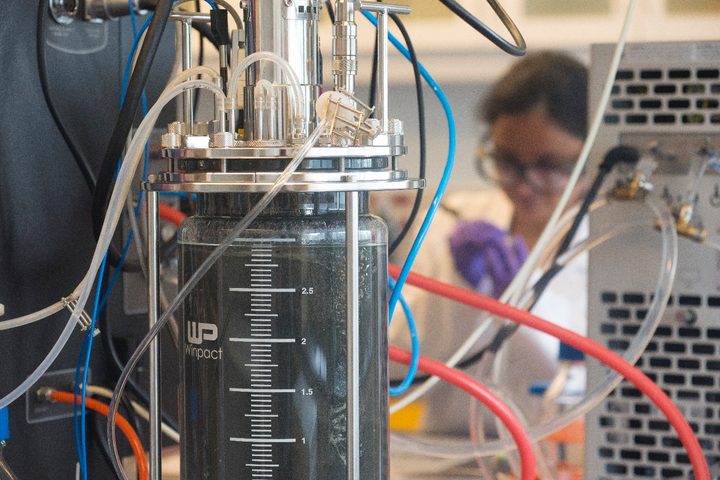
Image used with permission by copyright holder

“Over the past two years, Genecis has collected bacteria from all around the world, and isolated over 200 species that are not present in any existing database,” Yu continued. “This allows us to start developing our own synthetic biology platform, which rapidly creates new synthetic bacteria. These bacteria can be used to make better PHAs for 3D printing, and reprogrammed to make higher value materials used in the cosmetic, pharmaceutical, and nano-materials industries.”

Currently, Genecis is working to commercialize its first product line consisting of PHA bioplastic pellets. It is also seeking partnerships for users of its manufactured polymers. In other words, if any readers happen to be 3D printing filament makers, packaging manufacturers, or general plastic manufacturers that currently use PHAs, now is the time to get in touch!

Luke Dormehl
I'm a UK-based tech writer covering Cool Tech at Digital Trends. I've also written for Fast Company, Wired, the Guardian…
Starlink V5 is here, and it’s lighter, smarter, and far more efficient
The next-generation satellite internet kit promises improved efficiency while maintaining high-speed connectivity.
Starlink V4 vs V5

Not every hardware upgrade needs to be about speed. With Starlink V5, SpaceX is betting that a lighter design and lower power consumption matter just as much. The company has officially introduced its next-generation Starlink V5 kit, featuring a smaller and lighter design with significantly improved power efficiency.

Smaller, lighter, and far more efficient

Read more
Frontier joins the Starlink club with high-speed in-flight internet
The carrier plans to roll out SpaceX's satellite-powered Wi-Fi across its fleet starting in 2027.
Frontier Starlink partnership featured

If there's one thing budget airlines aren't exactly known for, it's great onboard Wi-Fi. In Frontier Airlines' case, it hasn't offered in-flight internet at all. That's about to change. Frontier Airlines has announced a partnership with SpaceX's Starlink to bring high-speed, low-latency internet across its fleet. Installations will begin in early 2027, making Frontier the first ultra-low-cost carrier in the United States to adopt Starlink's satellite-powered connectivity.

Streaming, browsing, and even gaming at 35,000 feet

Read more
OpenAI’s first hardware product sounds more like a companion than a speaker
The AI company is reportedly building a mobile home device that understands context and proactively helps users.
OpenAI press image

For months, rumors have suggested that OpenAI's first hardware product could be a wearable AI device, or perhaps even the beginning of its long-term smartphone ambitions. As it turns out, the company's first gadget may be something far simpler, yet arguably far more ambitious. It will help control smart-home appliances, play media, answer questions, respond to messages, and tap into the range of capabilities offered by OpenAI's ChatGPT, according to people familiar with the matter.

OpenAI's first AI device could end up being a speaker, following plenty of hype that the company is actually working on a wearable AI device and might even launch a smartphone down the road. According to a Bloomberg report, the speaker will serve as a human-like AI companion that will integrate directly with the smart home ecosystem.

Read more