  1. Home
  2. Computing
  3. Virtual Reality
  4. News

Microsoft patent highlights a potential VR text input system

Add as a preferred source on Google
Windows Mixed Reality Review
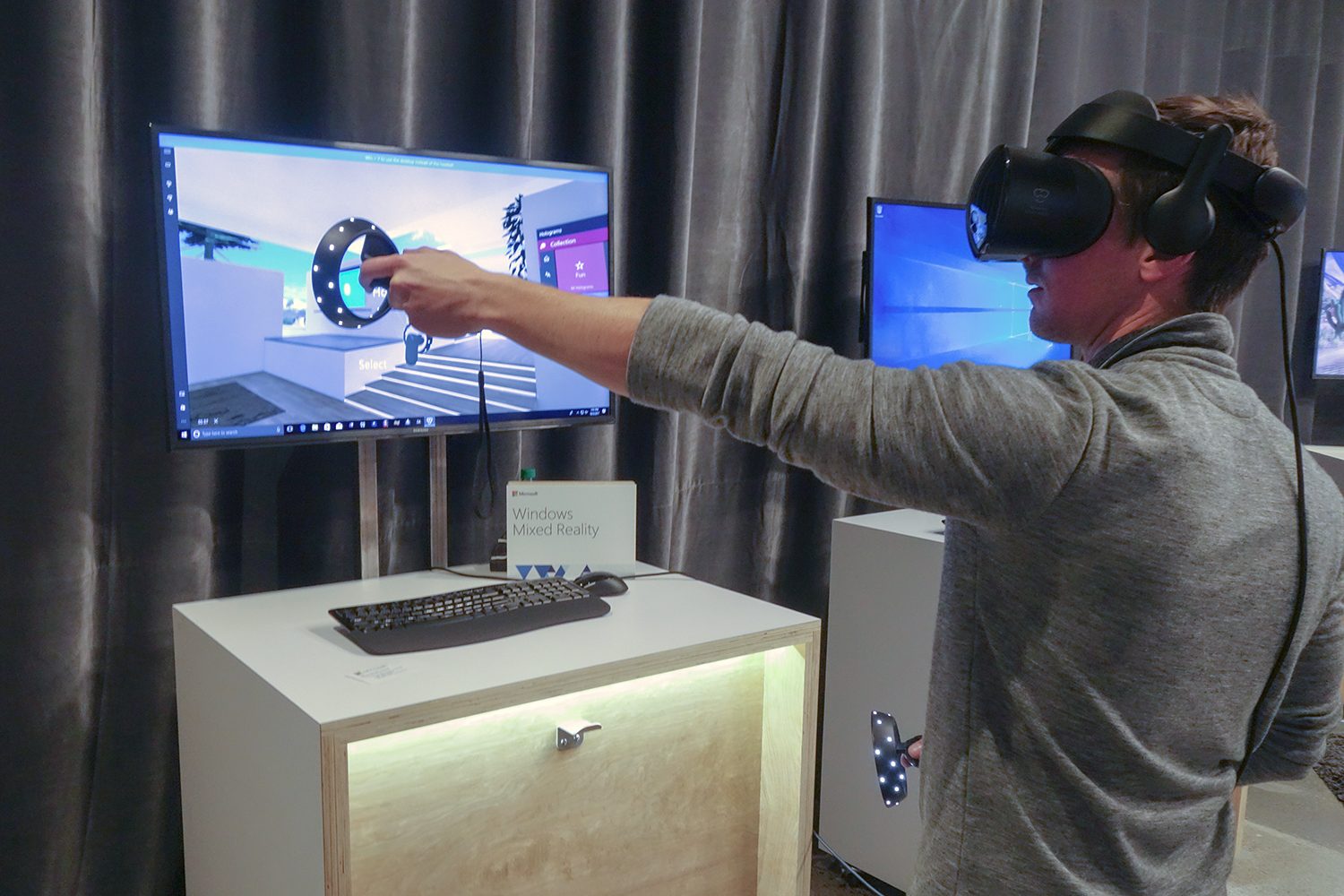
Nick Mokey/Digital Trends

Microsoft has been awarded a patent for a new virtual reality text input system that could prove to be a better way for writing complicated or lengthy text in VR when using motion controllers and Xbox gamepads. It uses a radial design with layered inputs and predictive elements that put the most likely of letters within easy reach depending on what’s being “typed.”

Despite QWERTY keyboards not offering the most accurate or intuitive keyboard layout, they still remain the most efficient mainstream method of creating lots of digital text quickly. We should know, we spend all day doing it. But there may come a time when typists need to learn to use something else and the transition to virtual reality with motion controllers that don’t facilitate easy access to a keyboard — virtual or physical — could be that turning point.

Recommended Videos

To that end, Microsoft is looking to create an input mechanism for the virtual future and in the same breath, offer console gamers something more intuitive to use when “typing” with a gamepad. Its new patent offers a wheel interface that’s not too dissimilar to its Surface Dial, as WindowsCentral highlights, and could prove to be a much easier way for VR and console gamers to input text quickly and accurately than existing floating keyboards.
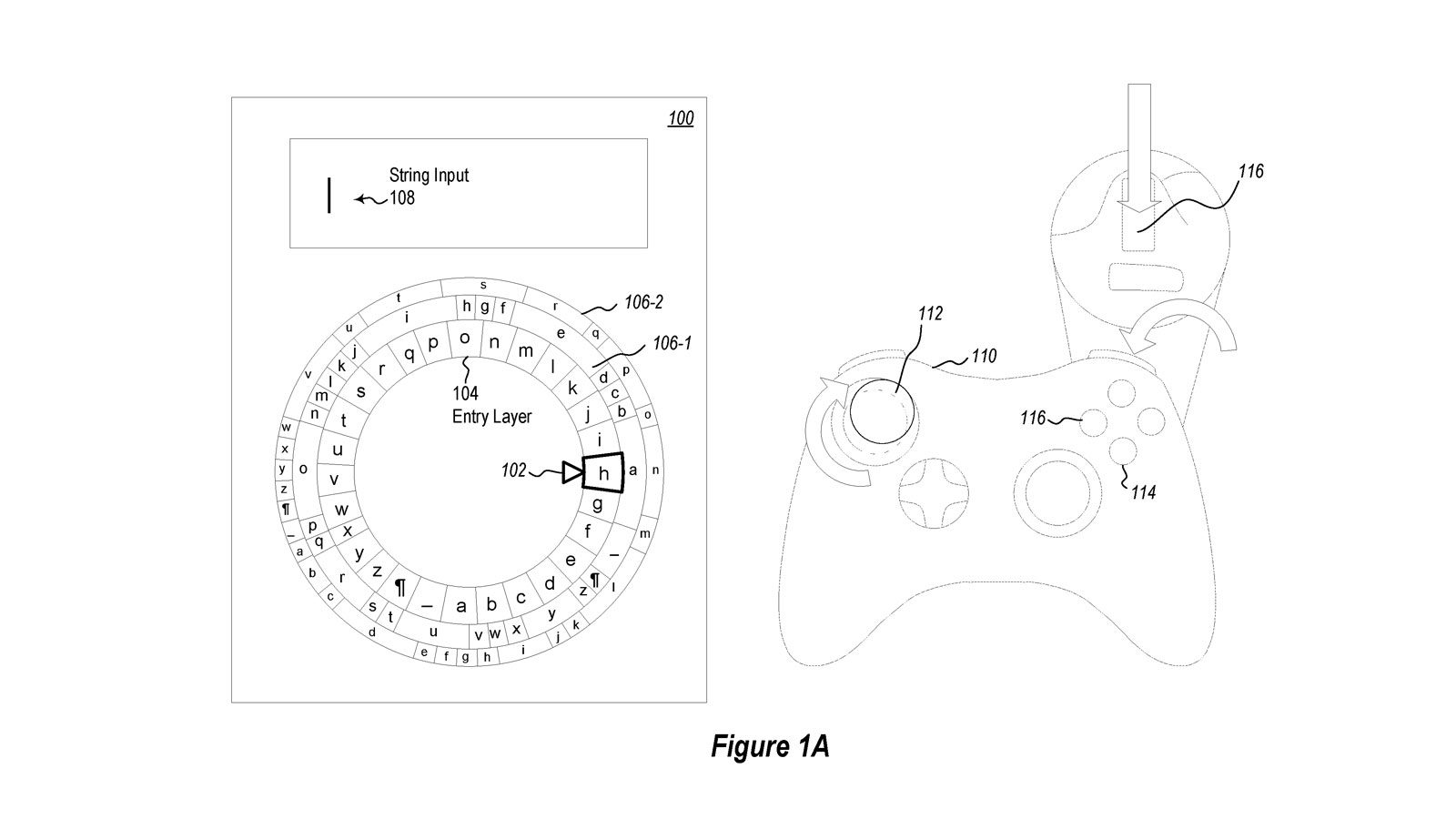
Image used with permission by copyright holder

The patent recognizes that the QWERTY layout is designed with 10-finger inputs in mind, making it a poor choice for the single-cursor system currently offered by joystick controlled inputs. Its new typing wheel could see usage in virtual reality, mixed reality, and any platform where game controllers are the most common input mechanism.

As with any patent, there is no guarantee that Microsoft ever makes a product that utilizes this radial mechanism, but it did originally file it back in March 2018. That could mean that the company been developing the idea in the meantime, so in theory, it doesn’t have to be years away from a more general release. Since it’s a software-based solution to the typing problem in VR and on gamepads, it wouldn’t take much more than a patch to make it available to gamers the world over.

If such a move did take place, it would be interesting to see if such a technology was eventually used in other company’s VR headsets, like Oculus VR’s new Quest.

Jon Martindale
Jon Martindale covers how to guides, best-of lists, and explainers to help everyone understand the hottest new hardware and…
Google’s new Magic Pointer Play Store listing reveals a Gemini shortcut built for Googlebooks
The unannounced app turns the cursor into a contextual AI tool for search, image creation, and shopping
Plant, Text, Business Card

Google has quietly published a new Play Store listing for Magic Pointer, an unannounced app built for Googlebooks. Updated on July 10, the app turns the cursor into a Gemini shortcut that can act on whatever a user selects on screen.

Magic Pointer can send an image to Lens, generate a related image, or surface a shopping action without forcing users to open a separate chatbot. Regular Android devices currently show as incompatible, so the listing offers an early preview rather than a broad release.

Read more
You can stop using AI, but this new report says you probably can’t escape it
A UK survey found that most people feel AI exposure is unavoidable, raising harder questions about consent, privacy, and whether opting out is still realistic
AI Chatbots

More people are trying to use less AI, but avoiding it altogether may already be impossible.

A survey of 2,055 UK adults found that 42% deliberately limit how much AI they use. Another 70% said avoiding AI exposure would be difficult or impossible, even when they actively wanted less of it.

Read more
The face on an AI interviewer may matter as much as the decision it makes
Researchers found that race and gender matching changed how fairly rejected applicants viewed an automated interview, even though everyone received the same outcome
File, Computer Hardware, Electronics

An AI hiring system can treat every applicant the same and still leave some people feeling targeted. Researchers found that rejected candidates judged an automated interview differently depending on the race and gender of the avatar delivering the result.

Around 220 participants completed a simulated interview for a fictional customer support role with one of four photorealistic AI avatars. Everyone was rejected, yet perceptions of fairness shifted with the interviewer’s appearance. An algorithm audit could miss that reaction because candidates don’t experience the system as raw code. They experience a face asking questions and judging their answers.

Read more