
Provided that retailers like Amazon get their way, it won’t be long before drones are delivering everything from books and Blu-rays to takeout meals and clothing. Could they prove useful for delivering transplant organs as well?
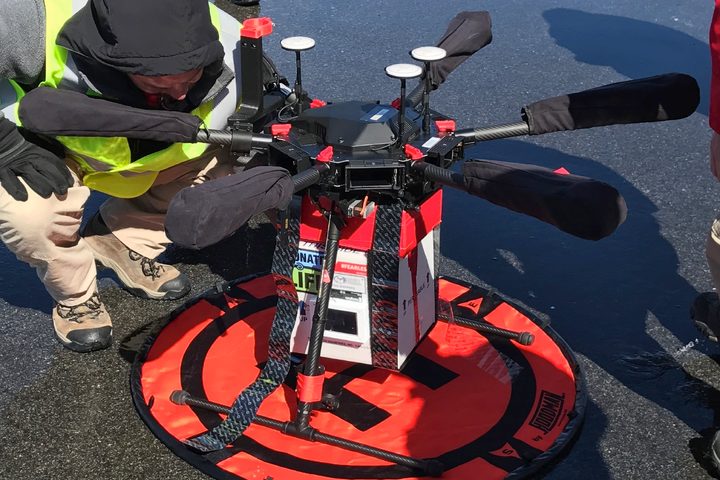
It’s a great idea in theory: Being able to avoid traffic jams and other road-based delays is much more important when you’re transporting a potentially life-saving organ to someone waiting in hospital. But exactly how practical this solution is has been subject to questioning. Perhaps until now, that is. In a new piece of research, investigators from the University of Maryland put a kidney in a cooler and flew it on test flights underneath a DJI M600 Pro drone. To find out exactly what happened during the course of the journey, they developed a dedicated organ-monitoring wireless biosensor to measure temperature, barometric pressure, altitude, vibration, and GPS position.
“As someone who deals with the time-sensitive nature of transplantable human organs on a daily basis, I remain frustrated that my patients’ ability to get a lifesaving organ is somehow contingent on commercial airline schedules,” Dr. Joseph Scalea of the University of Maryland Medical Center, told Digital Trends. “I do not accept this. I have always thought we could do better. Beyond ill-timed flights, eliminating the need for a human to accompany an organ limits exposure and risk for invaluable transplant nurses, technologists, and doctors on the recovery teams. So I teamed up with the incredibly smart people at the University of Maryland College Park and at the Unmanned Aircraft System (UAS) test site to begin asking tough questions about drone-based organ transportation.”
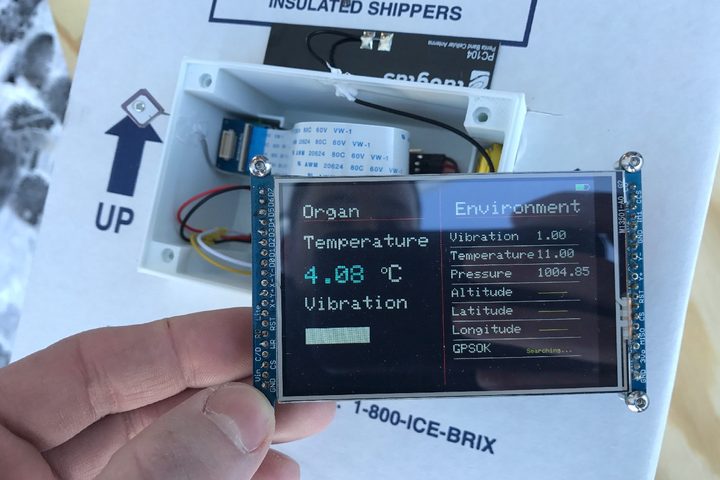
The good news coming out of the study is that the kidney remained stable during flight — and actually experienced fewer vibrations than when being transported in a fixed wing plane. Analysis after the flight revealed no damage had taken place either. Needless to say, that’s pretty important when it comes to transplant organs.
“The next step is learning more about barriers to entry, trying to identify the appropriate strategic partners, and trying to overcome additional technical hurdles,” Scalea continued. “For example, I envision that drones will need to fly safely, much faster than they are currently able. Further, flights need to be autonomous in order for drone transportation to be sustainable. I think that identifying partners interested in helping us reach this goal is important. I also think that we need to address the transplant community appropriately. It is critical to our team that we not lose the trust of the people we serve — our patients, our donors, and their families.”
The research was recently published in the IEEE Journal of Translational Engineering in Health and Medicine.


