1. Home
  2. Emerging Tech
  3. News

Magical new AR demo transforms 2D photos into ‘Harry Potter’-style 3D animations

Add as a preferred source on Google
Photo Wake-Up: 3D Character Animation from a Single Photo

Imagine if you were able to point your smartphone, tablet or augmented reality (AR) headset at a still image, and watch it come to life before your very eyes. This is something that’s possible using the latest augmented reality technology, such as Apple’s ARKit or Google’s ARCore. However, while we have seen it done before, typically it has been limited to just one or two select images — for instance, as a tool for animating advertising billboards.

Recommended Videos

Researchers from the University of Washington and Facebook have built something that’s a whole lot more versatile. Their new “Photo Wake-Up” project will animate stationary characters in any image, resulting in them springing into action to sprint toward you out of the background. Because who has time for boring old still images as we reach the final days of 2018?

The researchers write that: “The key contributions of this paper are [firstly], an application of viewing and animating humans in single photos in 3D. [Secondly], a novel 2D warping method to deform a posable template body model to fit the person’s complex silhouette to create an animatable mesh. And [thirdly], a method for handling partial self occlusions. We compare to state-of-the-art related methods and evaluate results with human studies. Further, we present an interactive interface that allows re-posing the person in 3D, and an augmented reality setup where the animated 3D person can emerge from the photo into the real world.”

As seen in the video up top, this effect was successfully demonstrated on photographs, in posters, and in art work. At present, the research is still at a relatively early stage, although it proves impressively adept at recognizing human figures across a wide range of mediums, regardless of whether they are modernist painted figures in a Picasso painting or ones taken from a black and white photograph.

In their paper, the researchers suggest that this work could open up new ways to “enjoy and interact” with images. If similar interactions could be extended to, say, making photographic cars drive, clouds move and any other number of possibilities, this could turn out to be the start of something very exciting. As it is, we could certainly see it saving animators considerable time.

The paper, titled “Photo Wake-Up: 3D Character Animation from a Single Photo,” is available to read online.

Luke Dormehl
I'm a UK-based tech writer covering Cool Tech at Digital Trends. I've also written for Fast Company, Wired, the Guardian…
Meta’s latest AI model is Muse Spark 1.1 and it can run your computer for you
meta-ai-chatbot-threads

AI assistants have gotten really good at answering questions and walking us through complicated tasks. But the next wave of AI is aiming for something much bigger: doing those tasks for us.

That's the idea behind Meta's new Muse Spark 1.1. Instead of simply telling you which buttons to click, the model is built to interact with your computer on your behalf. Whether it's searching across multiple websites, filling out forms, or switching between apps, Meta says Muse Spark 1.1 can navigate software much like a person would, choosing the fastest way to finish the job. It's a notable shift from purely conversational AI to AI designed to take action.

Read more
AI security cameras may soon recognize your walk before they recognize your face
A new AI gait system tracks body motion through skeletal keypoints, aiming at long-range identity checks where face scans and fingerprints fall short.
Security cam

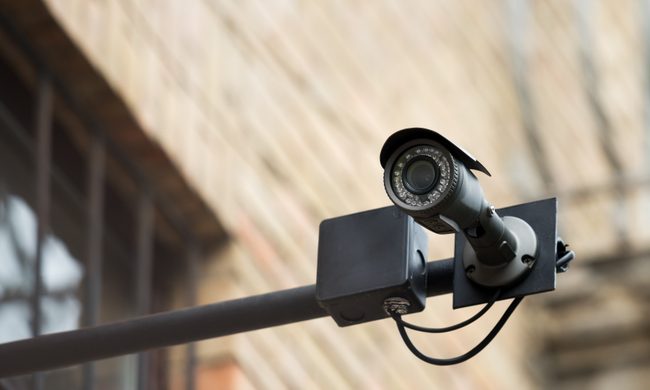
Security cameras are built to look for faces. New research suggests they may soon have another target, the small habits buried in the way someone walks.

A paper published in the International Journal of Reasoning-based Intelligent Systems describes SKDMap-Net as a gait recognition system designed to identify people from walking video, even when the camera doesn’t get a clean look at their face. Instead of relying on a close-up scan, it studies how a body moves from frame to frame.

Read more
A 20-second 3D printer breakthrough comes with exactly the kind of catch science loves
The process can create complex microstructures far faster than some laser-based methods, but full 3D control is still a work in progress.
Aluminium, Smoke Pipe

A 3D printer that can make a structure in about 20 seconds sounds like a lab claim wearing a cape. The clever bit is real. The catch arrives before anyone starts dreaming about instant replacement parts.

University of Utah researchers have demonstrated a holographic 3D printing technique that hardens tiny structures in one exposure instead of building them layer by layer. That one-shot approach could avoid the weak, leaky seams that stacked printing can leave behind. For now, though, this is a tool for microstructures, not a shortcut to printing whatever object pops into your head.

Read more