Futurists and tech companies often use the idea of freedom to promote products, but as technology gets ever more complicated and spreads into every facet of life, it provides authorities with ever more tools and opportunities to observe the populace and potentially infringe on those freedoms.
Law enforcement agencies, in particular, are rapidly incorporating cutting-edge tech into their workflow, and while some of these gadgets may make it easier to catch criminals, they’re also raising concerns about the erosion of privacy and the seeming ubiquity of surveillance.
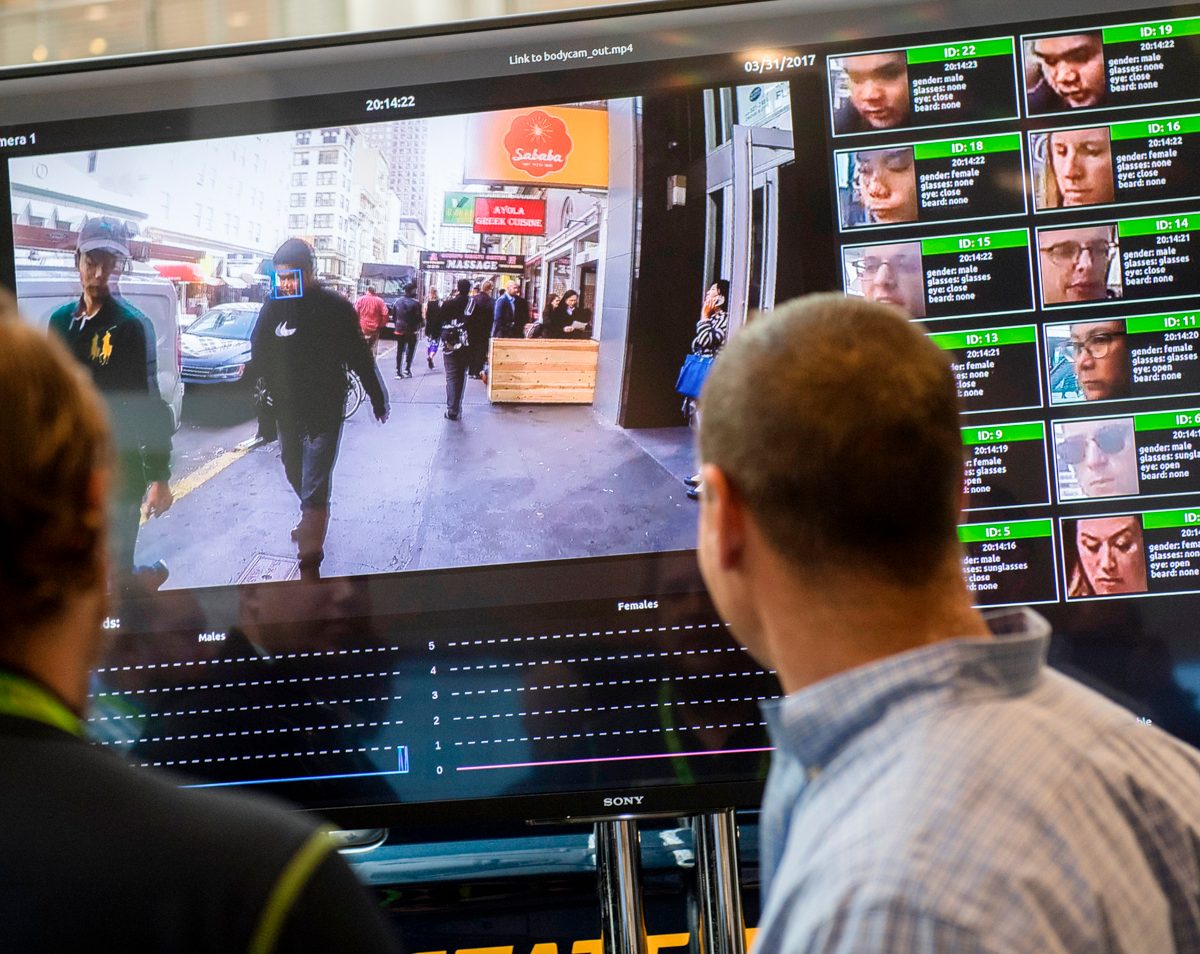
Perhaps nowhere is the dichotomy between security and intrusiveness more apparent than in facial-recognition software. Software is becoming frighteningly good at telling one face from another, and while that means you can unlock the latest iPhone simply by looking into the camera, it also means authorities can scan entire crowds, picking out individuals of interest. This isn’t merely the stuff of sci-fi nightmares, either; the Washington County Sheriff’s Office in Oregon has already used Amazon’s facial-recognition software, trimming the time needed to identify suspects to mere seconds and apprehending its first suspect within a week by using the new system, according to Amazon.
That might make catching criminals easier — in theory, anyway — but it’s raising concerns among skeptics and civil liberties watchdogs like the American Civil Liberties Union. Whether through closed-circuit television arrays (like those used in London) or through drones flying overhead, law enforcement agencies could keep an eye on anyone they want to, tracking the movements of private citizens wherever they may go.
Smartphones are another area in which police are looking to gather information about suspects. In Carpenter v. United States, the Supreme Court examined a case in which police used location information from a suspect’s cell phone records to present a detailed account of the suspect’s movements over a period of time. The court ultimately ruled that police need a warrant to obtain cell phone location records, with Chief Justice John Roberts writing: “Given the unique nature of cell phone location records, the fact that the information is held by a third party does not by itself overcome the user’s claim to Fourth Amendment protection. Whether the government employs its own surveillance technology … or leverages the technology of a wireless carrier, we hold that an individual maintains a legitimate expectation of privacy in the record of his physical movements as captured through CSLI.”
However, police are also using tech in ways that can promote more accountability and safety in law enforcement. For example, some departments are using virtual reality to train officers in handling tense situations. Many police departments in the U.S., in response to high-profile accusations of police brutality and unjustified shootings, are experimenting with body cameras, including those that turn on automatically when an officer draws their weapon, or even cameras that are always on. Debates about how society should weigh security versus privacy are unlikely to slow down, and neither is law enforcement’s pursuit of more advanced technology.