  1. Home
  2. Emerging Tech
  3. News

China’s space station gets the green light in surprise announcement

Add as a preferred source on Google
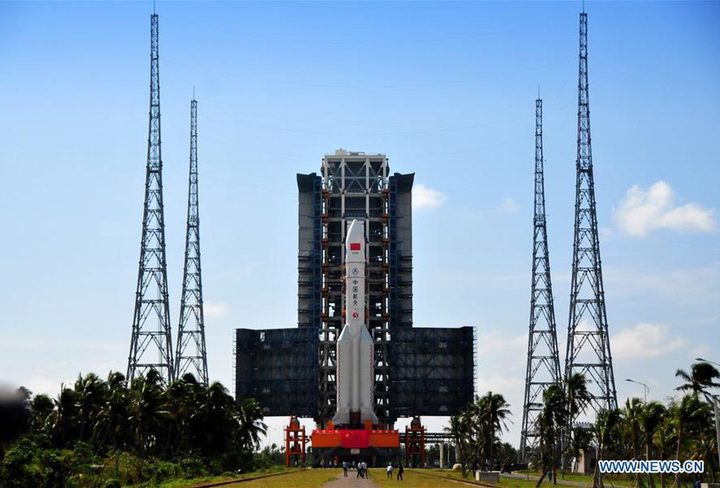
 Long March-5B carrier rocket
www.news.cn

In a surprise move, the China Manned Space Engineering Office (CMSEO) announced it will be starting the process of building its own space station sooner than expected. It expects to launch the first mission imminently and aims to have a space station completed by 2022.

Although China has made its desire to build a space station well known, aiming for a first launch this year is faster than was expected. It was only in 2016 that China’s Tiangong-2 space lab was launched, and the lab will de-orbit in July. In the meantime, the Chinese are expected to launch a commercial-grade rocket similar to those used by SpaceX, but one designed to be cheaper. But first, they will have to perform drills and joint tests which they expect to begin in the latter half of this year and to select and train their astronauts in a process that has already begun.

Lift-off soon for China’s space station mission

The aim is to create a space station which can hold up to three astronauts at a time and which will last for 10 years. The station will consist of three modules (one cabin and two labs), and its purpose is to host research into topics like life sciences and biotechnology. Surely it is also hoping to be a competitor to the International Space Station, which China was not involved in.

Recommended Videos

The announcement was made through Xinhua News Agency, China’s state-run news service, and it could have a serious impact on the international politics of space programs. However, China does plan to share the facilities of the station with other countries: “China is committed to making the country’s space station an international platform for scientific and technological cooperation, according to the CMSEO,” the Xinhua News Agency said. As part of this aim of co-operation, the CMSEO “will work with the United Nations Office for Outer Space Affairs to complete the application selection of China’s space station and launch a number of co-operation projects.”

The next key data in the project will come at the end of 2019 when the “Long March-5B” carrier rocket will perform its maiden voyage in preparation for the space station mission.

Georgina Torbet
Georgina has been the space writer at Digital Trends space writer for six years, covering human space exploration, planetary…
Claude Code can now browse the web without opening Chrome
The desktop app now includes an in-app browser that can read websites, click links, and interact with web apps.
Claude Code Featured

Developers spend a surprising amount of time bouncing between their code editor, browser tabs, API documentation, GitHub issues, and design files. Anthropic thinks Claude Code should simply do all of that without constantly asking users to switch windows. The company has announced a new in-app browser for Claude Code on desktop, allowing its AI coding assistant to open websites, read documentation, inspect designs, and interact with web pages directly from within the application.

A browser built into Claude Code

Read more
Apple is suing OpenAI over theft of trade secrets in blockbuster lawsuit
The lawsuit claims OpenAI recruited Apple employees and obtained confidential information about unreleased products.
Apple store Apple Building Apple Logo

For the past two years, Apple and OpenAI have been presented as close AI partners. ChatGPT powers key Apple Intelligence features, Siri can hand complex queries over to OpenAI, and together the two companies helped bring generative AI to millions of Apple devices. Now, that partnership has taken a dramatic turn.

What is Apple accusing OpenAI of?

Read more
Home robots can already walk. The hard part is stopping them from crushing your glassware
1X’s NEO uses tactile sensing and force control to handle fragile objects, aiming at the kind of household work humanoids still struggle to do.
Baby, Person, Electronics

A robot can look convincing while walking across a stage and still be useless in a kitchen. Picking up a wet glass demands precision, quick corrections, and enough restraint to avoid squeezing too hard. 1X is tackling that problem with new tendon-driven hands for NEO, its humanoid home robot.

1X says each hand has 25 degrees of freedom, with 22 across the fingers and palm and another three in the wrist. Its joints can yield when pushed instead of staying rigid, giving NEO a better chance of handling household objects without treating every collision like a wrestling match.

Read more