  1. Home
  2. Phones
  3. Mobile
  4. News

FCC to help first responders pinpoint 911 callers in multistory buildings

Add as a preferred source on Google

In a moment of distress, a person making a 911 call can’t always communicate clearly, if at all, making it all the more difficult for first responders to get to the scene quickly.

While wireless carriers can at the current time provide an approximate ground location regarding the whereabouts of a 911 caller — vital if the caller is unable to provide it themselves — a new proposal announced by the Federal Communications Commission (FCC) requests that carriers provide an accurate vertical location so a caller can be quickly located inside a multi-story building. The location data should be accurate to within just three meters of the handset used to make the emergency call, the FCC said.

Recommended Videos

The proposal is part of the FCC’s ongoing effort to improve its Enhanced 911 location accuracy rules, which require carriers to automatically transmit information on the location of an emergency caller to 911 call centers.

According to a news release, the rules require carriers to meet “an increasingly stringent series of location accuracy benchmarks in accordance with a timetable, including provision of the caller’s ‘dispatchable location’ (such as the street address and apartment number) or vertical location.” With the cooperation of carriers, the system could launch on a phased-in basis starting in April 2021.

The FCC said the plan had been in the pipeline for a while, but it had decided to hold off on a decision until it received additional testing data, which has now occurred.

Commenting on the proposal to get carriers to provide the so-called “z-axis” location data, FCC chairman Ajit Pai said in a video statement said that in most cases, the “three-meter standard is precise enough to identify the floor level of an indoor, 911 caller. Knowing better where a caller is in a big building can improve the emergency response time and ultimately save lives.”

Matthew Gerst, vice president of regulatory affairs at the Cellular Telecommunications Industry Association (CTIA), which represents the U.S. communications industry, said that carriers have already made “significant progress enhancing 911 location accuracy capabilities,” adding, “We are encouraged by the FCC’s efforts to provide certainty around expectations and requirements to deliver vertical location information, such as z-axis.”

With cell phones now accounting for around 70 percent of 911 calls, it makes perfect sense to utilize the technology to help first responders in their work. Other efforts include a text-to-911 service that’s been available for several years, while Google has been steadily rolling out Emergency Location Services for Android devices. Apple included technology with similar functionality in its iOS 12 update for the iPhone in 2018.

Trevor Mogg
Contributing Editor
Not so many moons ago, Trevor moved from one tea-loving island nation that drives on the left (Britain) to another (Japan)…
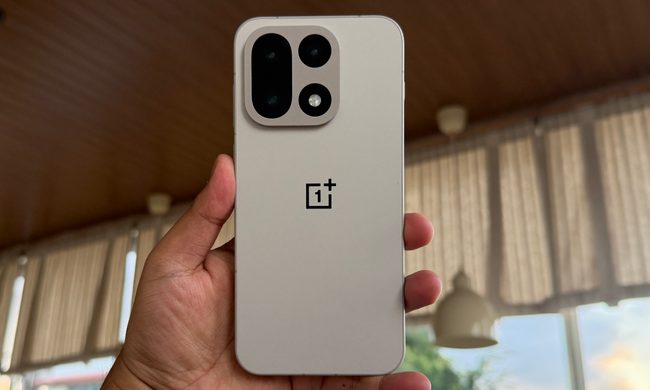
OnePlus is building another flagship monster for a shrinking audience, and its expected to launch in October
OnePlus 16 could launch in October, but it may not leave China
Rear shell of OnePlus 15.

While OnePlus may have exited the US and Europe, the brand is still alive in its home market and is already working on its next flagship smartphone. A fresh leak from Chinese tipster Digital Chat Station has now revealed more details about the OnePlus 16, including its design and a revised launch timeline.

The tipster previously claimed that the phone would arrive in September 2026, but the latest information points to an October launch in China (via Gizmochina). The global picture is far less clear, and there is now even some doubt over whether the OnePlus 16 will make it to India, which remains the company’s biggest market.

Read more
Samsung has another wild foldable phone lined up for 2027 and it will excite screen connoisseurs
Samsung wants another giant OLED folding inside your pocket
Samsung Galaxy TriFold unfolded

Samsung just gave foldable fans a wider 4:3 canvas with the Galaxy Z Fold 8. But that still isn't enough screen for the company. Samsung has reportedly begun early development of a successor to the Galaxy Z TriFold, its dual-hinged phone that unfolds into something much closer to a proper tablet.

According to Korean publication ETNews, Samsung has already shared information about the next-generation project with suppliers, but its final specifications have yet to be decided. One detail should immediately grab the attention of anyone who buys a foldable primarily for its display. A source familiar with the project told ETNews that Samsung is currently targeting a screen size similar to the original TriFold.

Read more
Android’s most powerful app permission could soon come with a much scarier warning
New Android 17 language spells out how trusted apps may interact with your screen while your device remains locked
Electronics, Mobile Phone, Phone

Android 17 could make one of its most powerful app permissions harder to approve without a second thought. New warning text explains that trusted apps may view and interact with screen content, even while the phone is locked.

Nerd’s Chalk uncovered the language in an APK teardown of Android 17 QPR2 Beta 1. The feature isn’t active, but Google’s description now leaves considerably less to the imagination.

Read more