For the first time ever, an international collaboration of astronomers has captured an image of a black hole.
Unveiled at a National Science Foundation event today, the above image represents a historic achievement in imaging of one of the most extreme and hard-to-observe phenomena in our universe.
Perhaps the most impressive thing about this image is the international cooperation required to create it. Because light cannot escape from a black hole, radio telescopes need to be specially tuned to capture light from the very edge of the event horizon. The black hole chosen for observation was located in Messier 87, a galaxy 55 million light-years away.
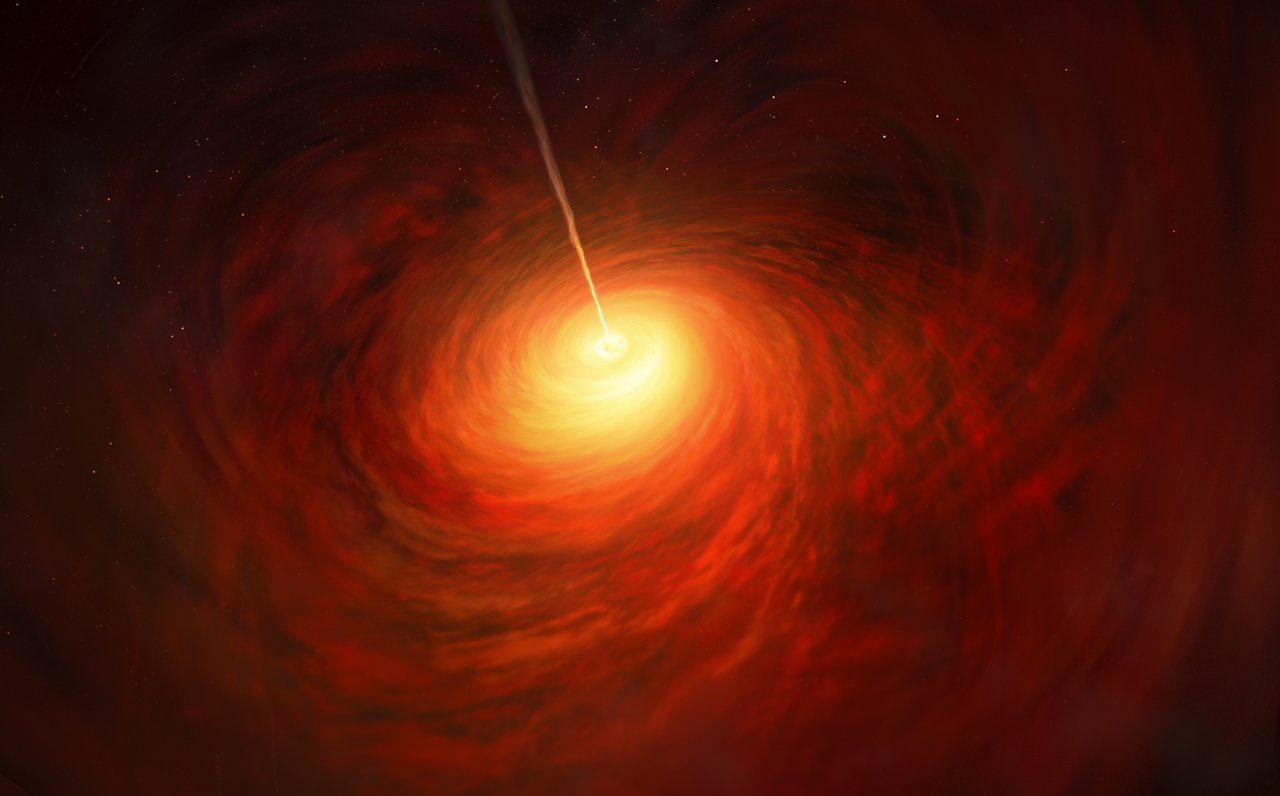
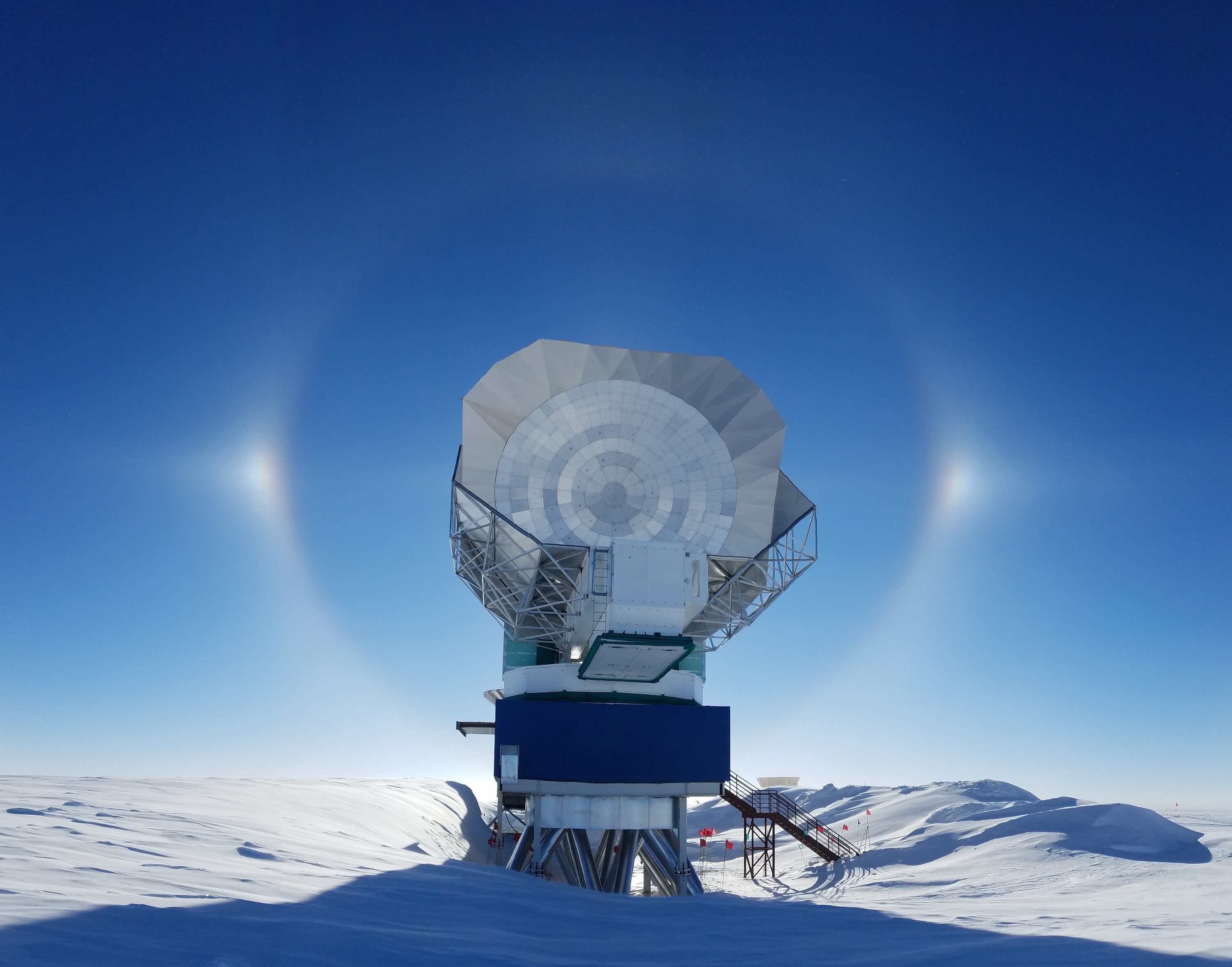
To create a telescope array powerful enough to capture light from this distance, telescopes from all around the world were used in unison. A team of more than 200 astronomers in 20 different countries used eight telescopes to form the Event Horizon Telescope Array, including the Atacama Large Millimeter/submillimeter Array (ALMA), a 66-telescope array in Chile, and the South Pole Telescope in Antarctica.
Many of the telescopes were not designed to collect this kind of data, so new hardware and software such as atomic clocks had to be installed at each site. When all the telescopes collected data together, they formed a virtual array the size of the Earth itself.
The power of the telescope array as a whole is incredible: It is equivalent of the ability to read the date on a quarter in Los Angeles while standing in Washington, D.C.
The process of linking together telescopes to collect the image was not guaranteed to succeed. It required “some very interesting cosmic coincidences,” according to Sheperd Doeleman, project director of the Event Horizon Telescope. Photons of light had to leave the horizon of the black hole, to travel 55 million light-years to Earth, to avoid being absorbed by water vapor in Earth’s atmosphere, and then be picked up against the background of the much larger Messier 87 galaxy surrounding the black hole.
Doleman described the experience of seeing the final image as one of “astonishment and wonder.” “I think any scientist in any field would know what that feeling is, to see something for the first time,” he said in a press conference. “It is a part of the universe that was off limits to us. When that happens, it is an extraordinary feeling.”
The image conformed to scientists’ predictions almost exactly. “I was a little stunned that it matched so closely the predictions that we had made,” said Avery Broderick, associate faculty members at the Perimeter Institute and the University of Waterloo. “We will be able to improve the precision with which we can probe the area, and we may find scientific surprises.”