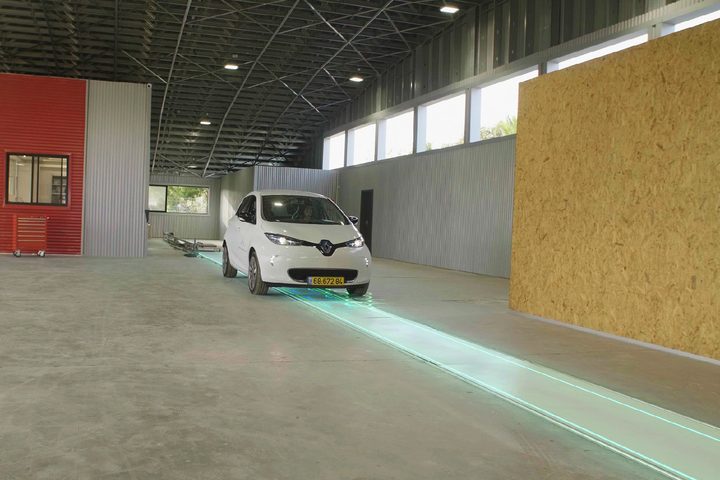
One of the biggest hassles for electric car owners is having to charge them. To get around the problem of needing to provide myriad electric charging stations, the Swedish transport administration is exploring the idea of having special roads which charge vehicles’ batteries as they drive over them.
To showcase the concept, the Smart Road Gotland consortium will be building an initial 1 mile stretch of road between the town of Visby and the airport on Gotland Island in Sweden. The road will be used to charge an electric truck and bus, using technology developed by the company Electreon, which will be carrying out construction. The majority of the $12.5 million project is funded by the Swedish government.
“The bus will be used for a shuttle for passengers traveling between the airport and town,” Noam Ilan, vice president of business development for Electreon, told Digital Trends. “It is exciting since it is the first time ever that a heavy truck will charge wirelessly from the road. Once we prove this works, it can bring the most elegant and cost-effective solution to the huge problem of emission from long-haul trucking.”
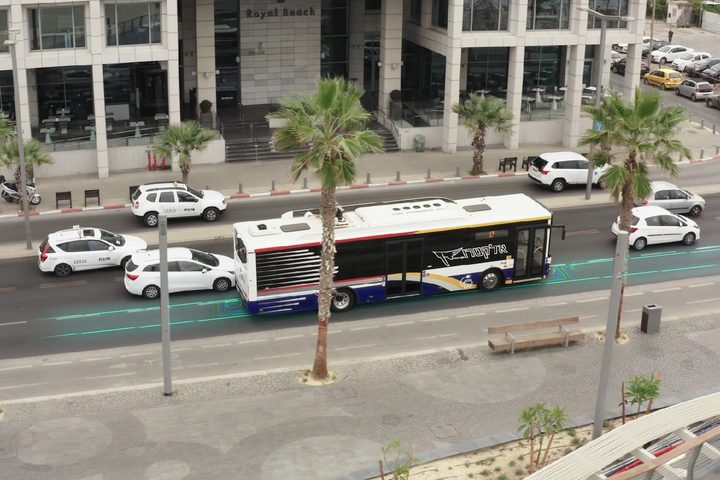
Ilan notes that the initial test will investigate whether or not the system is capable of transferring the required energy. It is also necessary to check that the road section can function (and, indeed, survive) in the harsh Swedish winters. “The best-case scenario is that, once all of this is proven, we will deploy the infrastructure in Sweden and other countries, making long-haul trucks electrification a reality with no visual hazards and in a cost-effective manner,” Ilan said.
Provided that all goes according to plan, the hope is that this will pave the way for a further 2,000 km of electric dynamic charging roads to be installed in Sweden. This would transform one of the country’s major highways, serving heavy transport, into an e-road. The cost of this is estimated at around $3 billion. While this is certainly expensive, it could actually turn out to a price worth paying.
“When you compare it to the cost of huge batteries and the loss of cargo capacity, as well as the operational expenses of charging and the cost of fast chargers and grid upgrades, it definitely makes sense,” Ilan said.
Sweden isn’t the only country to be exploring this technology. In Israel, a similar project aims to install a stretch of smart road between the city of Eilat and nearby Ramon International Airport.