1. Home
  2. Emerging Tech
  3. News

Startup has created technology for turning greenhouse gas emissions into soap

Add as a preferred source on Google
CleanO2 Carbon Capture Technologies

Remember that subplot in Fight Club, where Tyler Durden and the anonymous narrator make and sell soap created from the human fat taken from liposuction clinics? Well, a Canadian startup called CleanO2 has come up with their own, much less problematic variation on that. No, they’re not making soap out of fat, but they are creating cleaning products by recycling another waste byproduct in the form of greenhouse gas emissions.

Recommended Videos

The company has developed technology for turning CO2 emissions from furnaces and boilers into material that can be used to make soap, detergents, and more. The technology comes in the form of so-called CARBiNX units, which resemble large refrigerators. They function by capturing and absorbing CO2 with a type of hydroxide. This creates a product called potash, which is then sold — with the money being shared between the CARBiNX unit owner and CleanO2. So far, 14 CARBiNX units have been installed at a variety of venues in Alberta and British Columbia, Canada.
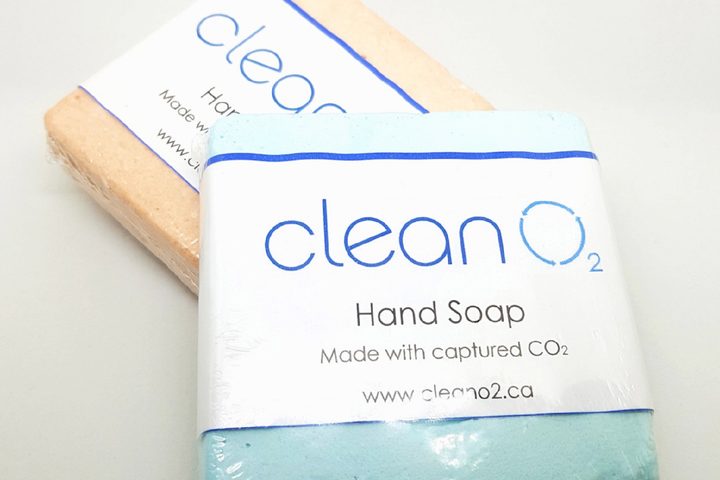
CleanO2

“The greatest challenge with carbon capture largely revolves around the economics,” founder Jaeson Cardiff told Digital Trends. “If the net benefit to both the environment and the customer are not clear and present then the likelihood of adopting the technology is quite low. Our technology is entirely profit-driven and can function as an enterprise without subsidy. That is not to say that support through subsidy is of [no] benefit to early-stage clean-tech developments, but rather that subsidy should be used as an incubator, rather than an ongoing support structure. By producing our own value-added products like soaps and detergents — that are matched in price to other comparable brands — we can both support our company and share in the profits with our customers to promote adoption. This is unheard of in the carbon tech market.”

Having shown some promise in Canada, CleanOS is now expanding into the U.S. with a pilot project in Minneapolis, supported by Centerpoint Energy. In Canada, people interested in purchasing the company’s soaps and detergents can do so through the AMRE Supply chain of stores. As of now, they’re not available to buy in stores in the U.S., although hopefully, that might change in the future. They can currently be purchased online, however.

Luke Dormehl
I'm a UK-based tech writer covering Cool Tech at Digital Trends. I've also written for Fast Company, Wired, the Guardian…
Starlink V5 is here, and it’s lighter, smarter, and far more efficient
The next-generation satellite internet kit promises improved efficiency while maintaining high-speed connectivity.
Starlink V4 vs V5

Not every hardware upgrade needs to be about speed. With Starlink V5, SpaceX is betting that a lighter design and lower power consumption matter just as much. The company has officially introduced its next-generation Starlink V5 kit, featuring a smaller and lighter design with significantly improved power efficiency.

Smaller, lighter, and far more efficient

Read more
Frontier joins the Starlink club with high-speed in-flight internet
The carrier plans to roll out SpaceX's satellite-powered Wi-Fi across its fleet starting in 2027.
Frontier Starlink partnership featured

If there's one thing budget airlines aren't exactly known for, it's great onboard Wi-Fi. In Frontier Airlines' case, it hasn't offered in-flight internet at all. That's about to change. Frontier Airlines has announced a partnership with SpaceX's Starlink to bring high-speed, low-latency internet across its fleet. Installations will begin in early 2027, making Frontier the first ultra-low-cost carrier in the United States to adopt Starlink's satellite-powered connectivity.

Streaming, browsing, and even gaming at 35,000 feet

Read more
OpenAI’s first hardware product sounds more like a companion than a speaker
The AI company is reportedly building a mobile home device that understands context and proactively helps users.
OpenAI press image

For months, rumors have suggested that OpenAI's first hardware product could be a wearable AI device, or perhaps even the beginning of its long-term smartphone ambitions. As it turns out, the company's first gadget may be something far simpler, yet arguably far more ambitious. It will help control smart-home appliances, play media, answer questions, respond to messages, and tap into the range of capabilities offered by OpenAI's ChatGPT, according to people familiar with the matter.

OpenAI's first AI device could end up being a speaker, following plenty of hype that the company is actually working on a wearable AI device and might even launch a smartphone down the road. According to a Bloomberg report, the speaker will serve as a human-like AI companion that will integrate directly with the smart home ecosystem.

Read more