  1. Home
  2. Emerging Tech
  3. News

Planet-hunting satellite spots rare hot Neptune on border of Neptune desert

Add as a preferred source on Google

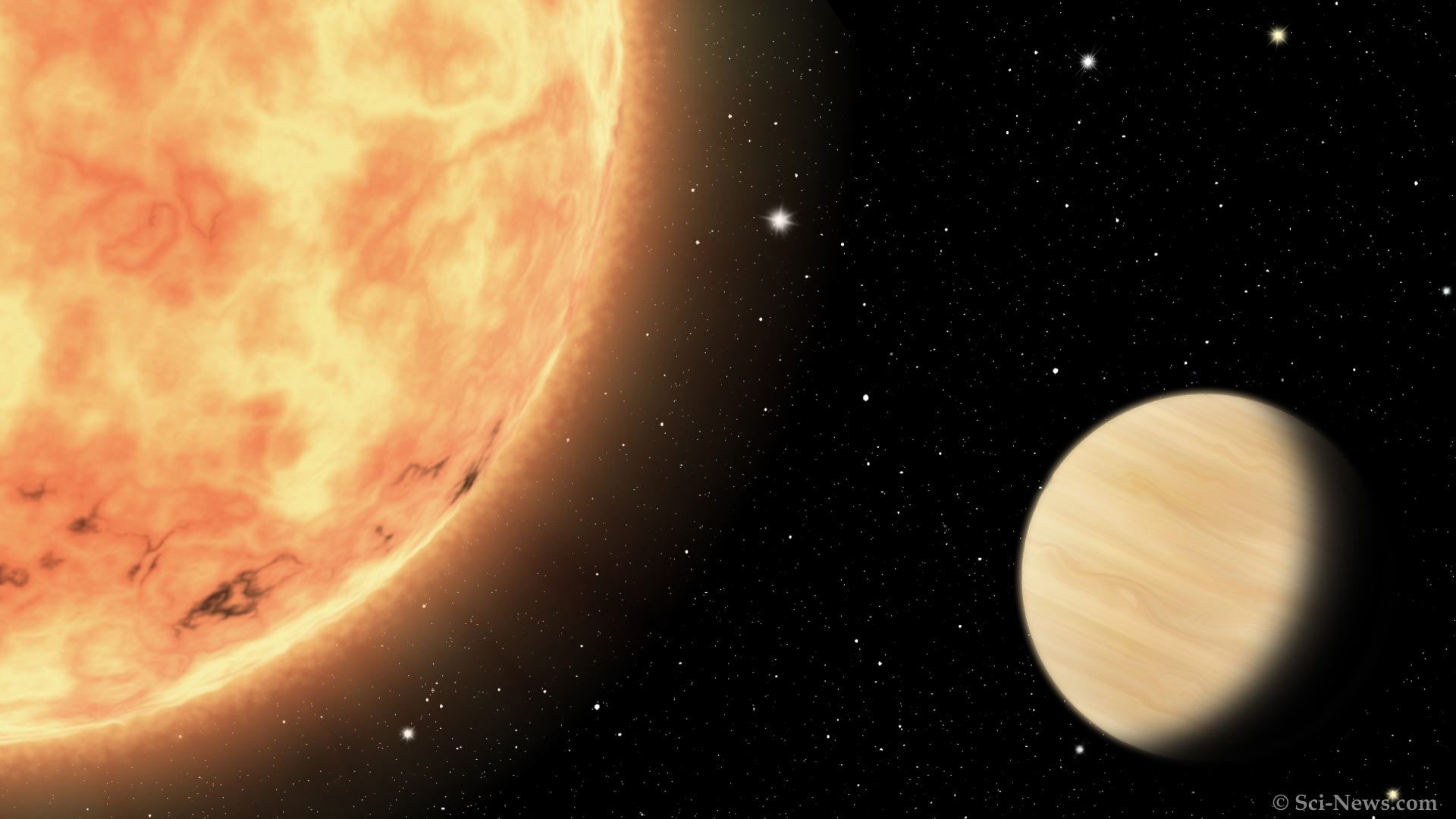
An artist’s impression of a hot gas giant and its host star. Sci-News.com

Astronomers have used data from NASA’s planet-hunting satellite, TESS, to make an unusual discovery: A planet around the size of Neptune orbiting extremely close to its star. Planet TOI-132b has an orbital period of just 2.11 days and its surface temperature is estimated to be a scorching 2,032 degrees Fahrenheit (1,111 degrees Celsius).

Recommended Videos

Hot Neptunes are rare, as although astronomers often find planets the size of Jupiter or slightly larger than Earth in orbits near to their stars, very few planets the size of Neptune have been discovered this close. Astronomers believe this may due to atmospheric loss, as Neptune-sized planets close to their stars lose gases from their atmosphere and are rapidly eroded into smaller Earth-sized planets.

This has lead to a phenomenon that astronomers refer to as the “Neptune desert,” an area around a star in which Neptune-sized planets are almost never found.

“Although Neptune-sized planets orbiting Sun-like stars are fairly abundant, at short orbital periods they are very rare,” researcher Dr. Matias Diaz of the Universidad de Chile and colleagues said in their paper. “A number of early studies indicated a lack of Neptune-sized planets with periods shorter than 2-4 days, and the term ‘Neptune desert’ was coined to explain this paucity.”

With the discovery of TOI-132b, the researchers have located a hot Neptune sitting right on the border of this Neptune desert. The star around which the planet orbits, TOI-132, is a G-type dwarf star which is 6 billion years old, and is slightly smaller and less massive than our sun.

To understand why TOI-132b survived but other hot Neptunes have not, the scientists looked at the properties of the planet. They found that it is heavy, being about 23 times the mass of the Earth and that it has a rocky core, which makes it dense. This helped the atmosphere of the planet to survive, which likely prevented it from being eroded into a smaller shape. “The survival of the planet’s atmosphere can likely be understood based on its large core mass, and also the incompatibility with being composed of either 100% rock or water,” the researchers said in their paper.

The paper is available to read on pre-publication archive arXiv and will be published in the journal Monthly Notices of the Royal Astronomical Society.

Georgina Torbet
Georgina has been the space writer at Digital Trends space writer for six years, covering human space exploration, planetary…
Starlink V5 is here, and it’s lighter, smarter, and far more efficient
The next-generation satellite internet kit promises improved efficiency while maintaining high-speed connectivity.
Starlink V4 vs V5

Not every hardware upgrade needs to be about speed. With Starlink V5, SpaceX is betting that a lighter design and lower power consumption matter just as much. The company has officially introduced its next-generation Starlink V5 kit, featuring a smaller and lighter design with significantly improved power efficiency.

Smaller, lighter, and far more efficient

Read more
Frontier joins the Starlink club with high-speed in-flight internet
The carrier plans to roll out SpaceX's satellite-powered Wi-Fi across its fleet starting in 2027.
Frontier Starlink partnership featured

If there's one thing budget airlines aren't exactly known for, it's great onboard Wi-Fi. In Frontier Airlines' case, it hasn't offered in-flight internet at all. That's about to change. Frontier Airlines has announced a partnership with SpaceX's Starlink to bring high-speed, low-latency internet across its fleet. Installations will begin in early 2027, making Frontier the first ultra-low-cost carrier in the United States to adopt Starlink's satellite-powered connectivity.

Streaming, browsing, and even gaming at 35,000 feet

Read more
OpenAI’s first hardware product sounds more like a companion than a speaker
The AI company is reportedly building a mobile home device that understands context and proactively helps users.
OpenAI press image

For months, rumors have suggested that OpenAI's first hardware product could be a wearable AI device, or perhaps even the beginning of its long-term smartphone ambitions. As it turns out, the company's first gadget may be something far simpler, yet arguably far more ambitious. It will help control smart-home appliances, play media, answer questions, respond to messages, and tap into the range of capabilities offered by OpenAI's ChatGPT, according to people familiar with the matter.

OpenAI's first AI device could end up being a speaker, following plenty of hype that the company is actually working on a wearable AI device and might even launch a smartphone down the road. According to a Bloomberg report, the speaker will serve as a human-like AI companion that will integrate directly with the smart home ecosystem.

Read more