1. Home
  2. Wearables
  3. Apple
  4. Mobile
  5. Tablets
  6. News

Digital Trends may earn a commission when you buy through links on our site. Why trust us?

Apple quietly reduces trade-in value for iPhones, iPads by up to $100

Add as a preferred source on Google
 

Apple quietly slashed the trade-in value for most of its products, including a long list of iPhone, iPad, Mac, and Apple Watch models.

Recommended Videos

The reductions were reported by MacRumors, which revealed that the maximum estimated trade-in values for the Apple products changed overnight. For example, the iPhone XS Max showed an estimated trade-in value of up to $600 on January 9, but on January 10, it was lowered to $500.

According to a list of trade-in prices compiled by MacRumors, the iPhone XS Max received the biggest reduction at $100. However, all iPhone models since the iPhone 6s, the oldest one accepted in the trade-in program, received reductions to their maximum trade-in values from $20 to $80.

Also affected are all the iPad models under the program, namely the iPad mini, iPad Air, iPad, and iPad Pro. The iPad Pro received the biggest reduction at $70, from $290 to $220, while the other models’ maximum values were slashed by either $30 or $40.

Meanwhile, for Mac computers, the iMac Pro took the biggest hit with the maximum value by lowered $90, from $4,240 to $4,150, while the trade-in values of the MacBook Pro, Mac Pro, and Mac mini were not affected. The Apple Watch was the least affected by the changes, as the trade-in values of the Apple Watch Series 1, Series 2, and Series 3, remained the same, while the Apple Watch 4’s value was lowered by only $10, from $110 to $100.

MacRumors reported that the trade-in value reductions were not only spotted on Apple’s online store in the U.S., but also in other countries and regions such as the U.K. and Germany.

Apple has not publicly announced the changes, but the lower trade-in values are already in effect, as seen on the program page on the official Apple website.

Apple has heavily promoted its trade-in program on its website and at its retail stores, with CEO Tim Cook recently claiming that a third or more of customers who visit Apple’s retail stores end up trading in an older device for a newer model. With the increasing popularity, perhaps Apple is trying to squeeze out a bit more profit from the program, or it may be because of new calculations for the depreciation of the device values.

Aaron Mamiit
Aaron received an NES and a copy of Super Mario Bros. for Christmas when he was four years old, and he has been fascinated…
This smart ring makes a blood pressure promise Apple and Oura still won’t
The $399 Signal Ring provides actual systolic and diastolic readings, but it’s launching as a wellness device without FDA clearance
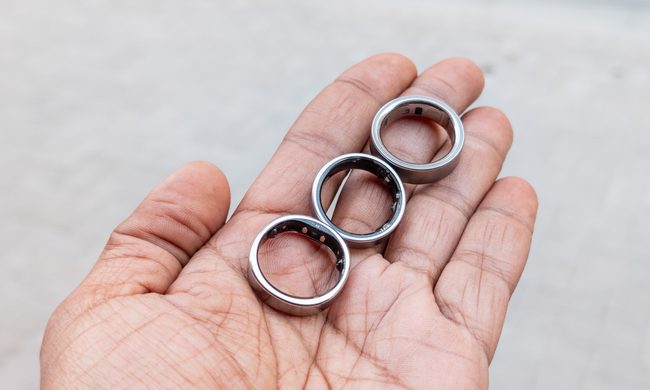
Oura Ring 4, Galaxy Ring and RingConn Gen 2 in the palm of a hand

Vital Signals has unveiled a $399 smart ring that goes further than Apple and Oura currently dare. The Signal Ring displays numerical blood pressure readings without requiring an arm cuff for initial or recurring calibration.

Bloomberg reports that preorders open July 16, with shipping scheduled to begin in October. The ring can collect readings during the day and overnight, then display the results through an iOS or Android app.

Read more
HTC’s smart glasses are apparently coming to the US, but HTC hasn’t said so
Amazon briefly listed the VIVE Eagle for a September 1 launch, while HTC still says the $499 glasses are only available in Taiwan
A woman wearing the HTC Vive Eagle smart glasses

HTC’s VIVE Eagle smart glasses could finally be heading to the US. Apparently, Amazon got the memo before HTC was ready to share it.

Notebookcheck spotted six versions available for preorder at $499, each carrying a September 1 release date. Amazon has since pulled the pages, so new orders are closed and anyone who already placed one is left wondering whether it still counts.

Read more
Don’t expect smartwatches and fitness bands with replaceable batteries anytime soon
Turns out even the EU thinks your smartwatch is too small for a battery swap.
Wristwatch, Arm, Body Part

The EU has a habit of pushing tech companies to adopt meaningful changes in their product. It's the reason your iPhone finally has a USB-C port, and it's also why companies now have to offer spare parts and repair support for electronics for several years after launch. So naturally, many of us assumed wearables were next in line for mandatory swappable batteries. Turns out, the EU just went the other way.

So what did the EU announce?

Read more