1. Home
  2. Space
  3. Emerging Tech
  4. News

Exoplanet discoveries include two super-Earths that could support life

Add as a preferred source on Google

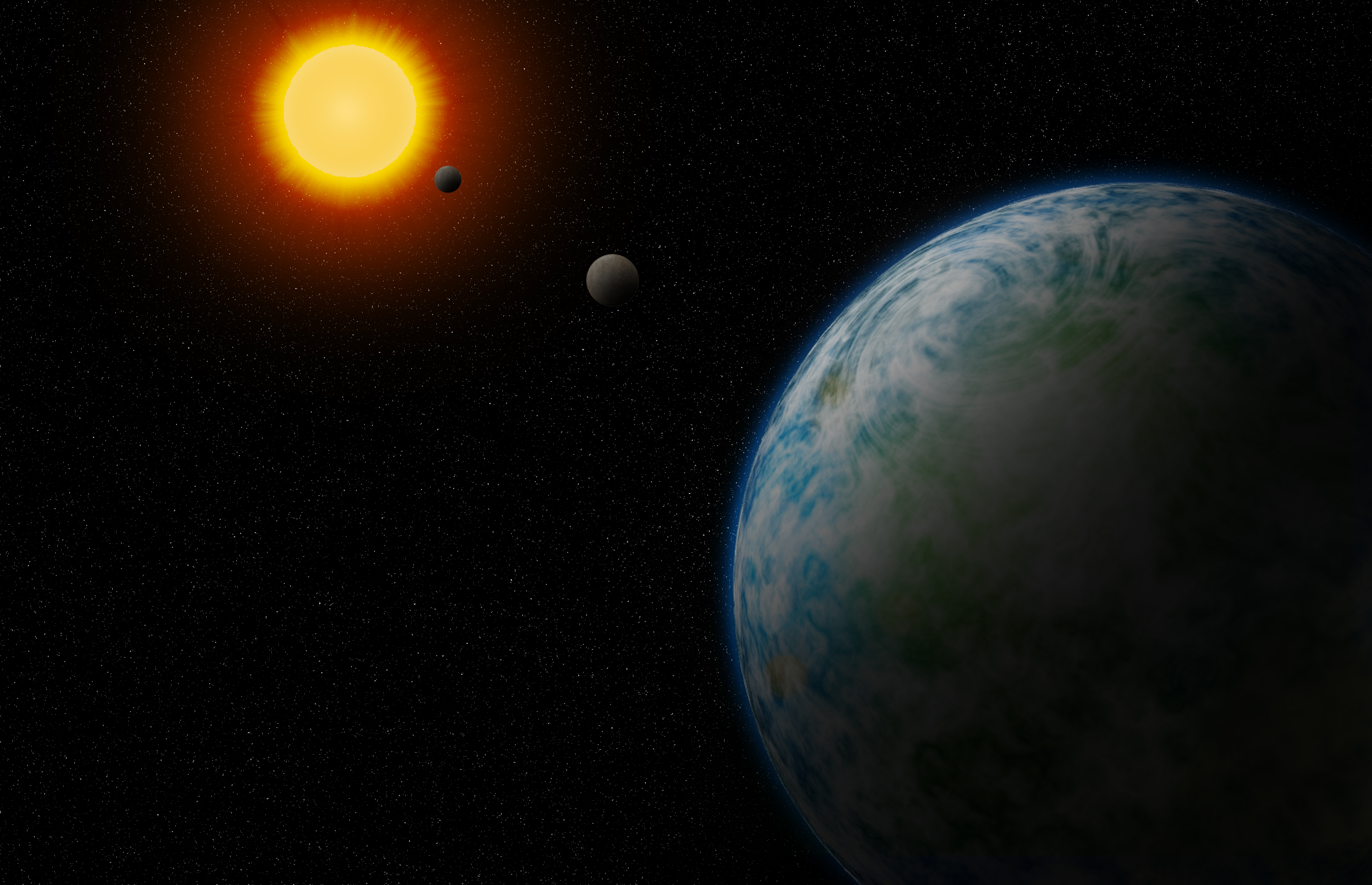
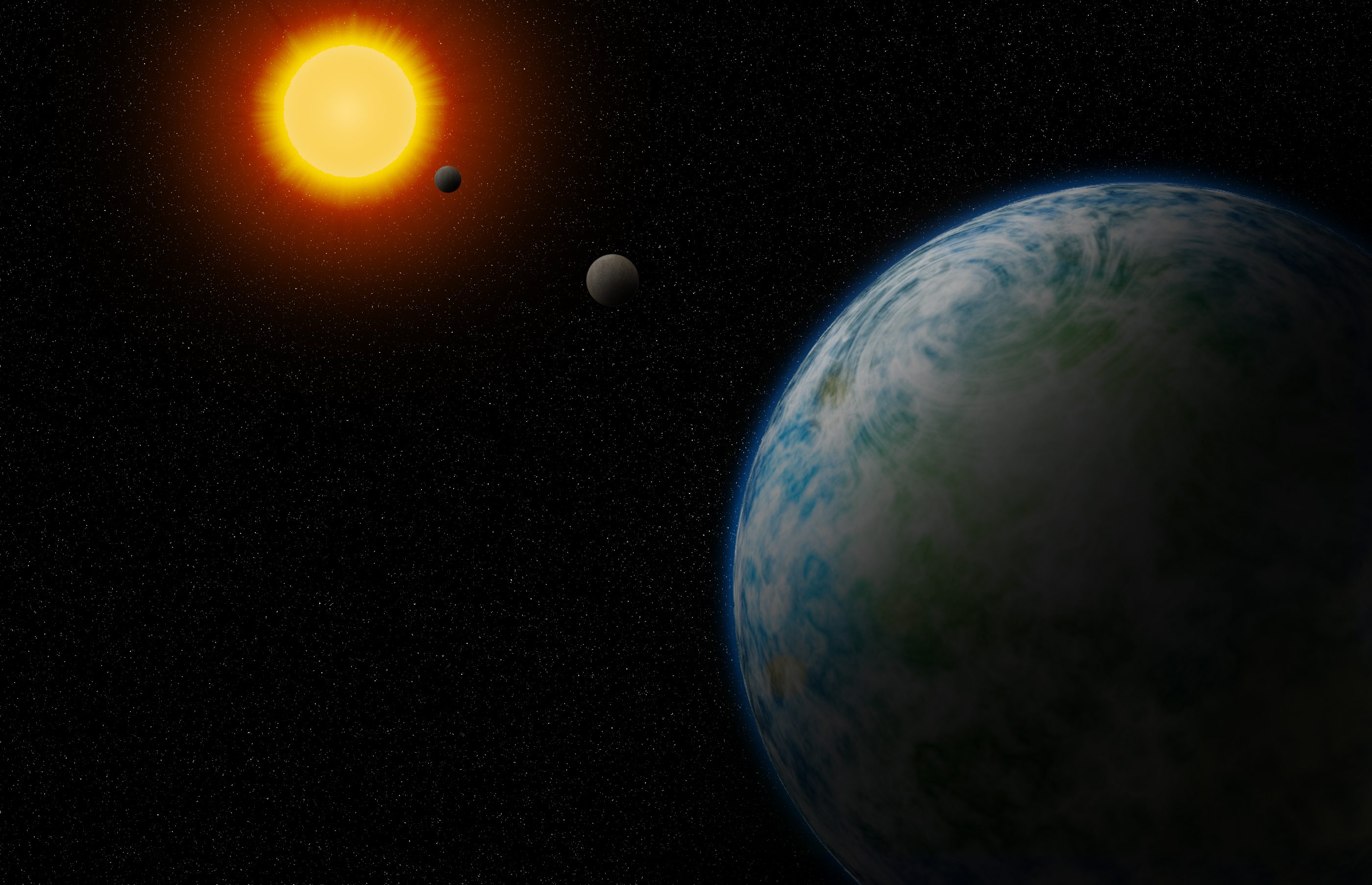
Two new exoplanets have been discovered outside of our galaxy that have the potential to support life. 

A new study published on January 8 in The Astrophysical Journal Supplement Series reports that GJ180 d and GJ229A c are “super-Earths” and are located 19 light-years and 39 light-years from Earth, respectively, which in space terms, is relatively close to our galaxy. The exoplanets were discovered by a team led by Carnegie Institution of Washington scientists, Fabo Feng and Paul Butler. 
Robin Dienel

The exoplanets orbit two red dwarf stars, which are cooler and dimmer than our sun, meaning that liquid could possibly be stable on their surfaces. The planets are located in a “habitable zone,” which is the region around a star in which liquid water could potentially pool on the surface of a rocky planet.

Recommended Videos

GJ180 d, in particular, is especially promising to scientists since it is not tidally locked. The exoplanet is slightly bigger than Earth and orbits its red dwarf far enough to support life. The planet is 7.5 times our planet’s mass and has an orbital period of 106 days. 

“GJ180 d is the nearest temperate super-Earth to us that is not tidally locked to its star, which probably boosts its likelihood of being able to host and sustain life,” Feng said in a press release about the study.

The GJ229A c exoplanet also has the potential to be habitual due to its proximity to its dwarf star. The planet is about 7.9 times Earth’s mass with 122 orbital days. 

“Our discovery adds to the list of planets that can potentially be directly imaged by the next generation of telescopes,” Feng added.  “Ultimately, we are working toward the goal of being able to determine if planets orbiting nearby stars host life.”

NASA confirmed the existence of more than 4,000 planets outside our solar system. The sheer number of that is impressive, but even more so if you take into consideration that before 1992, we couldn’t find any exoplanets. 

Digital Trends reached out to NASA for further information on the GJ180 d and GJ229A c exoplanets and their significance in space research. We will update this story if we hear back.

Allison Matyus
Former Digital Trends Contributor
Allison Matyus is a general news reporter at Digital Trends. She covers any and all tech news, including issues around social…
You can now walk through space and gaze into a black hole at this VR exhibit
Smithsonian Starstruck lets you drift past dying stars and see the origin point of the universe for as little as $18 a person.
Smithsonian Starstruck featured

Most planetarium shows ask you to sit still and look up. The Smithsonian's new VR exhibit takes a different approach, letting visitors walk through the vast expanse of the universe, drifting past stars, planets, and a black hole to get a physical sense of its true scale.

A $29 ticket to the edge of the galaxy

Read more
Scientists warn Elon Musk’s orbital data centers could blind Earth’s biggest telescopes
A new ESO study suggests millions of satellites could make parts of the night sky effectively unusable for astronomy.
One hour of satellites over the northern Atacama Desert in Chile (October 2025)

The race to blanket Earth with satellite internet has unlocked faster connectivity for millions. But according to the European Southern Observatory (ESO), it could also make one of humanity's oldest hobbies, and one of its most important sciences, a whole lot harder. The organization warns that the rapid growth of satellite mega-constellations could severely disrupt observations made by some of the world's most powerful telescopes.

Astronomers say the night sky is reaching its limit

Read more
Amazon’s Starlink rival just crossed a major milestone, but don’t expect perfect internet just yet
Amazon finally showed up to the space internet party
Amazon Leo satellite layout across all launch vehicles

Amazon has taken a significant step toward launching its long-awaited satellite internet service. Following its latest rocket launch, the company now has 396 Project Kuiper satellites in low-Earth orbit, enough to begin offering continuous service across select regions. The milestone keeps Amazon on track for its previously announced goal of launching commercial service by mid-2026.

https://twitter.com/Weber44Chris/status/2072575499461963938?ref_src=twsrc%5Etfw%7Ctwcamp%5Etweetembed%7Ctwterm%5E2072575499461963938%7Ctwgr%5Ed727a1b853cbf519585e7bf2655943afb2f91bb8%7Ctwcon%5Es1_&ref_url=https%3A%2F%2Fwww.theverge.com%2Fscience%2F960563%2Famazon-leo-service-tipping-point

Read more