1. Home
  2. Space
  3. News

Virgin Galactic completes second suborbital test flight from Spaceport America

Add as a preferred source on Google
Mission Recap: Virgin Galactic's SpaceShipTwo Unity completes second flight from Spaceport America.

Virgin Galactic has successfully performed a second test flight of its SpaceShipTwo Unity spacecraft from Spaceport America. The company aims to get ahead of the space tourism curve by offering suborbital flights which will take passengers to the edge of space, and this latest test flight brings it one step closer to making that a reality.

Recommended Videos

The company completed its first test flight from Spaceport America last month, practicing starting trips from the same location that will be used by paying passengers. The spaceport is located in Sierra County, New Mexico, and was created specifically for use by commercial entities, allowing the launch of spacecraft that take off either vertically or horizontally.

For this test flight, SpaceShipTwo Unity was piloted by Mark ‘Forger’ Stucky and Michael “Sooch” Masucci, both of whom have previously piloted the craft, and performed a glide flight. This is where the craft was taken into the air by a carrier aircraft, VMS Eve, and released at an altitude of 51,000 feet.

SpaceShipTwo Unity then glided through the atmosphere, reaching a speed of Mach 0.85, and performed a series of maneuvers that allowed the collection of performance data before the Unity landed on a runway back at Spaceport America.
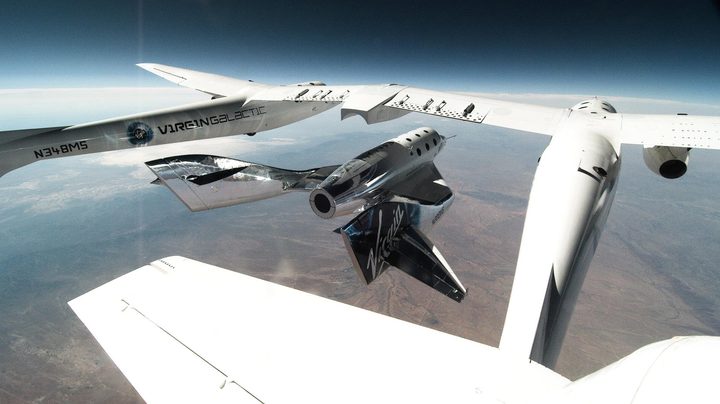
SpaceShipTwo Unity Released From VMS Eve for Second Glide Flight in New Mexico
SpaceShipTwo Unity Released From VMS Eve for Second Glide Flight in New Mexico Virgin Galactic

George Whitesides, CEO of Virgin Galactic and The Spaceship Company said: “I am thrilled with the team’s hard work to complete today’s test flight successfully. It was an important test that, pending data review, means we can now start preparing the vehicles for powered flight. Our focus for this year remains unchanged on ensuring the vehicles and our operations are prepared for long-term, regular commercial spaceflight service.”

The company has said its next steps are to analyze the data from this test flight and then perform a powered test flight of the craft.
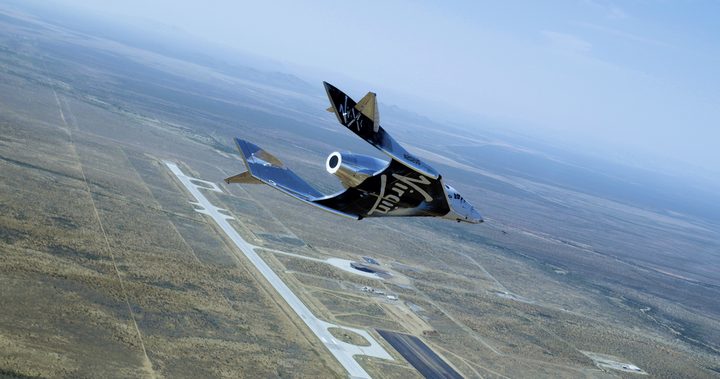
SpaceShipTwo Unity Second Glide Flight over Spaceport America
SpaceShipTwo Unity Second Glide Flight over Spaceport America Virgin Galactic

Virgin Galactic has an interest in going beyond suborbital flights in the future as well. Last week, the company announced it is entering a partnership with NASA to fly space tourists to the International Space Station in the future.

These trips will require the use of a different spacecraft than the SpaceShipTwo, which is not capable of orbital flight, but the company has not yet announced its plans for which vehicle it will use to carry passengers into orbit.

Georgina Torbet
Georgina has been the space writer at Digital Trends space writer for six years, covering human space exploration, planetary…
Amazon’s Starlink rival just crossed a major milestone, but don’t expect perfect internet just yet
Amazon finally showed up to the space internet party
Amazon Leo satellite layout across all launch vehicles

Amazon has taken a significant step toward launching its long-awaited satellite internet service. Following its latest rocket launch, the company now has 396 Project Kuiper satellites in low-Earth orbit, enough to begin offering continuous service across select regions. The milestone keeps Amazon on track for its previously announced goal of launching commercial service by mid-2026.

https://twitter.com/Weber44Chris/status/2072575499461963938?ref_src=twsrc%5Etfw%7Ctwcamp%5Etweetembed%7Ctwterm%5E2072575499461963938%7Ctwgr%5Ed727a1b853cbf519585e7bf2655943afb2f91bb8%7Ctwcon%5Es1_&ref_url=https%3A%2F%2Fwww.theverge.com%2Fscience%2F960563%2Famazon-leo-service-tipping-point

Read more
Amazon’s Starlink rival is set to launch satellite internet later this year
After launching nearly 400 satellites, Amazon says its Leo broadband service will go live later this year.
Atlas V launches 29 Amazon Leo satellites from Cape Canaveral, Florida

Amazon's long-awaited answer to SpaceX's Starlink is finally nearing liftoff. According to an exclusive report from Reuters, the company plans to begin offering its Leo satellite internet service later this year, after its latest rocket launch pushed the constellation to 394 satellites in orbit.

The pieces are finally falling into place for Project Kuiper

Read more
NASA is investing $590 million in private contractors to build humanity’s first Moon outpost
NASA is counting on private companies to land its Moon Base dream.
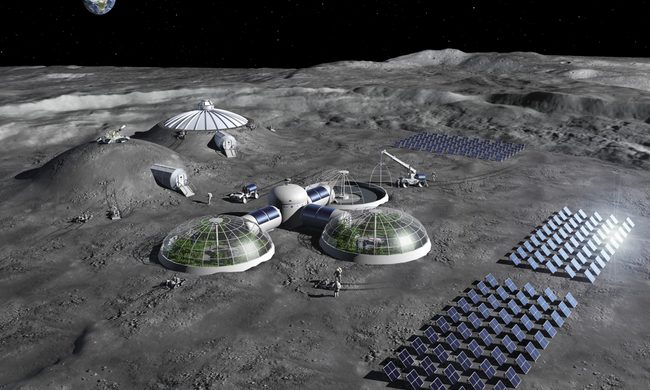
Artist impression of a Moon Base concept, with solar arrays for energy generation, greenhouses for food production, and habitats shielded with regolith.

Building a permanent base on the Moon sounds like science fiction, but NASA is making it feel a lot more real. The agency just handed $590 million in contracts to three private companies for four uncrewed lunar lander missions launching in late 2028.

These missions are part of Phase 1 of NASA's broader $30 billion Moon Base program, which needs to deliver landers, rovers, and scientific cargo up there before astronauts eventually move in. These efforts are closely tied NASA's Artemis program, which sent humans on a lunar flyby in April for the first time since the Apollo era.

Read more