1. Home
  2. Space
  3. News

Venus and Earth used to be twins. NASA wants to learn why they diverged

Add as a preferred source on Google

NASA wants to send a mission to Venus. Proposed to launch in 2026, the Venus Emissivity, Radio Science, InSAR, Topography & Spectroscopy, or VERITAS mission, aims to investigate how Earth and Venus, which started off very similar, evolved to be so very different today.

“Venus is like this cosmic gift of an accident,” Suzanne Smrekar, principal investigator of VERITAS at NASA’s Jet Propulsion Laboratory (JPL) explained in a statement. “You have these two planetary bodies — Earth and Venus — that started out nearly the same but have gone down two completely different evolutionary paths, but we don’t know why.”
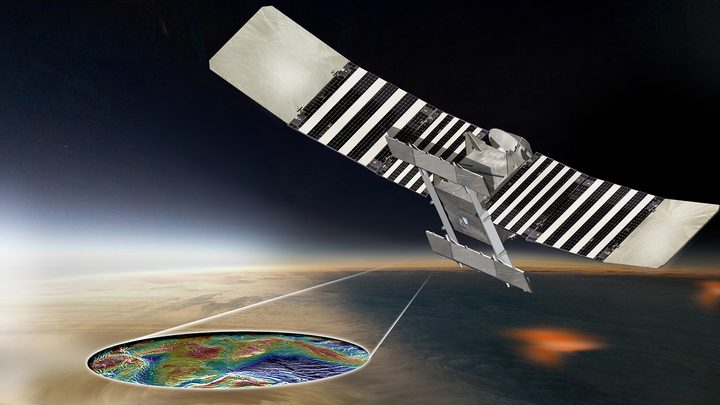
This artist's concept shows the proposed VERITAS spacecraft using its radar to produce high-resolution maps of Venus' topographic and geologic features.
This artist’s concept shows the proposed VERITAS spacecraft using its radar to produce high-resolution maps of Venus’ topographic and geologic features. NASA/JPL-Caltech

To learn about how the two planets diverged, VERITAS would gather data on the geology of Venus, looking at how its tectonic plates move over the planet’s mantle. It would also capture topographic maps of the surface to show features such as faults and plateaus, which could give scientists data about how Earth’s equivalent continents formed.

Recommended Videos

Another big topic of study for the mission is Venus’s abundant volcanic activity. “Determining whether Venus is actively undergoing volcanic activity and understanding what process is driving it is one of the really exciting questions I’d love to see answered,” VERITAS team members Jennifer Whitten said in the statement.

The craft would investigate volcanic activity using a spectrometer to identify rocks that were formed recently from magma coming up from beneath the crust. Analyzing these recently formed rocks would allow scientists to see more about the chemical processes going on under the planet’s surface without having their results affected by the time the rocks spent sitting exposed.
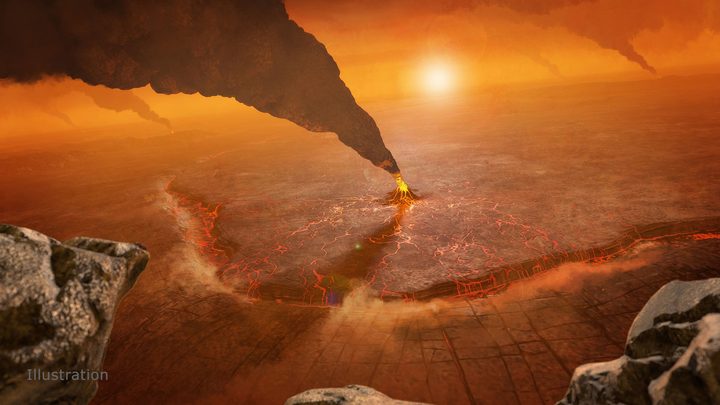
An artist's concept of active volcanos on Venus
An artist’s concept of active volcanos on Venus, depicting a subduction zone where the foreground crust plunges into the planet’s interior at the topographic trench. NASA/JPL-Caltech/Peter Rubin

One big open question about Venus is whether it still has large quantities of water in its interior. “To unwrap the mysteries of Venus we have to look under the hood at Venus’ interior; it is the engine for global geologic and atmospheric evolution,” Smrekar said. “Are Venus and Earth fundamentally unique worlds? Or are the differences between these ‘twins’ only cosmetic? Answering this question is key to understanding what makes other rocky planets habitable and, ultimately, emerge with life.”

The VERITAS mission is part of NASA’s Discovery Program which invites proposals for innovative ways to investigate objects in our solar system, including planets like Venus. NASA will make a decision on which of the proposed Discovery missions will be fully funded in 2021.

Georgina Torbet
Georgina has been the space writer at Digital Trends space writer for six years, covering human space exploration, planetary…
Space is becoming Bezos and Musk’s next data center site, and we have every reason to worry
The AI boom is coming for the night sky
How Vast's space station will look in orbit.

AI data centers already consume vast amounts of electricity and water on Earth, so Silicon Valley has begun looking somewhere considerably more spacious... literally.

Elon Musk's SpaceX and Jeff Bezos' Blue Origin, along with several other companies, have proposed enormous constellations of satellites designed to operate as orbital data centers. However, environmental groups and former space officials are now warning that putting them into orbit at the proposed scale could have severe consequences for Earth's atmosphere and the night sky.

Read more
The first possible exomoon is here, and it makes our Moon look hilariously tiny
Scientists may have found the first exomoon, except this one is the size of Jupiter
This artist’s concept depicts a potential volcanic moon between the exoplanet WASP-49 b, left, and its parent star. New evidence indicating that a massive sodium cloud observed near WASP-49 b is produced by neither the planet nor the star has prompted researchers to ask if its origin could be an exomoon.

We have already discovered more than 6,000 planets outside of our immediate neighborhood. Yet, finding a moon orbiting one of those distant worlds has proved considerably harder. Astronomers may finally have something close to the real deal, but this particular object stretches the word “moon” almost beyond recognition.

Using the European Southern Observatory’s Very Large Telescope in Chile, researchers detected strong evidence for a moon-like object in the CD-35 2722 system. Further observations are still necessary to confirm the discovery, but it could become the first confidently detected natural satellite outside our solar system. There is still one tiny complication though. This moon is apparently massive.

Read more
China’s answer to SpaceX’s reusable rockets literally catches boosters in a net
SpaceX catches boosters on legs. China just used a net.
Ammunition, Missile, Weapon

SpaceX's playbook for recovering a rocket booster generally involves legs, a precisely controlled vertical landing, and either a concrete pad or a drone ship. 

China just managed to pull off something similar, but in a slightly different way, and on July 10, it tested the method as well.

Read more