1. Home
  2. Space
  3. News

NASA preps touchdown on an asteroid 207 million miles away

Add as a preferred source on Google
OSIRIS-REx TAG Trailer

NASA is preparing to pull off a daring heist: Next month the robotic spacecraft OSIRIS-REx will touch down on the surface of asteroid Bennu and collect a sample, aiming to precisely touch this tiny asteroid just 260 meters wide and which is currently around 207 million miles away from Earth.

Recommended Videos

The aim of the mission is to collect at least 60 grams of asteroid rock in an event called Touch-And-Go (TAG) and return it to Earth for study, which would be the first time NASA has collected an asteroid sample. Analyzing the composition of primitive asteroids like Bennu could give clues to how the solar system developed and even about the origin of life on Earth.
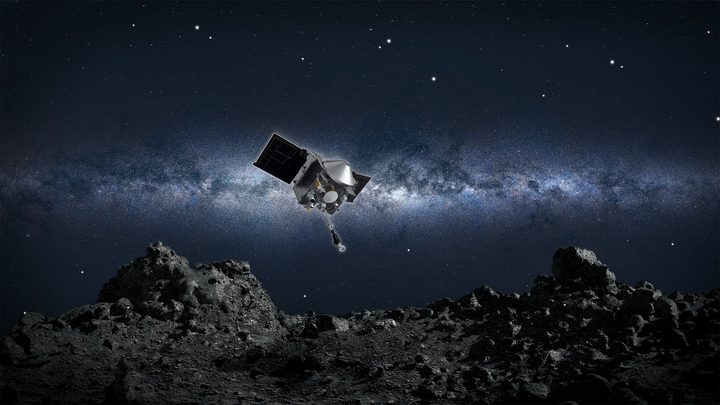
This artist’s concept shows NASA’s OSIRIS-REx spacecraft descending towards asteroid Bennu to collect a sample of the asteroid’s surface.
This artist’s concept shows NASA’s OSIRIS-REx spacecraft descending towards asteroid Bennu to collect a sample of the asteroid’s surface. NASA/Goddard/University of Arizona

But it’s no easy task to scoop up a sample from an object that’s so far away. Due to the distance from Earth, it’s not possible to control the OSIRIS-REx craft in real-time. So on the day of the event, October 20, it will have to act autonomously to maneuver and approach the asteroid using a pre-determined sequence.

“Because the spacecraft and Bennu are approximately 207 million miles (334 million km) from Earth during TAG, it will take about 18.5 minutes for signals to travel between them,” NASA explains in a blog post. “This time lag prevents the live commanding of flight activities from the ground during the TAG event, so the spacecraft is designed to perform the entire sample collection sequence autonomously. Prior to the event’s start, the OSIRIS-REx team will uplink all of the commands to the spacecraft and then send a ‘GO’ command to begin.”

The process of collecting the sample will take 4.5 hours, and NASA has been going through practice runs ahead of the real touchdown next month. The agency says it’s ready to go ahead with the touchdown despite the challenges of coronavirus which have forced the mission team to work remotely.

On the day of the event, a few key personnel will monitor from the main Mission Support Area, while other team members will be at other locations to check whether the touchdown has been successful and to confirm whether a sufficiently large sample has been collected.

Georgina Torbet
Georgina has been the space writer at Digital Trends space writer for six years, covering human space exploration, planetary…
Amazon’s Starlink rival just crossed a major milestone, but don’t expect perfect internet just yet
Amazon finally showed up to the space internet party
Amazon Leo satellite layout across all launch vehicles

Amazon has taken a significant step toward launching its long-awaited satellite internet service. Following its latest rocket launch, the company now has 396 Project Kuiper satellites in low-Earth orbit, enough to begin offering continuous service across select regions. The milestone keeps Amazon on track for its previously announced goal of launching commercial service by mid-2026.

https://twitter.com/Weber44Chris/status/2072575499461963938?ref_src=twsrc%5Etfw%7Ctwcamp%5Etweetembed%7Ctwterm%5E2072575499461963938%7Ctwgr%5Ed727a1b853cbf519585e7bf2655943afb2f91bb8%7Ctwcon%5Es1_&ref_url=https%3A%2F%2Fwww.theverge.com%2Fscience%2F960563%2Famazon-leo-service-tipping-point

Read more
Amazon’s Starlink rival is set to launch satellite internet later this year
After launching nearly 400 satellites, Amazon says its Leo broadband service will go live later this year.
Atlas V launches 29 Amazon Leo satellites from Cape Canaveral, Florida

Amazon's long-awaited answer to SpaceX's Starlink is finally nearing liftoff. According to an exclusive report from Reuters, the company plans to begin offering its Leo satellite internet service later this year, after its latest rocket launch pushed the constellation to 394 satellites in orbit.

The pieces are finally falling into place for Project Kuiper

Read more
NASA is investing $590 million in private contractors to build humanity’s first Moon outpost
NASA is counting on private companies to land its Moon Base dream.
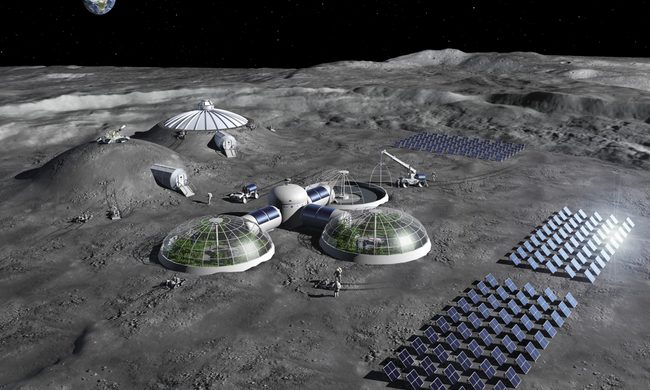
Artist impression of a Moon Base concept, with solar arrays for energy generation, greenhouses for food production, and habitats shielded with regolith.

Building a permanent base on the Moon sounds like science fiction, but NASA is making it feel a lot more real. The agency just handed $590 million in contracts to three private companies for four uncrewed lunar lander missions launching in late 2028.

These missions are part of Phase 1 of NASA's broader $30 billion Moon Base program, which needs to deliver landers, rovers, and scientific cargo up there before astronauts eventually move in. These efforts are closely tied NASA's Artemis program, which sent humans on a lunar flyby in April for the first time since the Apollo era.

Read more