Lenovo has announced a sweeping update to its ThinkPad X and T-series line of laptops, which include select models with 1080p webcams.
These higher-resolution webcams are a first for ThinkPads, but also count them among the very few FHD options currently available. The refreshed models include the second generation of ThinkPad X13, X13 Yoga, T14S, T14, and T15. Among those, however, only the X13 and T14S feature the new camera upgrade as an option. Even so, jumping up to 1080p is only available in upgrade configurations, not in the base models.
Of course, there’s much more to these new upgrades than just improved webcams. Let’s break it down, starting with the ThinkPad X-series.
Lenovo ThinkPad X13 and X13 Yoga Gen 2
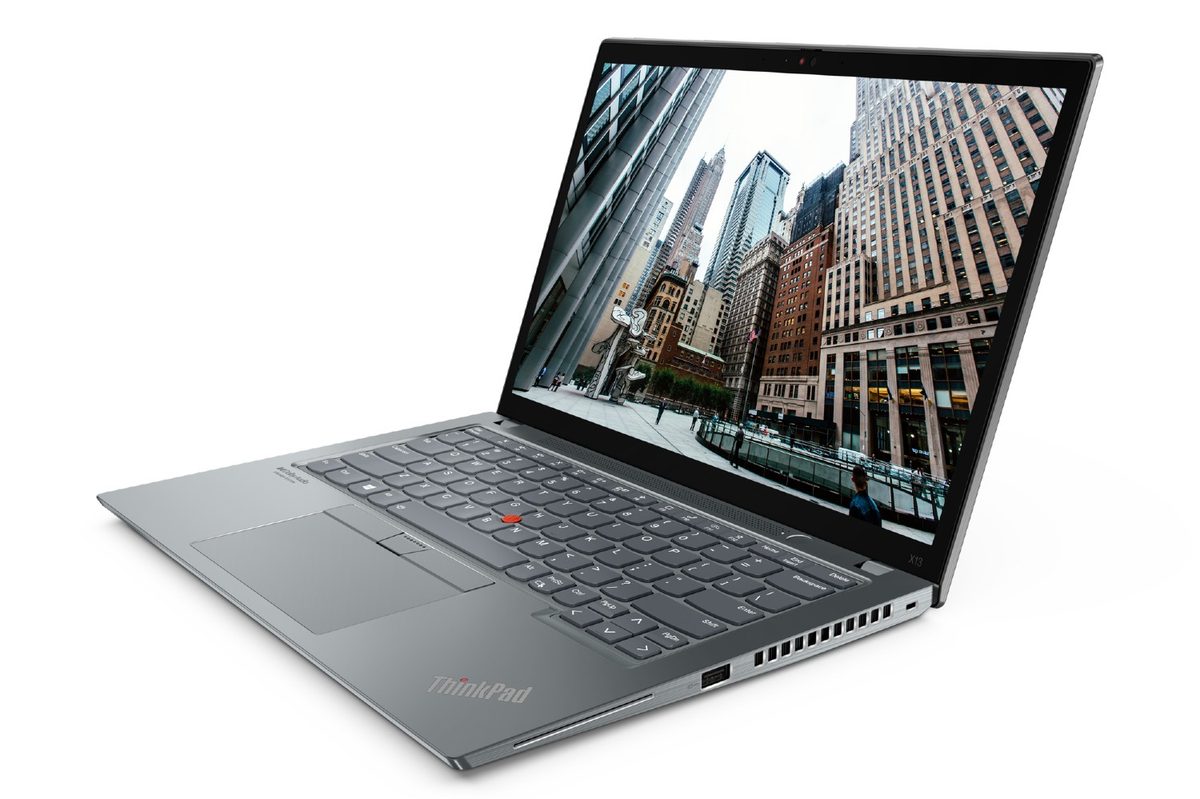
The X13 and X13 Yoga are the company’s two smallest ThinkPads, which use a 13-inch screen rather than a 14-inch. In the latest generation, they also feature a wider touchpad that now has a smoother tracking surface, as well as a relocated fingerprint scanner that’s now built into the power button.
These two models have both moved to a 16:10 aspect ratio, matching what the company did last month with its ThinkPad X1 flagship line. This means taller screens, more pixels, less wasted space, and thinner bezels. It was one of our biggest complaints about the original ThinkPad X13, which included thick, outdated bezels.
They also all include a new color and material option, an aluminum “storm grey” color. These aluminum ThinkPads feature CNC machined sidewalls, which offer a slight shine to the otherwise matte finish.
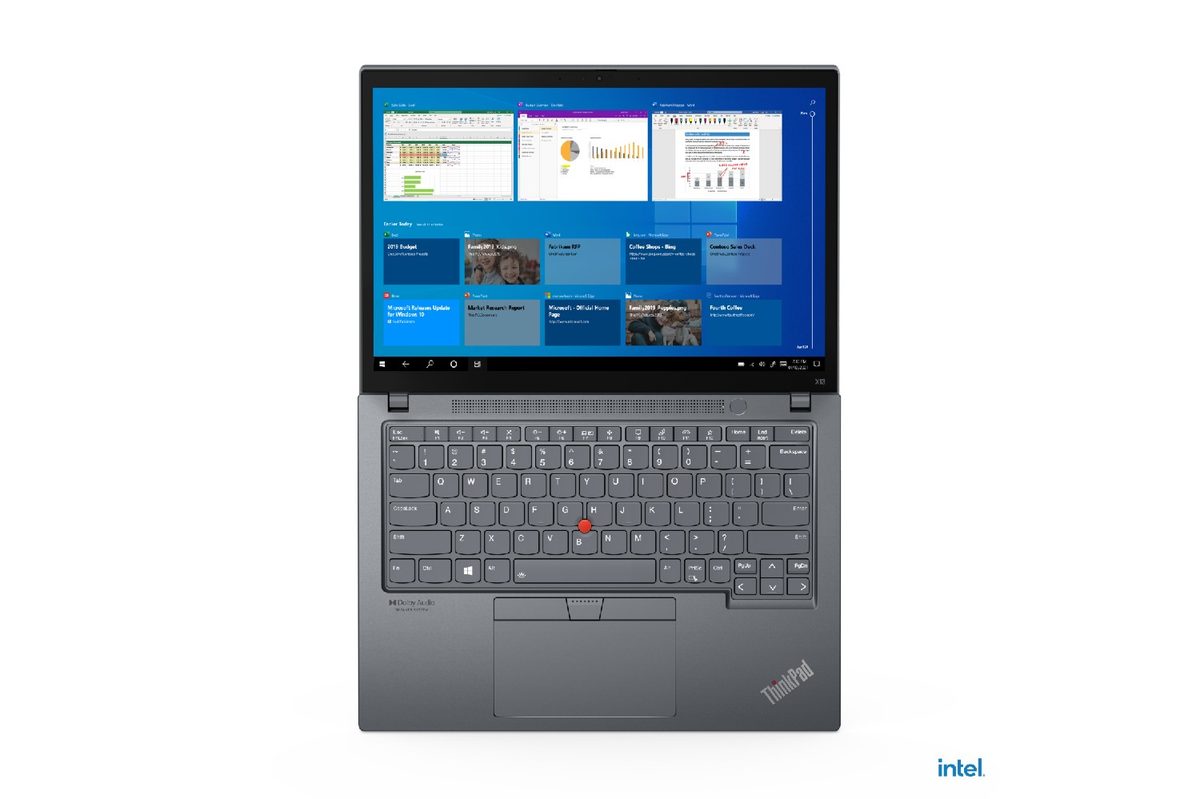
While the X13 Yoga has just a 720p camera, it does include both a 360-degree hinge and a built-in stylus, housed in its own slot by the keyboard. Lenovo says that while the clamshell models continue to outsell the 2-in-1s, the company continues to see year-over-year growth in its “Yoga” category.
The X13 and X13 Yoga both include options for the latest Intel 11th-gen vPro processors or Ryzen 5000 Pro, as well support for either 4G LTE or 5G connectivity.
The X13 weighs 2.62 pounds and is 0.72 inches thick, while the X13 Yoga is 2.65 pounds and 0.61 inches thick. Both models can be configured with up to 32GB of RAM (at 4,266MHz), 2TB of SSD storage, and up to a Core i7 or Ryzen 7 processor.
Both the X13 and X13 Yoga come with a range of display options, ranging from a non-touch 1920 x 1200 up to the “low-power” 2560 x 1600 resolution.
The AMD version of the ThinkPad X13 will be available starting at $1,139, while the Intel starts at $1,299.
Lenovo ThinkPad T14s, T14, and T15 Gen 2
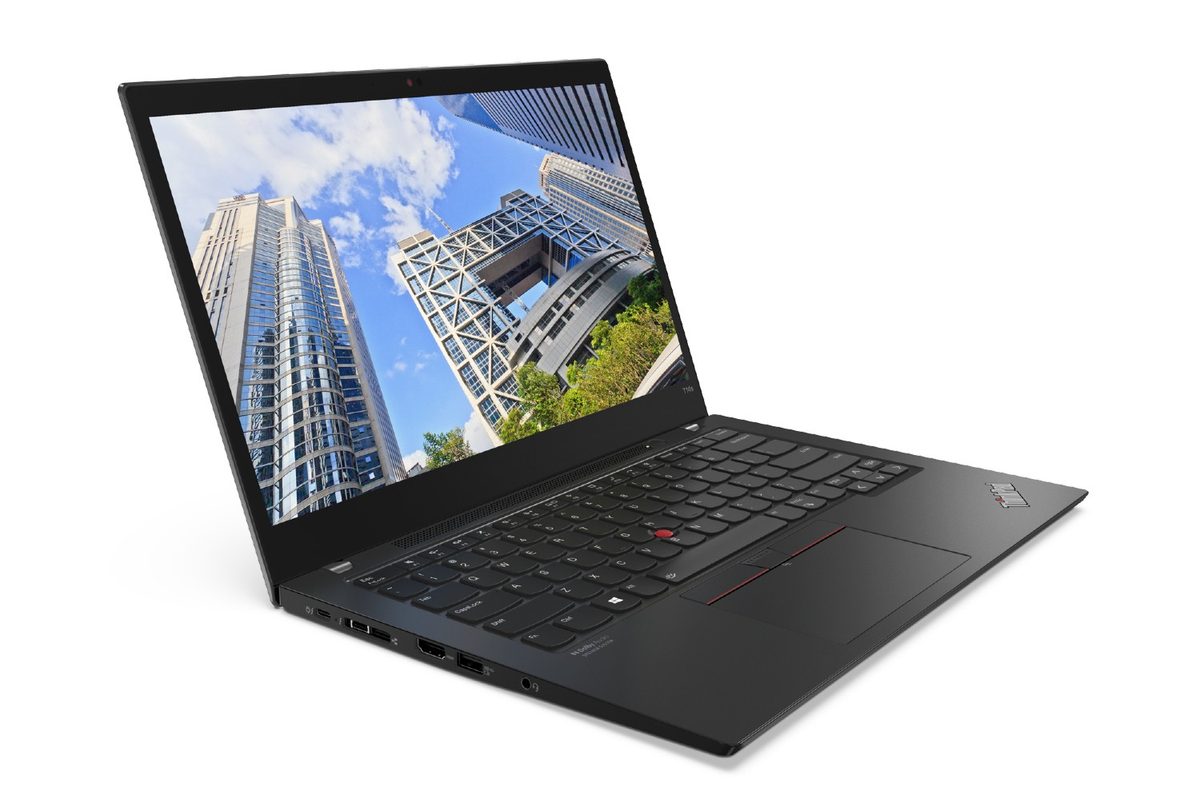
The T-series includes larger, bulkier ThinkPads, though the T14s is clearly the most modern-looking of the bunch. The “s” stands for slim, as the T14s is just 0.63 inches thick and 2.8 pounds compared to the 0.7-inch thickness and 3.23 pounds of the standard T14.
The T14s is also the only T-series laptop to feature some of the premium features coming to the X13, such as the fingerprint sensor built into the power button and support for 5G.
Like the X-series, Lenovo has fully adopted AMD Ryzen 5000 Pro as an alternative to the Intel vPro models. Outside of differences in processing power, the only feature difference is Thunderbolt 4, which is still an exclusive Intel technology. The Intel models also include Wi-Fi 6E, a faster connectivity standard that Ryzen has yet to adopt.
The T14 and T15 include the latest Nvidia MX450 discrete graphics. These pale in comparison to the RTX-level graphics found in more powerful 15-inch laptops like the Dell XPS 15 or ThinkPad X1 Extreme, but at least provide a small bump in graphical horsepower over integrated options.
The T-series all include models with either 1080p or 4K resolutions, as well as options like touchscreens, brighter displays (up to 500 nits), or one-watt panels for better battery life.
The AMD version of the T14s starts at $1,279, while the Intel version is $1,499. It’s a similar price discrepancy with the T14, which has the cheaper AMD model for $1,159 and the Intel version for $1,379. The T15 also starts at $1,379.
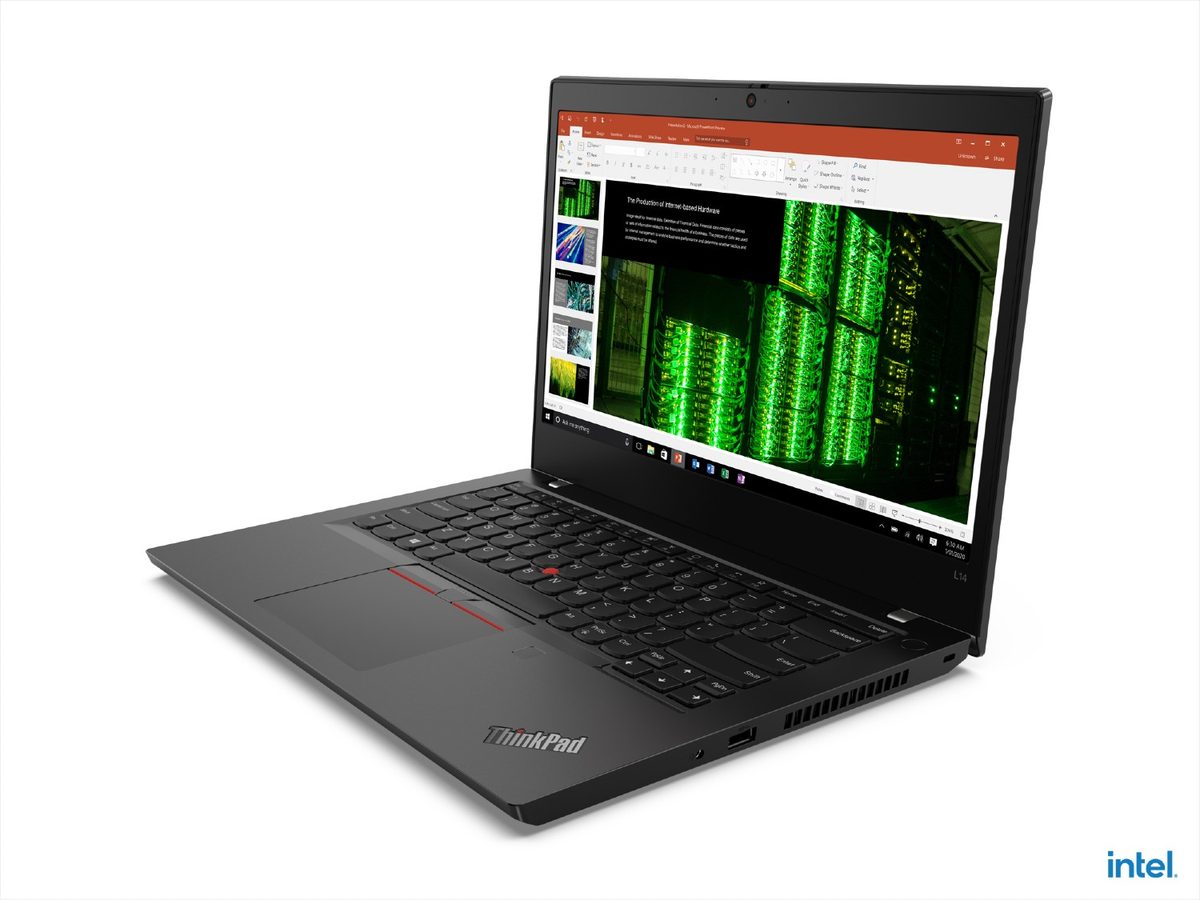
The company also announced a refresh for its budget-oriented ThinkPads, the L14 and L15. These now have the latest processor options and updated Nvidia MX450 graphics. The L14 and L15 both start at $689.
Lastly, Lenovo rolled out a small update to the P14s and P15s, its professional workstation level laptops. It also features the latest processors from AMD and Intel, the Nvidia T500 discrete graphics card, and two Thunderbolt 4 ports (on the Intel model). The P14s starts at $1,169 and the P15s starts at $1,389.
All versions of these new ThinkPads that feature AMD processors are due out in May, while the Intel models will ship in March.