  1. Home
  2. Space
  3. News

Hubble captures a dusty nursery where new baby stars are being born

Add as a preferred source on Google

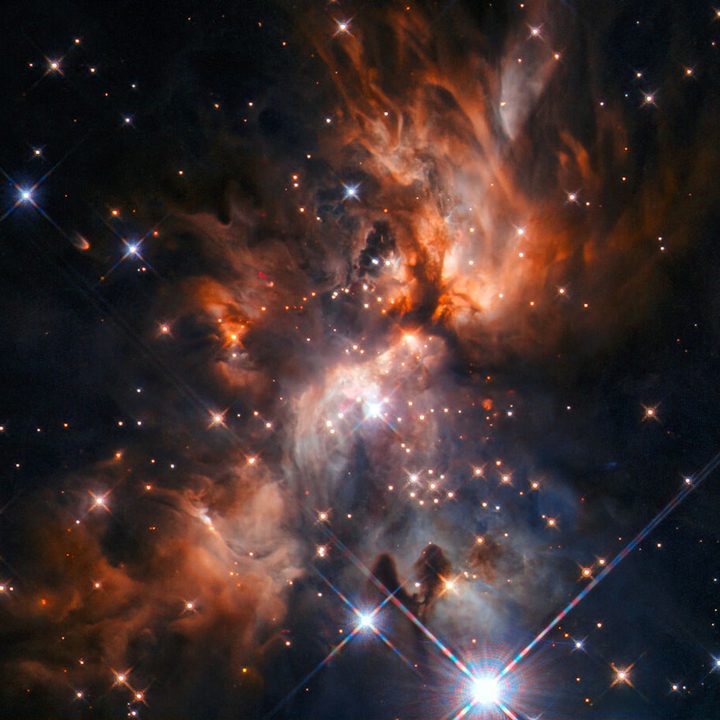
Image from the NASA/ESA Hubble Space Telescope features AFGL 5180, a beautiful stellar nursery located in the constellation of Gemini.
Nestled among the vast clouds of star-forming regions like this one lie potential clues about the formation of our own solar system. This image from the NASA/ESA Hubble Space Telescope features AFGL 5180, a beautiful stellar nursery located in the constellation of Gemini (the Twins). ESA/Hubble & NASA, J. C. Tan (Chalmers University & University of Virginia), R. Fedriani (Chalmers University); Acknowledgment: Judy Schmidt

Although it recently had a scare with some faulty computer hardware, the Hubble Space Telescope is now back up and running with its normal science operations. That means we can look forward to many more breathtaking images of space captured by this venerable telescope, like the one above recently shared by NASA.

Recommended Videos

This image shows the nebula AFGL 5180, a cloud of dust located in the constellation of Gemini (the Twins), which acts as the birthplace for new stars. A huge star is being born in the center of this image, sending out jets that disrupt the dust and gas above and below it.

Stars are born when clouds of dust like this one begin to form clumps. As more dust and gas are attracted to the clumps due to gravity, they begin to grow. Eventually, the clumps grow so large and dense that they collapse into stars. From start to finish, for a star to develop from a cloud of dust to a shining beacon, like our sun, the process takes around one million years.

Regions of relatively thick dust are essential for star formation, like this nebula. However, the dust that powers the birth of stars can be a problem for astronomers here on Earth. “Stars are born in dusty environments, and although this dust makes for spectacular images, it can prevent astronomers from seeing stars embedded in it,” Hubble scientists write. “Hubble’s Wide Field Camera 3 (WFC3) instrument is designed to capture detailed images in both visible and infrared light, meaning that the young stars hidden in vast star-forming regions like AFGL 5180 can be seen much more clearly.”

Using infrared allows astronomers to peer through the dusty veil and see what lies beneath. A similar approach has been used to peer through the clouds of Jupiter in our solar system or to see the movement of gas at the center of our galaxy.

Georgina Torbet
Georgina has been the space writer at Digital Trends space writer for six years, covering human space exploration, planetary…
NASA built the Roman Space Telescope to study dark matter, but it can also help protect Earth from killer asteroids
The Nancy Grace Roman Space Telescope wasn't built to hunt asteroids, but it turns out to be great at it.
Nancy Grace Roman space telescope.

NASA is about to launch a telescope built to unlock some of the universe's biggest mysteries, and it turns out that same design could help protect Earth along the way.

The Nancy Grace Roman Space Telescope is set to launch from Kennedy Space Center on August 30, 2026, with a primary mission focused on studying dark matter and dark energy - the invisible forces shaping galaxies and cosmic expansion. Researchers now say its unique design also makes it unexpectedly effective at spotting dangerous asteroids headed our way (via MIT Technology Review).

Read more
Space is becoming Bezos and Musk’s next data center site, and we have every reason to worry
The AI boom is coming for the night sky
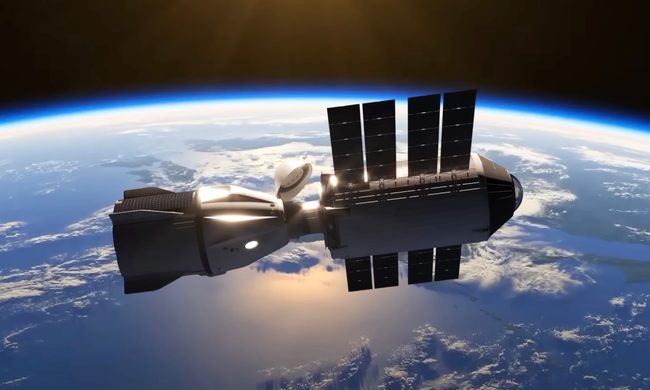
How Vast's space station will look in orbit.

AI data centers already consume vast amounts of electricity and water on Earth, so Silicon Valley has begun looking somewhere considerably more spacious... literally.

Elon Musk's SpaceX and Jeff Bezos' Blue Origin, along with several other companies, have proposed enormous constellations of satellites designed to operate as orbital data centers. However, environmental groups and former space officials are now warning that putting them into orbit at the proposed scale could have severe consequences for Earth's atmosphere and the night sky.

Read more
The first possible exomoon is here, and it makes our Moon look hilariously tiny
Scientists may have found the first exomoon, except this one is the size of Jupiter
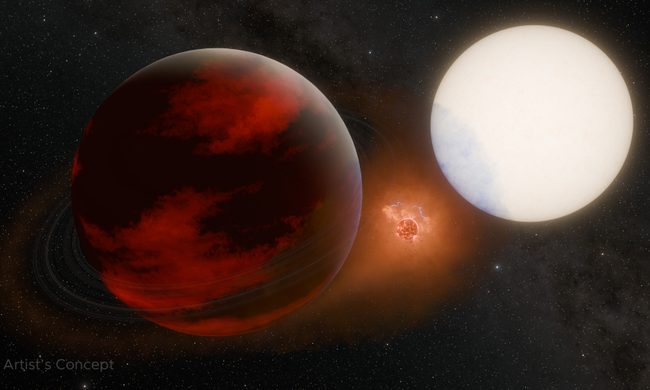
This artist’s concept depicts a potential volcanic moon between the exoplanet WASP-49 b, left, and its parent star. New evidence indicating that a massive sodium cloud observed near WASP-49 b is produced by neither the planet nor the star has prompted researchers to ask if its origin could be an exomoon.

We have already discovered more than 6,000 planets outside of our immediate neighborhood. Yet, finding a moon orbiting one of those distant worlds has proved considerably harder. Astronomers may finally have something close to the real deal, but this particular object stretches the word “moon” almost beyond recognition.

Using the European Southern Observatory’s Very Large Telescope in Chile, researchers detected strong evidence for a moon-like object in the CD-35 2722 system. Further observations are still necessary to confirm the discovery, but it could become the first confidently detected natural satellite outside our solar system. There is still one tiny complication though. This moon is apparently massive.

Read more