1. Home
  2. Space
  3. News

NASA reveals date for SpaceX’s next astronaut launch

Add as a preferred source on Google

NASA has announced a new launch date for SpaceX’s Crew-3 mission that will carry four astronauts to the International Space Station (ISS).

Conditions permitting, NASA astronauts Raja Chari, Tom Marshburn, and Kayla Barron, together with European Space Agency (ESA) astronaut Matthias Maurer, will lift off from Launch Complex 39A at the Kennedy Space Center in Florida at 2:43 a.m. ET on Saturday, October 30.

Recommended Videos

The date is a day earlier than originally planned.

The launch will mark the fourth crewed mission using SpaceX hardware following the company’s first astronaut launch in the summer of 2020 with NASA’s Doug Hurley and Bob Behnken.

The SpaceX Crew Dragon spacecraft carrying the Crew-3 astronauts is expected to take about 22 hours to reach the ISS.

The incoming astronauts will live and work alongside the Crew-2 astronauts before they head home in November after six months in orbit. The Crew-3 members will also stay aboard the orbiting outpost for six months, returning to Earth in April 2022.

Marshburn is the only Crew-3 member who has previously traveled to space. He has also flown on the space shuttle and participated in four spacewalks across two ISS missions.

Chari has extensive flying experience with the U.S. Air Force and took part in combat missions in Iraq. Barron graduated from the U.S. Naval Academy with a bachelor’s degree in systems engineering, and is also a qualified submarine warfare officer. Both were selected by NASA in 2017.

Maurer, from Germany, has earned several national awards for outstanding research in the field of materials sciences, and in 2016 spent 16 days underwater, testing exploration strategies and tools for future Mars missions. Earlier this year, Maurer offered a behind-the-scenes look at preparations for life on the ISS, and also revealed a particular skill that astronauts have to learn before going — one that you may not have considered before.

NASA’s schedule planning doesn’t stop with the Crew-3 mission, either, with NASA targeting April 15, 2022, for the launch of SpaceX’s Crew-4 launch to the space station.

As things stand, Crew-4 comprises NASA astronauts Kjell Lindgren and Bob Hines, along with ESA astronaut Samantha Cristoforetti. The remaining crew member has yet to be announced.

Trevor Mogg
Contributing Editor
Not so many moons ago, Trevor moved from one tea-loving island nation that drives on the left (Britain) to another (Japan)…
Space is becoming Bezos and Musk’s next data center site, and we have every reason to worry
The AI boom is coming for the night sky
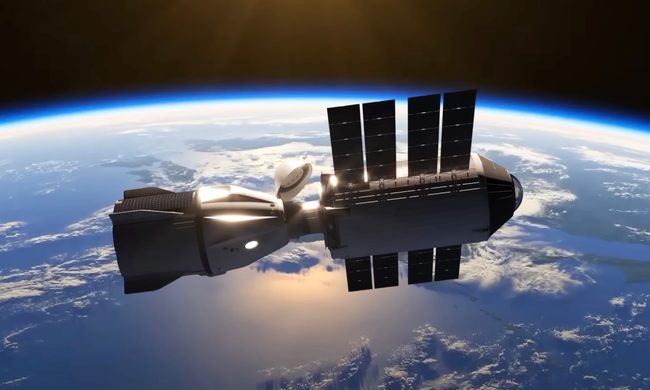
How Vast's space station will look in orbit.

AI data centers already consume vast amounts of electricity and water on Earth, so Silicon Valley has begun looking somewhere considerably more spacious... literally.

Elon Musk's SpaceX and Jeff Bezos' Blue Origin, along with several other companies, have proposed enormous constellations of satellites designed to operate as orbital data centers. However, environmental groups and former space officials are now warning that putting them into orbit at the proposed scale could have severe consequences for Earth's atmosphere and the night sky.

Read more
The first possible exomoon is here, and it makes our Moon look hilariously tiny
Scientists may have found the first exomoon, except this one is the size of Jupiter
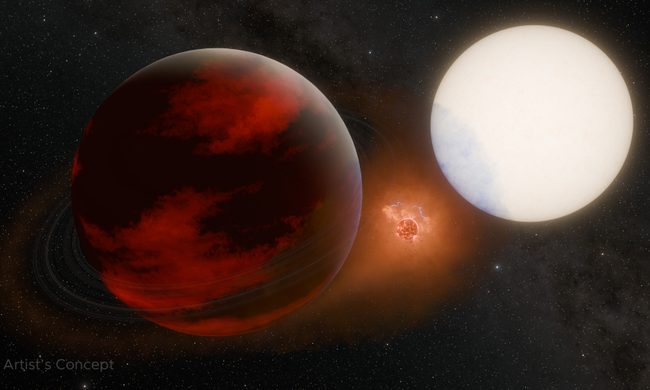
This artist’s concept depicts a potential volcanic moon between the exoplanet WASP-49 b, left, and its parent star. New evidence indicating that a massive sodium cloud observed near WASP-49 b is produced by neither the planet nor the star has prompted researchers to ask if its origin could be an exomoon.

We have already discovered more than 6,000 planets outside of our immediate neighborhood. Yet, finding a moon orbiting one of those distant worlds has proved considerably harder. Astronomers may finally have something close to the real deal, but this particular object stretches the word “moon” almost beyond recognition.

Using the European Southern Observatory’s Very Large Telescope in Chile, researchers detected strong evidence for a moon-like object in the CD-35 2722 system. Further observations are still necessary to confirm the discovery, but it could become the first confidently detected natural satellite outside our solar system. There is still one tiny complication though. This moon is apparently massive.

Read more
China’s answer to SpaceX’s reusable rockets literally catches boosters in a net
SpaceX catches boosters on legs. China just used a net.
Ammunition, Missile, Weapon

SpaceX's playbook for recovering a rocket booster generally involves legs, a precisely controlled vertical landing, and either a concrete pad or a drone ship. 

China just managed to pull off something similar, but in a slightly different way, and on July 10, it tested the method as well.

Read more