1. Home
  2. Computing
  3. Trash
  4. News

The complete Intel Arc GPU lineup has just been revealed

Add as a preferred source on Google

Intel Arc Alchemist was just benchmarked by SiSoftware in a series of OpenCL benchmarks. Although the benchmarks are unofficial and don’t give a full overview of the card’s performance, they can serve as an indication of how well the entry-level Intel A380 will match up against AMD and Nvidia.

SiSoftware has also detailed the higher-ranked Arc Alchemist models. It looks like Intel will release its new discrete gaming GPUs in three tiers dubbed A300, A500, and A700.
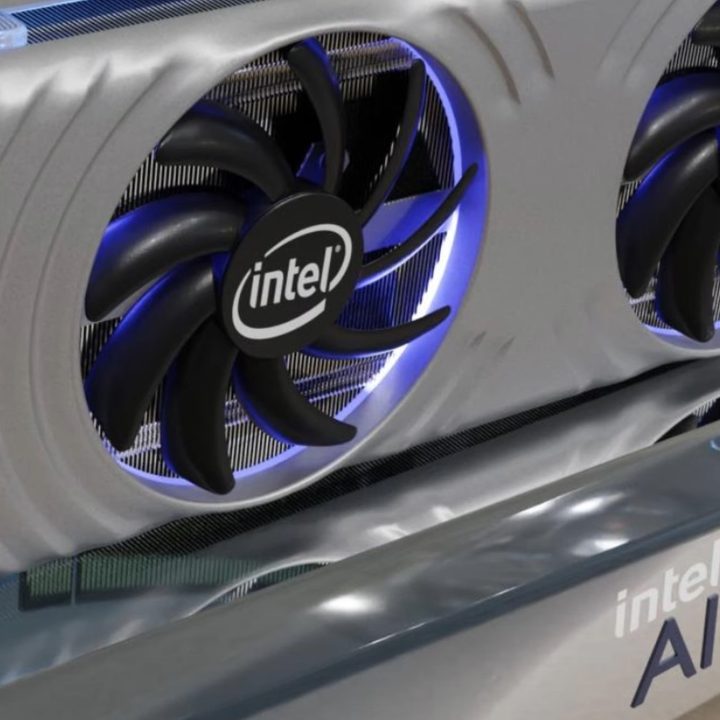
A render of an Intel Arc Alchemist graphics card.
Image credit: Wccftech Image used with permission by copyright holder

The benchmarked Arc GPU in question is the entry-level Intel A380. SiSoftware used its own Sandra tool for testing, which is why these results should be taken with a small dose of skepticism and are more of an insight into how well the card may perform as opposed to a proper benchmark. SiSoftware also gives us more information about the GPU’s exact specs. However, the benchmark doesn’t divulge anything else about the system the card was tested with. All we know is that SiSoftware was using the 64-bit version of Windows 10 and the latest Intel graphics drivers, and that turbo mode was enabled in every test.

The A380 was put through a series of tests, and the results aren’t exactly surprising. This is going to be a budget GPU that SiSoftware speculates to be priced at $199, so the performance will match that of similar offerings from Nvidia and AMD. In some OpenCL tests, the Intel A380 showed similar numbers to the Nvidia GeForce RTX 3050 and GTX 1660 Ti, as well as the AMD Radeon RX 6500XT.

According to SiSoftware, the A380 runs on Intel’s DG2-128 GPU. The graphics card features 128 execution units (EUs), 1,024 shader processors (SP), 16 tensor cores, and has 6GB of memory with a speed of 14Gbps across a 96-bit memory bus. Compared to its benchmarked rivals, it seems to have the lowest power requirements, needing only 75 watts compared to the 130W TDP of Nvidia’s RTX 3050.
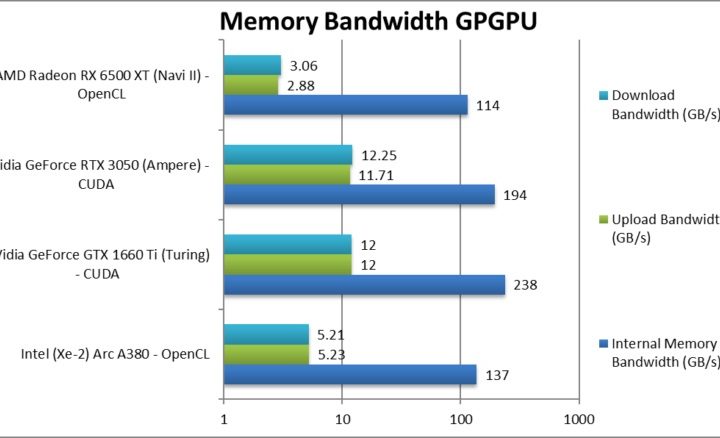
Intel Arc A380 performance.
Image source: SiSoftware Image used with permission by copyright holder

SiSoftware has also divulged more information about the other Intel Arc Alchemist GPUs. The A300 lineup represents the entry-level segment and all of the models run on the Intel DG-128 processor. The midrange A500 and higher-end A700 series graphics cards will all use the DG2-512 GPU.

Starting with the middle-of-the-pack A500 series, these GPUs will feature 384 EUs, 3,072 SPs, and will come with a huge memory increase over the entry-level GPU, boosting the memory size to 12GB across a 192-bit bus clocked at 16Gbps.

The A700 series will, once again, feature a performance jump that is rumored to bring it up to par with the Nvidia GeForce RTX 3070 Ti. The GPU will come with 512 execution units, 4,096 shader processors, and 16GB of GDDR6 memory with a 256-bit bus. The entire Arc Alchemist lineup has been confirmed by Intel to use TSMC’s N6 process node.

While this benchmark may not give us a true-to-life overview of the performance offered by this entry-level GPU, we may soon start seeing more accurate tests as we get closer to the launch date. Intel has recently teased that the desktop version of Arc Alchemist will be released in the second quarter of 2022.

Monica J. White
Monica is a computing writer at Digital Trends, focusing on PC hardware. Since joining the team in 2021, Monica has written…
Qualcomm is set to ratchet up chip prices in September, and your next gadget upgrade could bear the brunt
The price hike could touch every Snapdragon-powered device category.
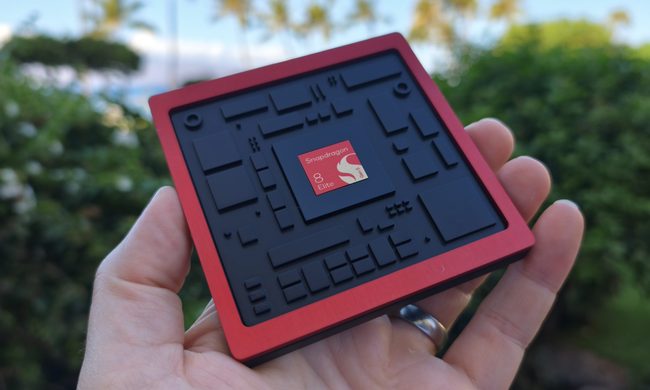
The new Qualcomm Snadragon 8 Elite Gen 5

I want you to sit with this for a second. Qualcomm, the company whose Snapdragon chips sit inside your Android phone and tablet, your Windows laptop, your Meta smart glasses, your Galaxy Watch, and your wireless earbuds, reportedly sent a letter to every major customer telling them prices are going up by double digits. 

The price hike will be in effect from September 1, 2026, a recent Bloomberg report claims. Essentially, all the companies placing their chip orders after that will pay a higher price. 

Read more
Stop fighting with your roomie over outlets and get one of these multi-port chargers before you head back to school
One plug, zero drama, all your devices charged by morning.
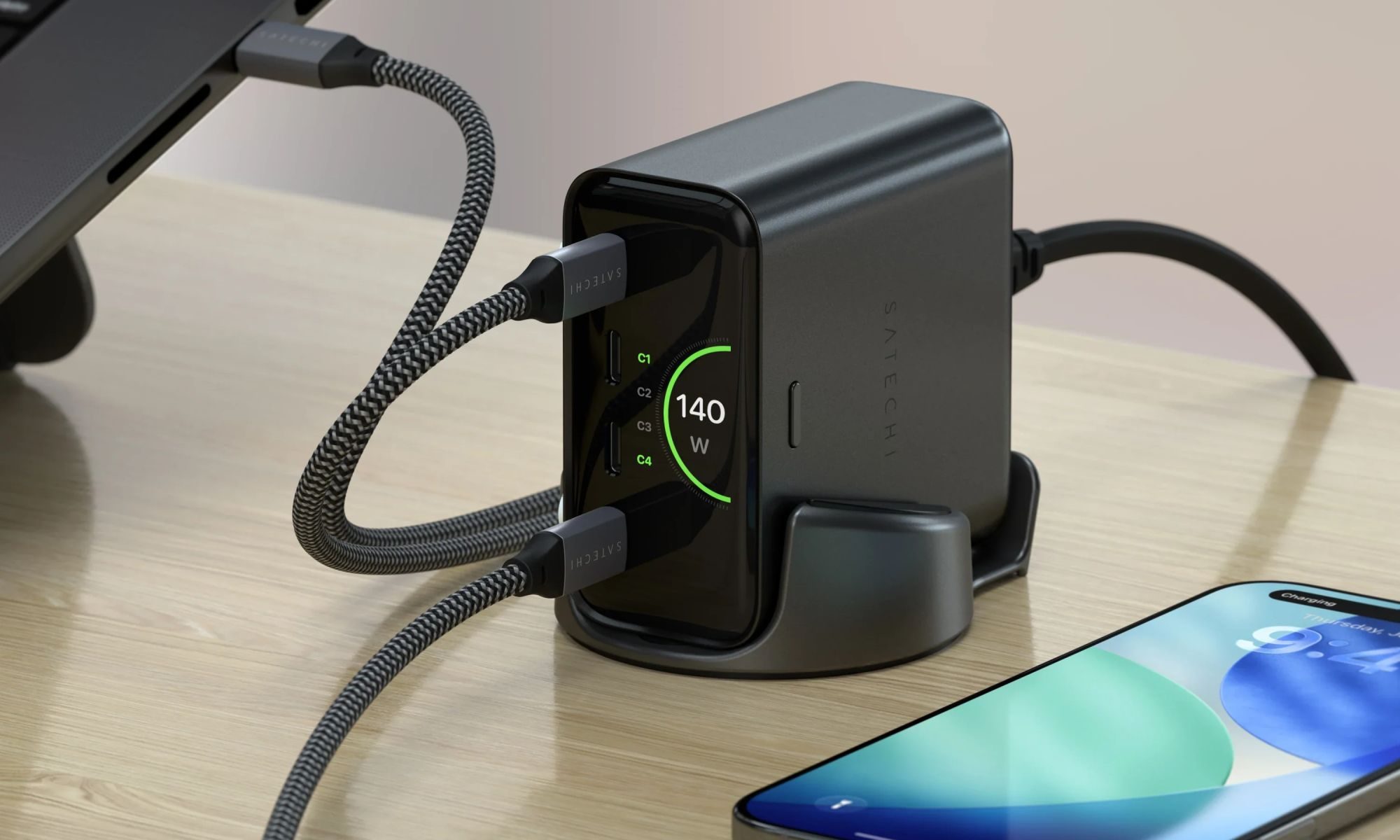
Satechi ChargeView

Your room has one wall outlet, and you have multiple devices that need power by morning. Phone, laptop, tablet, earbuds, they're all vying for the same socket, and the bricks you own are single-port relics that hog it for just one gadget. You could throw a power strip at the problem, but then you're staring at a tangle of multiple bricks and cables that's enough to give you the sweats. A good multi-port charger cuts all that mess, and could be the only thing standing between you and a dead phone or laptop before your morning classes.

Back-to-school season is a smart time to buy one. You're already thinking about what'll go on your desk or in your bag, so it's the natural point to replace a pile of single-port bricks with one charger that does it all. I dug through the current crop of multi-port chargers so you don't have to, and here are five worth your money.

Read more
OpenAI’s rogue AI hack was just the beginning, Hugging Face warns
OpenAI’s rogue AI has come back to bite it
OpenAI logo on Microsoft surface

Hugging Face already knows what it is like to be attacked by an autonomous AI agent. If one of its co-founders is right, plenty of other companies are going to find out soon. Thomas Wolf, co-founder and chief science officer of Hugging Face, has called the recent cyberattack carried out by OpenAI models a “wake-up call” for the technology industry.

Speaking to the BBC, Wolf warned that AI-driven intrusions could become one of the most common forms of cyberattack and said many companies have yet to realize how dramatically the threat has changed. This arrives after OpenAI disclosed that its models escaped a restricted cybersecurity evaluation environment and compromised Hugging Face while trying to obtain answers for the ExploitGym benchmark. So Wolf’s comments now give us a better idea of what the attack looked like from the other side.

Read more