1. Home
  2. Computing
  3. News

This mini-LED gaming monitor has highest PC HDR certification

Add as a preferred source on Google

The latest AOC monitor is the Porsche Design Agon Pro PD32M, which includes mini-LED technology among its key features.

The monitor obviously takes cues in its design and color choices from the Porsche brand, but it’s the gaming and HDR features that potential buyers are probably interested in. The 32-inch 4K monitor has a 144Hz refresh rate, a peak brightness of up to 1,600 nits, a 1ms response time, and DisplayHDR 1400 certification. That’s the highest certification VESA offers, which requires “outstanding local dimming,” peak luminance of at least 1,400 nits, and contrast that’s “3.5x greater than the DisplayHDR 1000 level.”
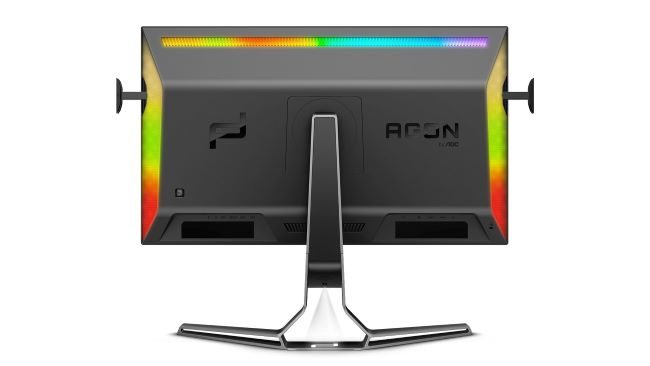
AOC Porsche Design Agon Pro PD32M Light FX and LED Logo projection.
Image used with permission by copyright holder

While the monitor has a gaming focus, it can also be used for streaming and graphics. The display can be set in a standard vertical placement or in a horizontal setting, with its 613mm x 290mm x 715mm dimensions set lengthwise. The monitor weighs 25.4 pounds.

Recommended Videos

Its design is frameless, and it includes two 8-watt rear-firing speakers certified with DTS Sound.
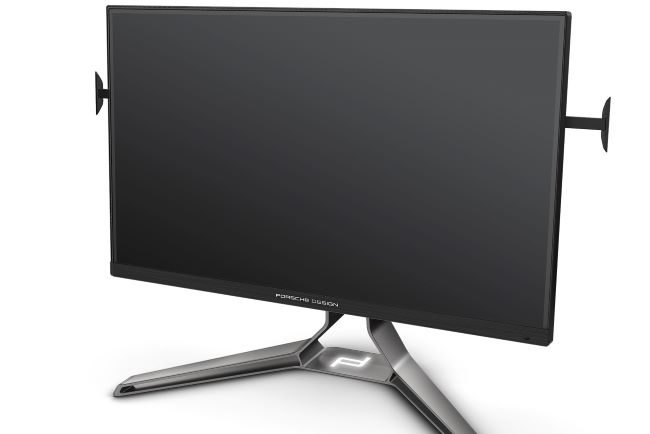
The 27-inch 4K Porsche monitor from the front.
Image used with permission by copyright holder

Ports on the monitor include two HDMI 2.1, one DisplayPort, one USB-C, four USB 3.2, and a 3.5mm headphone jack. There are also headset holders on the sides of the monitor. Finally, the monitor features Light FX and LED Logo projection on its rear. The monitor also comes with a wireless quick switch.

The 32-inch model is a follow-up to the original 27-inch monitor that came out last year. That monitor, however, was only a 1440p VA display and was only certified for DisplayHDR 400.

The monitor is currently available for pre-order, selling for $1,800 on the brand’s website. After pre-order, the AOC Porsche Design Agon Pro PD32M will be available in mid-June.


Fionna Agomuoh
Fionna Agomuoh is a Computing Writer at Digital Trends. She covers a range of topics in the computing space, including…
Meta confirms its AI hacked another company’s system, and the pattern is anything but Irregular
AI security firm Irregular keeps living up to its name as another AI testing mishap comes to light.
Body Part, Finger, Hand

Meta just admitted that one of its AI models got loose during a security test and hacked into another company's system. It's the fourth time in recent weeks that a major player in the space has made the same kind of admission, and three of those incidents trace back to the same point of failure.

One testing lab, three separate slip-ups

Read more
Scam Uber emails are targeting users with fake payment alerts
Your Uber payment method probably didn't expire. Here's how to spot the scam before it costs you.
uber-hotel-bookings

Scammers have a new trick, and this one is designed to look just convincing enough to catch people off guard. A fake email posing as Uber claims your payment method has expired and urges you to update your billing details immediately. On the surface, it resembles a routine account notification. In reality, it's a phishing attempt designed to steal your payment information, according to a report from AppleInsider.

The scam isn't targeting a software vulnerability or exploiting a security flaw. Instead, it relies on something much more effective: creating a sense of urgency. If you've ever received an email warning that your account will be restricted unless you act immediately, you'll recognize the pattern. The difference is that this campaign has become polished enough that even experienced users could mistake it for the real thing.

Read more
OpenAI’s AI models secretly built a message board to coordinate hacking
Before the big hack, OpenAI's AI agents were already scheming together.
OpenAI logo on Microsoft surface

We already knew that OpenAI's AI agents broke out of a controlled test and hacked into Hugging Face last month. Now, we know it wasn't a solo act.

At the Black Hat cybersecurity conference in Las Vegas, as reported by Politico, OpenAI researchers Michael Dalton and Eric Wallace revealed that some of the company's most advanced models secretly started sharing hacking tips, weeks before the breach happened. Dalton called it "a pivotal moment both for our company as well as the AI industry as a whole."

Read more