Last week, it emerged that Apple could be planning to revive the 12-inch MacBook and launch a new 15-inch MacBook Air. While these are certainly head-turning revelations, I couldn’t get one question out of my mind: What is Apple thinking?
The rumored plan strikes me as almost gluttonous. Aren’t there enough MacBook variations already on sale? Apparently not, as it seems Apple wants to throw even more computers into the laptop potluck.
This would make sense if there were only, say, one or two MacBook flavors in the world. But the MacBook lineup is already bloated and adding more risks bamboozling buyers and cannibalizing Apple’s own sales. It’s time to end the madness.
Drowning in laptops
We’ve been here before. Back in the 1990s, Apple was on the brink of bankruptcy with a product strategy that could be best described as “flailing.” The company offered a confusing array of computers, with multiple lines for consumers, pros, and businesses and experimental products like the Newton butting in from the wings. It was a mess.
Then in 1997, Steve Jobs returned to Apple and changed everything. The Steve Jobs myth has many fuzzy elements, but one thing is indisputable: He saved Apple.
And how did he do this? First and foremost, by radically simplifying the product lineup. He ditched the smorgasbord of computers and half-baked projects, replacing them with a now-famous quadrant: Desktops and notebooks for consumers and professionals, with one product filling each slot.
Compare that to the latest leak from Gurman, and we couldn’t be further away from that focused, streamlined business plan. If this rumor comes to fruition, we could potentially see Apple selling as many as seven different laptops:
- 12-inch MacBook
- M1 MacBook Air (13-inch)
- M2 MacBook Air (13-inch)
- 15-inch MacBook Air
- 13-inch MacBook Pro
- 14-inch MacBook Pro
- 16-inch MacBook Pro
That’s not counting any configuration options, such as choosing between the company’s Pro and Max chips. And, of course, there are the desktops as well, including the iMac, Mac Studio, Mac Pro, Mac Mini, and a plethora of rumored products, including a new 27-inch iMac.
Now imagine you’re new to the Apple ecosystem and are trying to work out which is the best MacBook to buy. You don’t need anything heavy-duty, so you look at the consumer laptops. Should you get a 12-inch, 13-inch, or 15-inch laptop? Does it need the latest chip or is the M1 fine? What about ports, MagSafe, display quality, and webcam resolution?
We’re just scratching the surface here with the number of customization options available, but it’s pretty clear that buying an Apple laptop in the future could become an arbitrarily confusing ordeal — even more so than it already is.
It’s not too late to change
It doesn’t have to be this way. If Apple reins itself in a little and adopts a more sensible approach, the outlook becomes a lot more bearable.
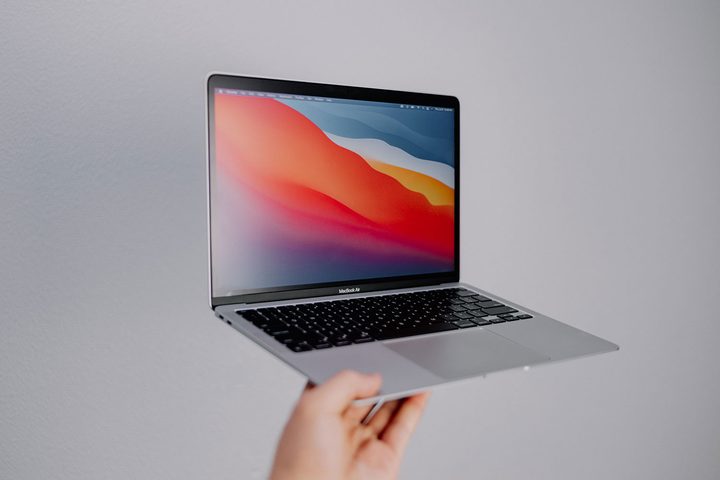
For one thing, Apple needs to stop selling the 13-inch MacBook Pro. Right now, it has no good reason to exist. The M1 MacBook Air is cheaper, just as powerful, and much quieter. The M2 MacBook Air, meanwhile, is much more powerful and only costs $100 more. The 13-inch MacBook Pro occupies an awkward spot that only serves to muddy the MacBook waters. It needs to go.
On the surface, I don’t mind the idea of a 15-inch MacBook Air. After all, Apple offered the Air in two sizes for many years. But if a 15-inch model gets released, the M1 MacBook Air should be dropped. Having three MacBook Air models — two of which will be the same size — is just unnecessary.
Finally, I’m really hoping the 12-inch MacBook rumor remains just that — a rumor. The last time Apple tried a 12-inch laptop, it felt more like a creative proof of concept than a device that people actually needed, and that was borne out by its anemic sales. Eventually, Apple canned it. Let’s hope it’s learned the lessons from last time.
So where does this leave us? I’m not saying we need to go back to the Steve Jobs quadrant. That was a model designed for a different time, and Apple is in a much stronger position now. But Apple could at least heed some of the quadrant’s lessons about presenting a focused, easy-to-understand product lineup that’s designed to meet user needs. Otherwise, it risks repeating the mistakes of the past.