1. Home
  2. Space
  3. News

NASA announces four new astrophysics mission proposals

Add as a preferred source on Google

NASA has announced it is considering four new mission proposals to study topics in astrophysics. Each of the proposals has been funded for a nine-month concept study, after which two will be chosen to be built for launches in 2027 and 2028.

The four mission concepts cover topics including studying the sky in the ultraviolet range to learn about the evolution of galaxies, using sensitive X-ray and ultraviolet telescopes to study short events like supernova explosions, searching almost the entire sky for bursts of gamma rays, and studying gamma-ray bursts from the International Space Station.
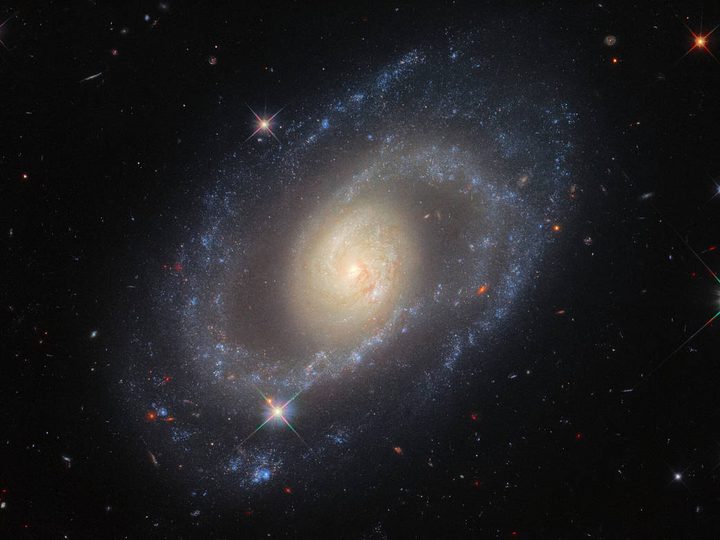
This image from NASA’s Hubble Space Telescope features the spiral galaxy Mrk (Markarian) 1337, which is roughly 120 million light-years away from Earth in the constellation Virgo.
This image from NASA’s Hubble Space Telescope features the spiral galaxy Mrk (Markarian) 1337, which is roughly 120 million light-years away from Earth in the constellation Virgo. ESA/Hubble & NASA, A. Riess et al.

The concepts are part of NASA’s medium-scale Explorers Program, split into the Medium Explorer section and the Missions of Opportunity section.

Recommended Videos

“NASA’s Explorers Program has a proud tradition of supporting innovative approaches to exceptional science, and these selections hold that same promise,” said Thomas Zurbuchen, associate administrator for NASA’s Science Mission Directorate at NASA Headquarters in Washington, in a statement. “From studying the evolution of galaxies to explosive, high-energy events, these proposals are inspiring in their scope and creativity to explore the unknown in our universe.”

Astrophysics is a topic that doesn’t always garner as much public interest as topics like planetary science, but it’s vitally important to understand astronomical objects from smaller objects like planets and moons all the way up to entire galaxies and how they interact. The Explorers Program funds projects in topics like geophysics, heliophysics, and astrophysics.

Previous Explorers Program missions include the NEOWISE infrared space telescope, which first spotted a famous near-Earth comet, the NuSTAR X-ray telescope, which made news for identifying a cosmic oddity in the X-ray wavelength, and the Transiting Exoplanet Survey Satellite or TESS, which has discovered over 5,000 candidate exoplanets. The program also includes the upcoming SPHEREx mission, which surveys the entire sky to investigate the origins of the universe, set to launch in 2025.

The idea of the program is to fund relatively low-cost missions, so the recently selected missions under the Medium Explorer program will have a total budget of $300 million not including the launch vehicle, while the Mission of Opportunity missions have a total budget of $80 million.

Georgina Torbet
Georgina has been the space writer at Digital Trends space writer for six years, covering human space exploration, planetary…
Space is becoming Bezos and Musk’s next data center site, and we have every reason to worry
The AI boom is coming for the night sky
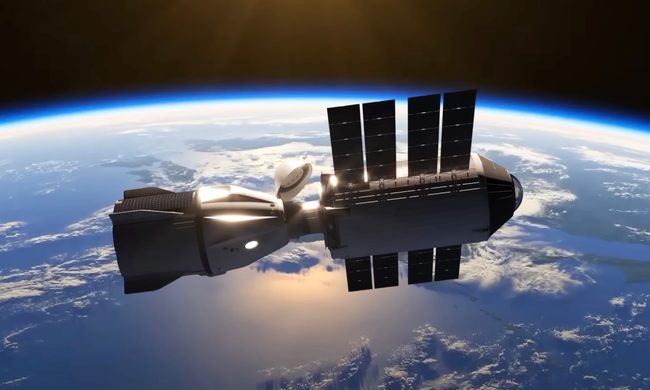
How Vast's space station will look in orbit.

AI data centers already consume vast amounts of electricity and water on Earth, so Silicon Valley has begun looking somewhere considerably more spacious... literally.

Elon Musk's SpaceX and Jeff Bezos' Blue Origin, along with several other companies, have proposed enormous constellations of satellites designed to operate as orbital data centers. However, environmental groups and former space officials are now warning that putting them into orbit at the proposed scale could have severe consequences for Earth's atmosphere and the night sky.

Read more
The first possible exomoon is here, and it makes our Moon look hilariously tiny
Scientists may have found the first exomoon, except this one is the size of Jupiter
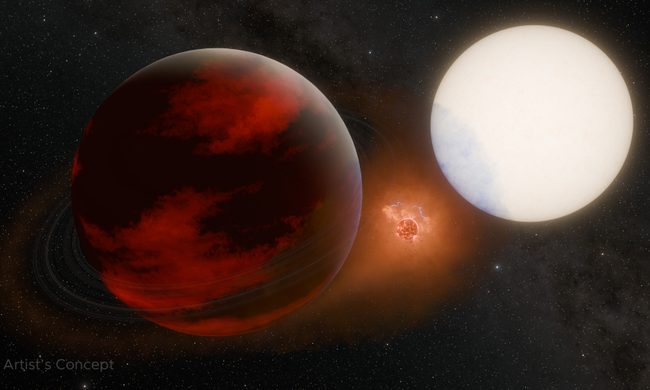
This artist’s concept depicts a potential volcanic moon between the exoplanet WASP-49 b, left, and its parent star. New evidence indicating that a massive sodium cloud observed near WASP-49 b is produced by neither the planet nor the star has prompted researchers to ask if its origin could be an exomoon.

We have already discovered more than 6,000 planets outside of our immediate neighborhood. Yet, finding a moon orbiting one of those distant worlds has proved considerably harder. Astronomers may finally have something close to the real deal, but this particular object stretches the word “moon” almost beyond recognition.

Using the European Southern Observatory’s Very Large Telescope in Chile, researchers detected strong evidence for a moon-like object in the CD-35 2722 system. Further observations are still necessary to confirm the discovery, but it could become the first confidently detected natural satellite outside our solar system. There is still one tiny complication though. This moon is apparently massive.

Read more
China’s answer to SpaceX’s reusable rockets literally catches boosters in a net
SpaceX catches boosters on legs. China just used a net.
Ammunition, Missile, Weapon

SpaceX's playbook for recovering a rocket booster generally involves legs, a precisely controlled vertical landing, and either a concrete pad or a drone ship. 

China just managed to pull off something similar, but in a slightly different way, and on July 10, it tested the method as well.

Read more