If AMD’s new Ryzen 7000-series processors get their way, DDR4 RAM is destined for the trash heap. Sure, Intel is still supporting the obsolete RAM architecture, but after yesterday’s AMD event, I’m confident we’re witnessing the end of DDR4. I’m also happy about it.
AMD’s enigmatic CEO, Dr. Lisa Su, took the stage at a pre-recorded event to launch AMD’s much-anticipated Ryzen 7000-series processors. She introduced the new 5nm chips in her iconic straight-to-the-point manner. In her succinct and professional way, Dr. Su explained AMD’s roadmap for the next four quarters, and then passed the stage to Mark Papermaster to explain the Zen 4 core. That’s when the controversial topic of DDR5 RAM came up.

The end of DDR4
Amid all the technical talk from Dr. Su, Mark Papermaster, and David McAfee, the subject of the new AM5 socket came up. The AM5 is designed to work best with the Ryzen processors, Radeon GPUs, and most importantly, DDR5 RAM only.
That last part was the real kicker and was barely mentioned at the event. But this is big news. AMD is officially ditching DDR4 RAM. Even Intel wasn’t so bold when they released its 12th-gen Alder Lake processors last November, continuing to support DDR4 RAM. I’m not sure how long that will last now.
DDR4 RAM has been the standard in desktops, laptops, consoles, and mobile devices since 2014. It’s almost nine years old and as a result, it’s cheap and readily available. DDR4 RAM is also fast enough to power all those computers from the 2010s.
The fastest DDR4 RAM chips can top out at 4,800MHz, which is plenty fast for the XPS, MacBooks, Surface Pros, and iPads of that decade. The average device from 2018 had 8GB of DDR4 RAM at 3200MHz. And while it served those machines well, we are entering a new era of computer processing. This is the 2020’s, baby. But that doesn’t mean the transition isn’t going to be rocky.
DDR5 RAM is the new normal
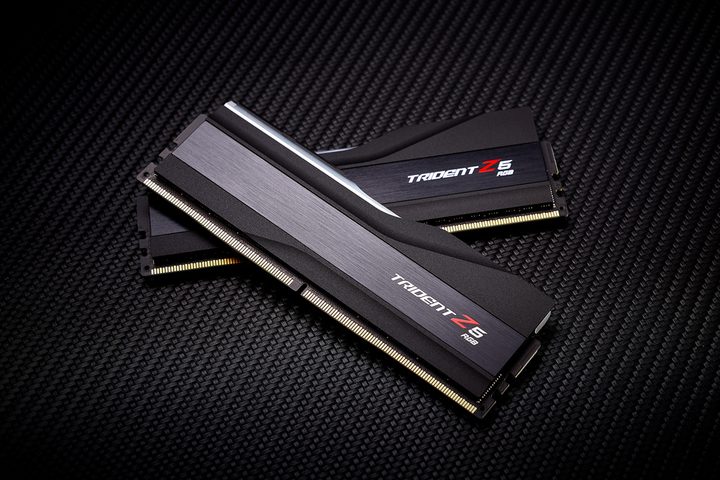
DDR5 RAM is significantly faster and more power efficient than DDR4. The baseline, bottom-of-the-barrel DDR5 starts at 4800 MHz clock speed, which is what the fastest and most expensive DDR4 maxed out at. The high end of DDR5 can push 6,400MHz. It also uses its own power supply, so it reduces drain on laptop batteries and doesn’t need to fight with the processor and GPU for resources. That’s a win for the entire computer.
This new memory type first released in the autumn of 2020 and was immediately met with howls of protest from enthusiasts, mainly because it was filthily expensive and impossible to find. There was a global pandemic and a global chip shortage. But it’s two years later and DDR5 RAM is now affordable and easily available.
The main thing to know about DDR5 RAM is that it currently shares space with DDR4 RAM. Many PC manufacturers still offer a choice between the two. Some stick with DDR4 out of pure laziness.
Home computer builders still buy DDR4 because it has been cheaper and easier to find up until now. This is why Intel continues to support it despite the incredible power of its latest Alder Lake and upcoming Raptor Lake processors. Intel’s afraid it’ll chase off the enthusiasts. AMD thinks differently.
AMD is looking forward
By ditching support for DDR4 and fully embracing DDR5 going forward, AMD is saying they’re focused on the future of computing. They’ve taken a big plunge here, and one which spells the ultimate demise of DDR4.
AMD controls just over 24% of the global processor market in both desktops and laptops and they are extremely popular with gamers. Ryzen processors outperform Intel processors in multicore benchmarks and are usually cheaper. And do you know who loves to build their own desktop PCs? Gamers.
It’s now only a matter of time before Intel follows AMD down this road.
This is a key market for desktop PC manufacturers, and AMD is telling everyone to switch to DDR5. Gamers building their own rigs at home won’t have a choice unless they go with the more expensive and power-intensive Intel chips. Personally, I don’t think it makes sense to pair an Intel Core-i9 12900K processor with DDR4-3200MHz RAM in 2022. I’m sure most gamers will agree.
24% of the global computer market is a big number, and it’s now only a matter of time before Intel follows AMD down this road. Sure, Intel is keeping DDR4 on life support for now, but that won’t last. AMD just killed DDR4 RAM at their Ryzen 7000-series event.
This is a good thing. DDR4 is obsolete technology. The longer it sticks around, the more outdated it becomes. We’re in a new age of ultra-powerful CPUs and GPUs unlike anything we have seen before. The power behind both AMD and Intel x86 chips, and ARM chips like Apple’s M1 and M2, is incredible.
We’ve taken huge strides forward in processors lately and these processors need modern RAM. DDR5 has the speed and power efficiency to satisfy those computing needs. It’s beyond time we moved onto DDR4 — and sometimes it’s best just to rip the Band-Aid off.