1. Home
  2. Computing
  3. News

Meta hints at Quest Pro launch on October 11

Add as a preferred source on Google

Meta has set the date of its next big event, Meta Connect, and all signs point to this being the debut of the new Quest Pro VR headset.

Mark your calendar for October 11, since this event promises to be filled with exciting news for VR enthusiasts, including more revelations about ongoing work and plans to expand the metaverse.
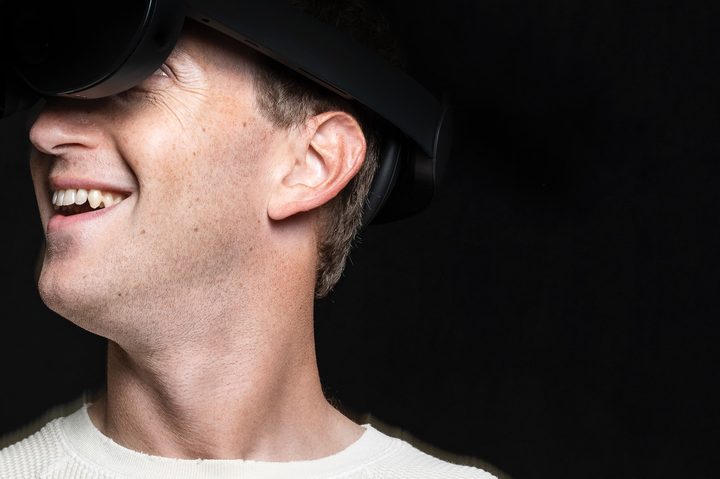
Mark Zukerberg is wearing a next generation VR headset.
Image used with permission by copyright holder

You can check a countdown at Meta’s new website, metaconnect.com. The event will be streamed on the Reality Labs Facebook page starting at 10 a.m. PT/1 p.m. ET. The invitation page contains minimal information, describing the event as an exploration of augmented and virtual reality as well as building the metaverse. The metaverse will be the form the internet will take in the advanced technologies that are coming.

Recommended Videos

While Meta isn’t sharing many details about the event, some information has already come out, such as plans for Meta’s next VR headset to be announced in October, as told by Zuckerberg himself during his visit to the Joe Rogan podcast. This new headset is expected to be based on Reality Labs’ work on Project Cambria. Expected to be officially called the Quest Pro, Meta has said the new headset will cost more than $800 and will bring an interesting new approach to VR.

Another teaser of the new VR headset was shared by Meta, shown above, with Zuckerberg smiling and wearing a mysterious VR headset. The small amount of hardware that’s visible looks much the same as one of the prototypes that Meta teased in a showcase earlier this year. The display portion is significantly slimmer and more open than that of a Quest 2 headset and the back of the head strap is bulkier. This should provide a more balanced feel when worn.

Mark Zuckerberg tests a next-gen VR headset.
Image used with permission by copyright holder

The Quest 2 and earlier models have had the capability of running apps and browsing the internet, but that was more of an afterthought, while gaming was the real purpose for VR. With the Quest Pro, doing productive work is said to be considered a primary focus. Combined with the new Meta accounts that separate Quest headsets from a requirement for a Facebook account, Meta is gearing up for more work to be done in and on the metaverse.

That doesn’t mean fun and games are off-limits. The Quest Pro will be able to run Quest 2 apps and games. With advanced display technology and a faster processor, the Quest Pro will certainly tempt gamers to upgrade, as well. The time for teasers, previews, and leaks is nearly over, and the full information will be shared at Meta Connect on October 11.


Alan Truly
Alan Truly is a Writer at Digital Trends, covering computers, laptops, hardware, software, and accessories that stand out as…
What happens when AI detectors fail? Researchers say we must be trained to spot fake AI faces
Researchers say spotting AI faces may soon depend more on people than software
Zuckerberg Deepfake

Artificial intelligence has become remarkably good at creating fake human faces. So good, in fact, that the old tricks people relied on - counting fingers, spotting warped earrings, or looking for distorted backgrounds - are quickly becoming obsolete. According to a new study highlighted by the BBC, the next line of defence may not be a better AI detector at all. It might simply be a better-trained human.

Researchers from the University of Aberdeen, working alongside Australia's National University, found that people can dramatically improve their ability to distinguish AI-generated faces from real ones after a relatively short period of structured training. Instead of hunting for obvious visual glitches, participants were taught to recognise subtle patterns that modern image generators still struggle to replicate consistently.

Read more
Google’s new Magic Pointer Play Store listing reveals a Gemini shortcut built for Googlebooks
The unannounced app turns the cursor into a contextual AI tool for search, image creation, and shopping
Plant, Text, Business Card

Google has quietly published a new Play Store listing for Magic Pointer, an unannounced app built for Googlebooks. Updated on July 10, the app turns the cursor into a Gemini shortcut that can act on whatever a user selects on screen.

Magic Pointer can send an image to Lens, generate a related image, or surface a shopping action without forcing users to open a separate chatbot. Regular Android devices currently show as incompatible, so the listing offers an early preview rather than a broad release.

Read more
You can stop using AI, but this new report says you probably can’t escape it
A UK survey found that most people feel AI exposure is unavoidable, raising harder questions about consent, privacy, and whether opting out is still realistic
AI Chatbots

More people are trying to use less AI, but avoiding it altogether may already be impossible.

A survey of 2,055 UK adults found that 42% deliberately limit how much AI they use. Another 70% said avoiding AI exposure would be difficult or impossible, even when they actively wanted less of it.

Read more