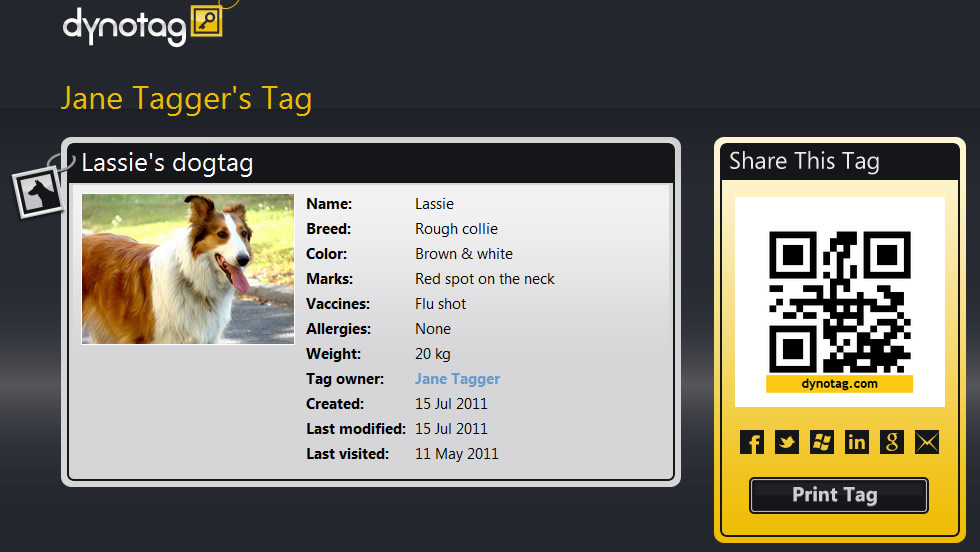
While the QR code is still gaining mainstream support across America, a Seattle-based startup named Dynotag launched this week that allows users to create QR codes for free and link those codes to a personal Web page. The QR code can be printed out in the form of a tag and attached to items that may potentially become lost. For instance, a user could create a QR code tag for a piece of luggage. If that luggage was left in the back of a cab or lost in transit during a flight, anyone can scan the QR code and be directed to the web page containing personal information about returning the luggage as well as any reward offered for the return.
 Other applications include attaching a tag to the collar of a dog or another pet. The page could list personal information about the dog including name, address, favorite treats, vaccines and other important details. In addition, Dynotag can send the user an email or text notification when the tag is scanned as well as showing visitor locations on a map assuming the scanning device has GPS capabilities. While standard tags are free for anyone to create through the site, Dynotag is also selling premium tags as well. Web pages for these tags come with 50MB of storage instead of the standard 4MB in addition to the previously mentioned alert notifications, a security PIN, a complete history of all access logs instead of the last 1,000 and API access.
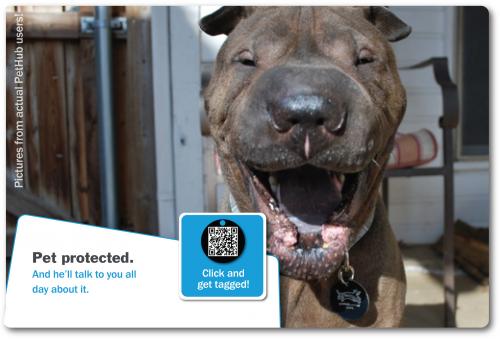
Another Seattle startup called PetHub is also using QR codes to keep track of pets. Pet owners can build out a pet’s profile on the site to contain photos and personal information about the animal. The tag that connects to the collar not only lists the QR code, but also a web address on the opposite side in case the person that finds the lost animal doesn’t understand what to do with the QR code. Pet owners can purchase the tag for $12.95 or purchase a collar with the QR code on the band for about $30.