1. Home
  2. Wearables
  3. Mobile
  4. News

Your Apple Watch’s SpO2 sensor might be a lot better than you thought

Add as a preferred source on Google

The Apple Watch’s SpO2 sensor that allows wearers to measure their blood oxygen levels was impressive when it first debuted, but it may be even more accurate than initially marketed.

According to a recent study, the Apple Watch’s blood oxygen reader is comparable to medical-grade pulse oximeters. Although Apple Watches shouldn’t be used in lieu of official medical devices, it’s nice to know that the readings they’re displaying are accurate enough to be reliable.
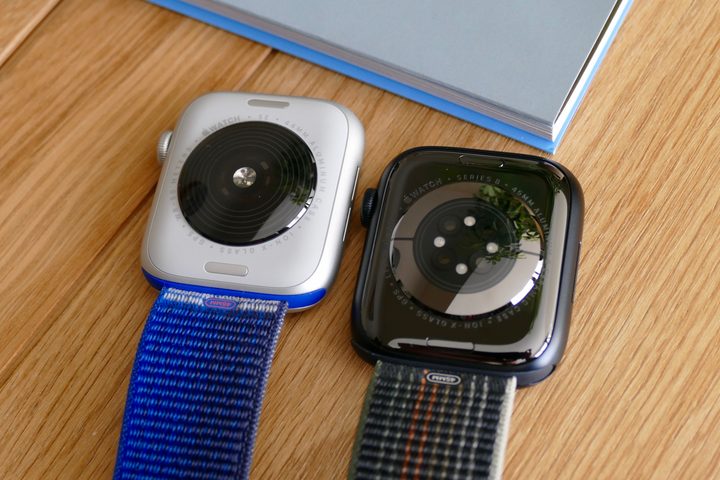
The case back differences between the Apple Watch SE 2 and Apple Watch Series 8.
Apple Watch SE 2 (left) and Apple Watch Series 8 (right) Andy Boxall/Digital Trends

First reported by 9to5Mac, the study was published this month in the Digital Health journal and sought to compare a “commercially available smartwatch” to a medical-grade pulse oximeter. The watch the study used was the Apple Watch Series 6, the first of Apple’s smartwatches to include an SpO2 sensor, which is over two years old at this point.

Recommended Videos

The results of the study showed that the Apple Watch “can reliably detect states of reduced blood oxygen saturation with SpO2 below 90% when compared to a medical-grade pulse oximeter.” To come to that conclusion, the study used 24 healthy participants, each one wearing an Apple Watch Series 6 on their wrist and clamped a Masimo Radical-7, a common pulse oximeter, on the middle finger of the same hand. The participants then did various breathing exercises to manipulate their blood oxygen levels to see how the Apple Watch performed when compared to the Masimo Radical-7. By the end of the tests, there were 642 blood oxygen readings to compare.

To reiterate: If you’re looking for a fully accurate blood oxygen level reading, it’s still best to use a proper medical device. But the results of the study show that Apple’s wearable tech is certainly moving in the proper direction for providing accurate medical information. In addition to the SpO2 sensor, Apple Watches provide alerts for irregular heartbeat rhythms that may suggest atrial fibrillation, medication intake reminders, and sleep tracking.

While Apple doesn’t claim that any of its devices can be used as concrete medical readers, the features that have been added to Apple Watches, in particular, are extraordinarily useful for those looking to monitor their bodily functions and have informed conversations with healthcare providers should they discover anything noteworthy.

Peter Hunt Szpytek
A podcast host and journalist, Peter covers mobile news with Digital Trends and gaming news, reviews, and guides for sites…
This smart ring makes a blood pressure promise Apple and Oura still won’t
The $399 Signal Ring provides actual systolic and diastolic readings, but it’s launching as a wellness device without FDA clearance
Oura Ring 4, Galaxy Ring and RingConn Gen 2 in the palm of a hand

Vital Signals has unveiled a $399 smart ring that goes further than Apple and Oura currently dare. The Signal Ring displays numerical blood pressure readings without requiring an arm cuff for initial or recurring calibration.

Bloomberg reports that preorders open July 16, with shipping scheduled to begin in October. The ring can collect readings during the day and overnight, then display the results through an iOS or Android app.

Read more
HTC’s smart glasses are apparently coming to the US, but HTC hasn’t said so
Amazon briefly listed the VIVE Eagle for a September 1 launch, while HTC still says the $499 glasses are only available in Taiwan
A woman wearing the HTC Vive Eagle smart glasses

HTC’s VIVE Eagle smart glasses could finally be heading to the US. Apparently, Amazon got the memo before HTC was ready to share it.

Notebookcheck spotted six versions available for preorder at $499, each carrying a September 1 release date. Amazon has since pulled the pages, so new orders are closed and anyone who already placed one is left wondering whether it still counts.

Read more
Don’t expect smartwatches and fitness bands with replaceable batteries anytime soon
Turns out even the EU thinks your smartwatch is too small for a battery swap.
Wristwatch, Arm, Body Part

The EU has a habit of pushing tech companies to adopt meaningful changes in their product. It's the reason your iPhone finally has a USB-C port, and it's also why companies now have to offer spare parts and repair support for electronics for several years after launch. So naturally, many of us assumed wearables were next in line for mandatory swappable batteries. Turns out, the EU just went the other way.

So what did the EU announce?

Read more