1. Home
  2. Wearables
  3. Computing
  4. Mobile
  5. News

Digital Trends may earn a commission when you buy through links on our site. Why trust us?

Apple slashes trade-in values for its iPhones and more

Add as a preferred source on Google

For at least the third time this year, Apple has slashed the trade-in values for its various products.

It means that if you’re shopping at Apple during this holiday season and plan to hand over your old device for a new one, the credit you receive will be less than if you’d done it before November 10.

Recommended Videos

Comparing Apple’s current trade-in webpage with an archived version, we see some quite significant changes to maximum trade-in values across its range of products.

For iPhones, the trade-in value largely depends on the model, storage size, and condition. For example, up until Wednesday, the maximum trade-in value for the iPhone 13 Pro Max was $720, but it’s been cut to $650.

The iPhone 13 Pro’s maximum trade-in value has also fallen by $50, from $600 to $550, while trading in an iPhone 13 will get you up to $450, down from $470.

Regarding slightly older devices, the iPhone 12 Pro used to get you up to $430, whereas that’s been cut to $400, while the iPhone 11 Pro now gets you up to $250, down from $300.

Several handsets have retained their trade-in value, including the two retired iPhone Mini handsets (12 and 13), which continue to get you up to $250 and $380, respectively. The iPhone SE 2 also continues to get you up to $100.

Looking at some of its other products, we see that anyone trading in an iPad Pro will now receive up to $445, down from $500. The iPad Air’s maximum trade-in value has fallen by $15 to $230, the iPad by $35 to $160, and the iPad Mini by $15 to $240.

Computers are also hit, with, for example, the MacBook Pro’s maximum trade-in value now standing at $630, down from $850, and an iMac getting you up to $530 when it used to be $680.

Even the diminutive Apple Watch doesn’t escape the trade-in reductions. For example, handing over your Apple Watch Series 6 will get you up to $105, down from $125, while the SE’s maximum trade-in value stands at $70, marking a $5 reduction. The Apple Watch Series 7 remains unchanged at up to $155.

It’s normal for Apple to take this kind of action, but the timing may irk some customers who had recently budgeted for an Apple purchase with a trade-in as part of the deal, especially as we head into the holiday season when personal finances can be tight.

Of course, you don’t have to trade in your phone with Apple. In fact, taking another route will likely result in a better deal. Digital Trends has some excellent tips for selling your iPhone, though the advice can be easily applied to other gadgets, too.

Trevor Mogg
Contributing Editor
Not so many moons ago, Trevor moved from one tea-loving island nation that drives on the left (Britain) to another (Japan)…
Qualcomm is set to ratchet up chip prices in September, and your next gadget upgrade could bear the brunt
The price hike could touch every Snapdragon-powered device category.
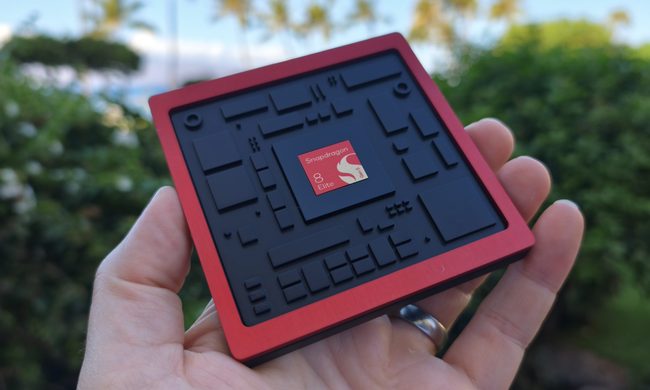
The new Qualcomm Snadragon 8 Elite Gen 5

I want you to sit with this for a second. Qualcomm, the company whose Snapdragon chips sit inside your Android phone and tablet, your Windows laptop, your Meta smart glasses, your Galaxy Watch, and your wireless earbuds, reportedly sent a letter to every major customer telling them prices are going up by double digits. 

The price hike will be in effect from September 1, 2026, a recent Bloomberg report claims. Essentially, all the companies placing their chip orders after that will pay a higher price. 

Read more
Slacked off all summer? Here are 3 fitness trackers that’ll help you stay accountable as you head back to school
Three trackers, three price points, three totally different approaches to keeping you honest about your own goals.
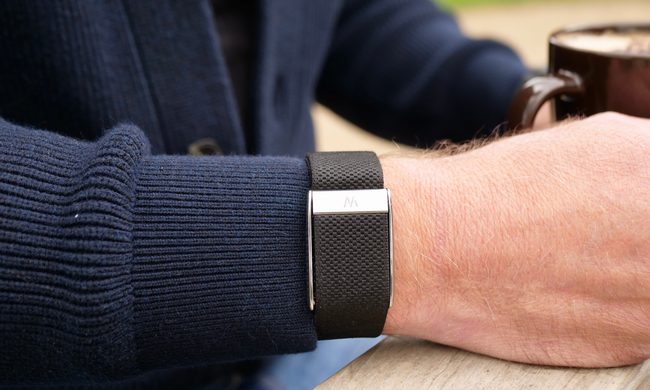
A person wearing the Whoop 5.0.

Summer break did what it usually does. Your sleep schedule drifted, workouts happened less often than you'd hoped, and by the time August rolled around, you were feeling it. You've got a plan to get back on track once the school year starts and your days have more structure, but you know how that usually goes. The first two weeks are solid, then the routine quietly slips.

A fitness tracker won't get you off your couch. What it will do is put a number in front of you every day, one that makes it obvious whether you stuck to your goal or slacked off. That small bit of visibility is often the difference between meaning to work out and actually doing it. Back-to-school season is a good time to buy in, since you're already resetting more than one part of your routine, and the overlap makes the habit more likely to stick. To keep the odds in your favor, here are three fitness trackers that can help you stay accountable and actually hit your goals.

Read more
Galaxy Watch 9 vs. Watch Series 11: Has Apple finally met its smartwatch match?
From AI-powered health coaching to outdoor fitness tracking, here's how Samsung's Galaxy Watch 9 stacks up against Apple's Watch Series 11.
Wristwatch, Arm, Body Part

These days, the real battleground between smartwatches is who can turn a wrist-worn, sensor-loaded device into something that resembles a personal fitness trainer, and this year's crop of flagship wearables takes that fight more seriously than ever. 

Samsung just refreshed its mainstream Galaxy Watch line with a new silicon and a batch of clinically-backed health tools, landing squarely on Apple's home turf of preventive wellness tracking. Apple, for its part, has spent the better part of a year letting its Series 11 sit as the reigning pick for anyone inside its ecosystem, propped up by a software catalog few rivals match feature-for-feature. 

Read more