The world is no stranger to the perilous impact of global warming. Research courtesy of experts at the University of California, Irvine that was published last month warns of an oceanic disaster in the near future due to the current trajectory of climate change. Now, radical new research is proposing a rather odd solution to shield our planet from the Sun’s heat — moon dust.
The brainchild of experts at the University of Utah and the Center for Astrophysics (Harvard & Smithsonian), the idea is to launch dust collected from the moon into a stable orbit, allowing the dust cloud to block some of the sunlight. “Judiciously chosen trajectories allow streams of grains to shade Earth for up to a week,” says the research paper published in PLOS journal.

Instead of launching dust from Earth into a stable orbit to block a small amount of sunlight, scientists aim to mine the lunar surface and push the moon powder ballistically into the desired location. The latter method has two advantages. First, it would require less kinetic energy to do from a station on the moon. Second, all the sun-blocking dust we need is readily available on the moon.
To determine if moon dust shielding would actually be a viable means of cooling the planet, the research team started by running complex simulation models that analyzed the movement of dust in an orbit, after factoring in the gravitational pull from Earth, the moon, the sun, and the nearby planets. The initial idea was to put a dust-spraying station at the L1 Lagrange point, where the net gravitational pull between the sun and the Earth is at an equilibrium between the two celestial bodies. However, replenishing the dust supply to this floating station would be difficult.
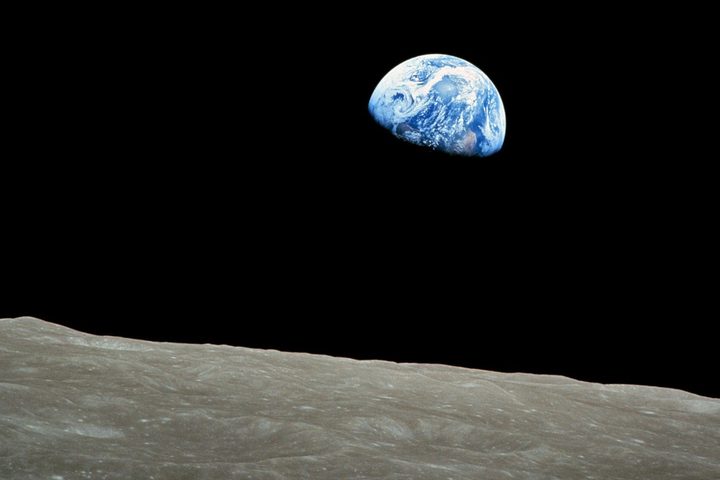
The more feasible alternative, according to the researchers, is to build a station on the moon and blast dust off the lunar surface to create a temporary cloud that would block 1% to 2% of the sunlight exposure. As per the research paper, the team is targeting a 1.8% reduction in solar irradiation, which equates to eliminating about six full days of sun exposure from a standard year.
However, this plan has its own set of drawbacks. First and foremost, scientists would have no control over the behavior of this dust cloud, and while they’re confident that the dust wouldn’t fall back to Earth or inadvertently transform it into a frozen, dark, postapocalyptic hellscape, they do admit that once the dust is released, there’s effectively no way to steer it. Second, building a station on the moon and the ballistic dust-shooting gear is a plan without any concrete execution date, and more importantly, adequate funding. NASA’s lunar mining operations are still limited to small samples of regolith, and plans to build a station and implement the moondust cloud is a decade away, by the safest estimates.
In other words, don’t hold your breath. While blasting moon dust into the void between Earth and the sun is technologically feasible, it’s unlikely that this plan will move beyond the conceptual phase anytime soon. So until some future billionaire astrophilanthropist decides to spend his fortune on planetary sunscreen, we’ll just have to do our best to fight climate change the old-fashioned way.