1. Home
  2. Space
  3. News

NASA’s experimental supersonic jet edges toward first test flight

Add as a preferred source on Google

NASA’s experimental X-59 Quiet SuperSonic Technology (QueSST) plane is gearing up for its first test flight sometime this year.

Recommended Videos

As its name suggests, the plane is trialing technology that dampens the sound of the very loud sonic boom that occurs when an aircraft breaks the sound barrier. The X-59 is supposed to reduce the sudden noise to a quieter “sonic thump,” so it could pave the way for supersonic passenger flights over the continental U.S. that up to now have been banned due to regulations around noise pollution.

NASA recently shared a couple of images (above) showing the X-59 sitting on what’s known as the “flight line,” the space between the hangar and the runway, at Lockheed Martin Skunk Works in Palmdale, California.

“The move from its construction site to the flight line is one of many milestones that prepare the X-59 for its first and subsequent flights,” NASA said this week, adding that the team will now conduct a series of important ground tests to ensure that the aircraft ready for its maiden flight.

One such test flight will involve flying the X-59 at supersonic speed over a number of communities to see how residents respond to the sonic thump generated during its high-speed flight. NASA will then hand its findings to U.S. and international regulators in a move that could open up the possibility of commercial supersonic flights over land.

The X-59, which began development in 2016, is designed to fly at 55,000 feet (16,765 meters) at a cruise speed of Mach 1.42 (937 mph/1,508 kph) — getting on for double that of a conventional passenger jet. At that kind of speed, flight times between destinations will of course be drastically reduced. The fastest flight between New York City and London by Concorde — the supersonic passenger jet operated by British Airways and Air France until its retirement in 2003 — took just 2 hours and 53 minutes, well under half the time it takes a subsonic passenger jet. It means that a supersonic flight between New York City and Los Angeles, which currently takes around 5 hours and 30 minutes, could be cut to around 2 hours and 30 minutes or even less.

Concorde flew between the U.S. and Europe, a route only allowed because the airports — Washington Dulles and New York City’s JFK — were on the East Coast, meaning the supersonic boom occurred over the Atlantic.

The X-59, however, could lead to a slew of new and faster routes not just over the U.S., but also globally, though whether you’ll be able to afford a seat is another matter entirely.

Trevor Mogg
Contributing Editor
Not so many moons ago, Trevor moved from one tea-loving island nation that drives on the left (Britain) to another (Japan)…
Space is becoming Bezos and Musk’s next data center site, and we have every reason to worry
The AI boom is coming for the night sky
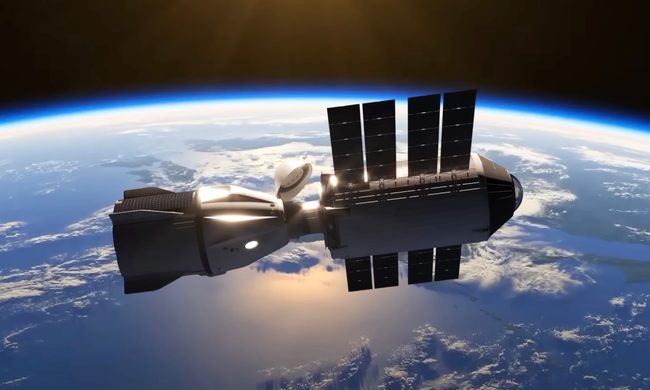
How Vast's space station will look in orbit.

AI data centers already consume vast amounts of electricity and water on Earth, so Silicon Valley has begun looking somewhere considerably more spacious... literally.

Elon Musk's SpaceX and Jeff Bezos' Blue Origin, along with several other companies, have proposed enormous constellations of satellites designed to operate as orbital data centers. However, environmental groups and former space officials are now warning that putting them into orbit at the proposed scale could have severe consequences for Earth's atmosphere and the night sky.

Read more
The first possible exomoon is here, and it makes our Moon look hilariously tiny
Scientists may have found the first exomoon, except this one is the size of Jupiter
This artist’s concept depicts a potential volcanic moon between the exoplanet WASP-49 b, left, and its parent star. New evidence indicating that a massive sodium cloud observed near WASP-49 b is produced by neither the planet nor the star has prompted researchers to ask if its origin could be an exomoon.

We have already discovered more than 6,000 planets outside of our immediate neighborhood. Yet, finding a moon orbiting one of those distant worlds has proved considerably harder. Astronomers may finally have something close to the real deal, but this particular object stretches the word “moon” almost beyond recognition.

Using the European Southern Observatory’s Very Large Telescope in Chile, researchers detected strong evidence for a moon-like object in the CD-35 2722 system. Further observations are still necessary to confirm the discovery, but it could become the first confidently detected natural satellite outside our solar system. There is still one tiny complication though. This moon is apparently massive.

Read more
China’s answer to SpaceX’s reusable rockets literally catches boosters in a net
SpaceX catches boosters on legs. China just used a net.
Ammunition, Missile, Weapon

SpaceX's playbook for recovering a rocket booster generally involves legs, a precisely controlled vertical landing, and either a concrete pad or a drone ship. 

China just managed to pull off something similar, but in a slightly different way, and on July 10, it tested the method as well.

Read more