  1. Home
  2. Audio / Video
  3. Entertainment
  4. News

Disney already knows if you’re sharing your streaming account

Add as a preferred source on Google
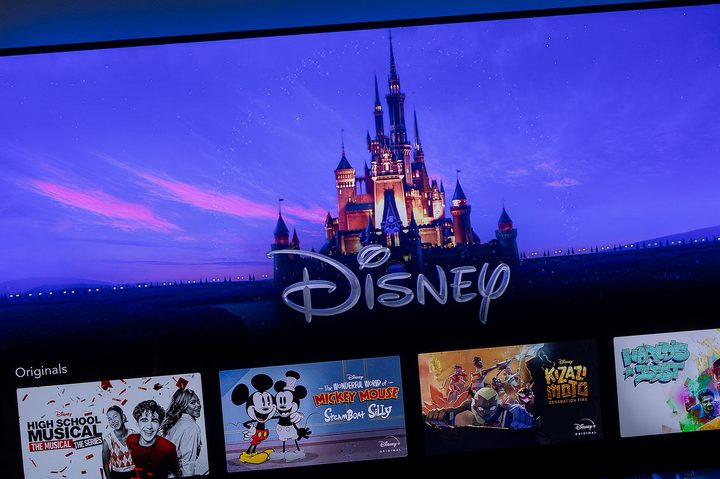
The Disney World castle as seen in the Disney+ streaming app.
Phil Nickinson / Digital Trends

Along with a number of price increases, the other big news to come out of Disney’s (fiscal) third-quarter earnings report was that the company is taking a serious look at account sharing — password sharing, if you will — and will begin to crack down on it in 2024.

In other words, it’s going to do what Netflix has done, and it’s time to pay up. But we don’t yet know exactly what that will look like.

Recommended Videos

“We’re actively exploring ways to address account sharing, And the best options for paying subscribers to share their accounts with friends and family,” CEO Bob Iger said. And you have to appreciate that positive spin. You’ll be given the option to share your account, so long as you pay to do it.

Iger wouldn’t say how many accounts Disney believes are allowing double-dipping, only that “it’s significant.” By way of context, Netflix — which has nearly twice as many paid subscribers worldwide as Disney+ — said 100,000 accounts were sharing passwords when it began to crack down on the practice and instead offer account holders a way to pay extra (but less than a full account) to allow someone who doesn’t reside at the same home to use the account.

And what’s more: Disney has a pretty good idea who’s allowing their logins to be used elsewhere.

“We already have the technical capability to monitor much of this,” Iger said on the earnings call.

There are a lot of details to be worked out, and Iger said there’s a good chance that whatever Disney decides to do, it might not be completely finished until 2025, but that subscribers should look for the scheme to begin in 2024. Another of those details is whether the account-sharing crackdown would extend to Hulu and ESPN+, which also fall under the Disney umbrella. (We wouldn’t bet against it.)

No matter the details, it’s all about the money, and getting those who aren’t paying, but probably should be to become revenue-generating customers. (Netflix, for what it’s worth, has said its scheme works.)

“What we don’t know, of course, as we get to work on this, is how much of the password sharing, as we basically eliminate it, will convert to growth and subs,” Iger said. “Obviously, we believe there will be some, but we’re not speculating.”

Phil Nickinson
Former Section Editor, Audio/Video
Phil spent the 2000s making newspapers with the Pensacola (Fla.) News Journal, the 2010s with Android Central and then the…
Samsung takes on Dolby Vision 2 with its new HDR format hitting Prime Video this month
Samsung's HDR10+ Advanced beats Dolby Vision 2 to Prime Video this month.
Samsung TV Settings

I didn't expect Samsung to be the one crossing the finish line first here, given how much noise Dolby Vision 2 made when it was announced (September 2025). 

The company has confirmed its next HDR format, and it’s arriving on a popular OTT platform this month, beating Dolby Vision 2 to the punch.  

Read more
CMF’s first open-ear earbuds are here with a Smart Dial charging case that lets you control music
CMF's new earbuds ditch touch controls for a rotating dial on the case.
nothing-cmf-clip-pro-earbuds

CMF just stepped into one of the most crowded corners of the earbud market, and it's doing it with a case that steals the spotlight. The Nothing sub-brand launched the Clip Pro, its first open-ear earbuds, designed to let you hear your surroundings without sacrificing sound quality.

The CMF Clip Pro arrives in the US, UK, and Japan on August 15, priced at $99, with a wider global rollout following on September 15.

Read more
Google Drive steps up its video collaboration game with timestamped comments
Google Drive's timestamped comments pin feedback to exact moments in videos.
Google Drive featured image.

Over the years, I’ve collaborated with many video editors and content creator friends of mine, often pointing out things like how the text isn’t visible around the two-minute mark or how the transition in the opening sequence feels a little off. 

However, most of the time, they would end up scrubbing through the whole clip trying to find what I meant, or they'd ask me to send a screenshot of the exact moment I was referring to. Considering I wasn’t charging anything to spot those issues, that extra effort always stung a little. Thankfully, Google’s latest Workspace update finally fixes that.

Read more