  1. Home
  2. Computing
  3. Gaming
  4. News

This might be why AMD’s FSR 3 isn’t picking up momentum

Add as a preferred source on Google
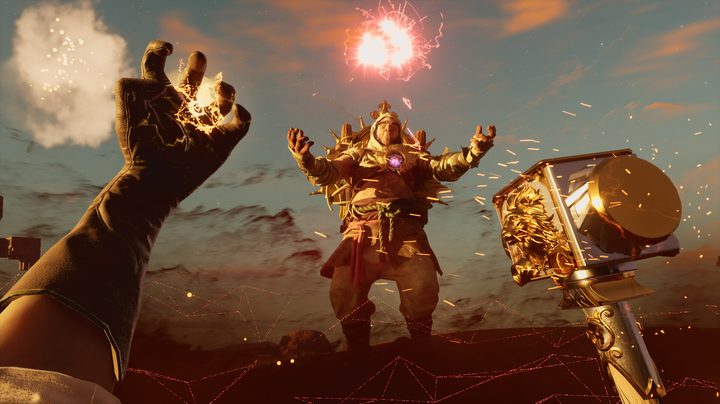
Combat in the game Nightingale.
Inflexion Games

AMD’s platform-agnostic FSR 3 is a great feature, but months after releasing, it’s only available in a small list of titles. Now, we might finally have a clue as to why.

Developers of the upcoming open world survival game Nightingale posted a development update stating that it was removing FSR 3 due to crashes. “After reviewing crash data from the Server Stress Test, a significant number of them seemed to point to FSR3 integrations, whether or not users had the setting turned on,” a prelaunch update post reads.

Recommended Videos

The developer says it’s looking at ways to implement FSR 3 in the future, but it won’t be available in the launch build. The game is set to launch on February 20, a day after this news broke. The update suggests players use XeSS or DLSS as an alternative for now as they wait for the developer to “see if we can implement [FSR 3], or an older FSR version, in future updates.”

FSR 3 adoption hasn’t picked up nearly as much momentum as we expected. Since the feature released in September of last year, it’s only shown up in 13 games. Nvidia’s DLSS 3 made its way into 25 games in the same time frame. Many titles that have promised support, including Cyberpunk 2077 and Warhammer 40K: Darktide, have yet to receive the feature as well.

Perhaps the biggest fumble for FSR 3, though, was Starfield. AMD signed on as the “PC exclusive partner” for the game, but despite that, FSR 3 only made its way into Starfield about a week ago. On top of that, developer Bethesda added support for Nvidia’s rival DLSS 3 before FSR 3 was added to the game.

The update for Nightingale provides some interesting insight into the slowed FSR 3 adoption. The developer says crash data points to FSR 3, regardless of if it’s turned on or not, suggesting there may be issues getting the feature running. The online component of Nightingale may be playing a role, too — of the list of FSR 3 games, the majority are offline, single-player titles, with the exception of Mortal Online 2 and Call of Duty Modern Warfare 3. 

This wouldn’t be the first time AMD has run into issues with online titles. Last year, AMD’s Anti-Lag+ was flagged by anti-cheat software in Counter-Strike 2, leading some users to receive a ban in the game for turning on the feature.

Jacob Roach
Former Lead Reporter, PC Hardware
Jacob Roach is the lead reporter for PC hardware at Digital Trends. In addition to covering the latest PC components, from…
How Claude helped my 65-year-old dad finally ditch his handwritten ledgers
AI has a lot to answer for, but this one small win is hard to argue with, at least for me.
Claude app on iPhone

My dad has owned a small business for as long as I can remember, and for just as long, he's kept his books the old-fashioned way. Every sale gets written down by hand so he can file his taxes later. The problem is that his accountant needs this data in Excel, and my dad, who didn’t grow up around computers, has never learned how to use it.

For years, his workaround was paying someone to manually type his handwritten entries into a spreadsheet. It worked, but it was adding additional cost to his business, which he wanted to avoid, but couldn't.

Read more
AI’s energy tax was already concerning. Research says AI agents are over hundred times worse
AI agents could consume 136 times more energy than today's AI, study finds
AI agents

The AI industry's soaring electricity demand has already become a growing concern for governments, utilities, and technology companies. But a new study suggests the next generation of artificial intelligence could make that problem significantly worse.

Researchers from the Korea Advanced Institute of Science and Technology (KAIST) have published what they describe as the first comprehensive analysis of the energy cost of AI agents - AI systems capable of reasoning, planning, and completing tasks autonomously. Their findings show that these systems can consume up to 136.5 times as much energy per query as conventional generative AI models, raising fresh questions about whether the infrastructure supporting tomorrow's AI is ready for what's coming.

Read more
I hope Apple keeps the MacBook Neo away from the AI hype and preserves its true identity
The cheapest MacBook beats the cheapest AI MacBook.
Computer, Electronics, Laptop

If there's one thing that has disrupted consumer tech economics over the last year while changing how we understand and recommend products, it's the ever-rising cost of memory and chips. 

The desperate need to scale up AI infrastructure has pushed major manufacturers to prioritize enterprise demand, leaving everyday consumers with far fewer choices. Those available cost significantly more than they did a year ago.

Read more