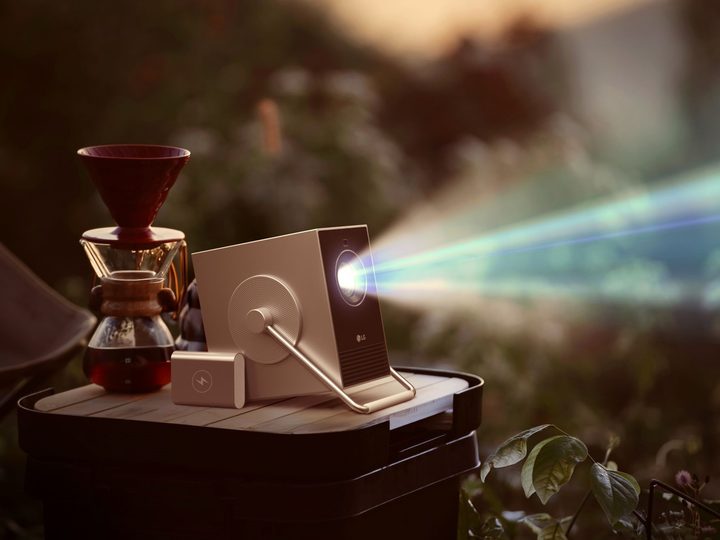

Projector technology has advanced significantly in recent years. The visual fidelity is just as good as that of your average TV, with a brighter screen than you might expect. However, projectors are also shrinking in size, moving away from the bulky, unwieldy designs they used to have. Take the LG CineBeam Q projector, for example. It’s tiny, weighing just 3 pounds, which makes it perfect for portable use. It reimagines what a home cinematic experience can be, delivering true 4K quality in a super compact form. Beyond that, you’ll love many features, like content streaming right out of the box, a swing-down handle that can adjust the projector viewing angles, and cinematic sound to match the visuals, thanks to impressive built-in 3-watt speakers. It’s time to create the home cinema you’ve always imagined.
LG CineBeam Q projector deal
- Current deal — $999, was $1,299
The deal for the LG CineBeam Q projector is for a limited time, so grab it while you can!
A new generation of cinematic experiences
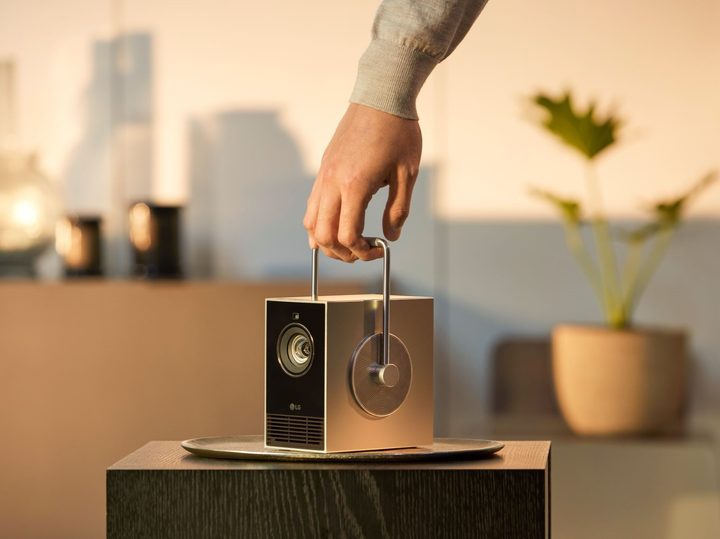
Imagine watching your favorite movies or shows on a sharp, beautiful screen featuring impeccable color and 4K quality video, all on a 120-inch screen. Even better, now imagine having that experience virtually anywhere. Your bedroom, a hotel room, your back patio or backyard, at a campground, you name it. That’s precisely what the LG CineBeam Q projector can deliver in its super compact and manageable format. It weighs just three pounds and includes a built-in handle. That handle doubles as a functional stand so that you can adjust the viewing angle. For example, you could prop the projector up to display a screen on the ceiling.
Stream content directly to the device from your favorite platforms, including Netflix, Apple TV, and more. LG’s webOS, which is integrated into the cinematic experience, makes this possible. You can even cast from iOS, MacOS, and Android devices, sharing your screen or showing off some family photos.
LG has also emphasized an entire cinematic experience here, not just with video but also with sound. You’ll get cinematic surround audio with incredibly powerful built-in speakers. That’s not something you usually see in projectors of any size, let alone something as small as the CineBeam Q. But here we are.
If you’re into specs, here are some of the more important ones:
- 450,000:1 contrast ratio
- 4K ultra-HD resolution at 3840 by 2160
- Screen size: 50 up to 120 inches
- Distance: 80-inches at 7 feet away or 100-inches at 8.7 feet away
- Bluetooth wireless
- HDCP 2.2, HDR10, and HLG support
- 1 HDMI input and 1 USB Type-C for display and power
Why the LG CineBeam Q?
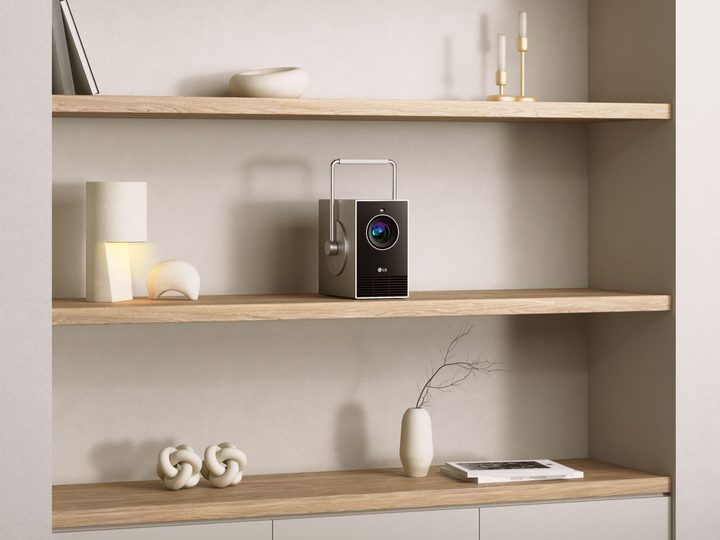
Typically, when you’re going for a portable device like this, you have to sacrifice some great features somewhere. That’s not the case with LG’s CineBeam Q. It’s super tiny, lightweight, and versatile while still providing 4K quality content at an incredible size — up to 120 inches — and with smart streaming built-in thanks to LG’s webOS. Plus, you don’t have to worry about lugging extra gear everywhere, like an external speaker, because it has fantastic audio built-in.
Q isn’t a question. It’s a statement, and with this device, LG is undoubtedly making a statement. It’s time for a new generation of home cinematic experiences on a level you could only imagine in the past. We’re still caught up on the idea of a 120-inch screen. Wow.