It looks like Samsung is making some major changes, inside and out, for the next Galaxy S flagship. So far, leaked renders have imagined a sharper-looking Galaxy S25 Ultra with slimmer bezels, cleaner lines, and a more boxy design.
Now, according to reliable leakster UniverseIce, the Galaxy S25 Ultra will come fitted with 16GB RAM. For comparison, the Galaxy S24 Ultra offers 12GB of RAM, while the entire iPhone 16 lineup has 8GB of memory.
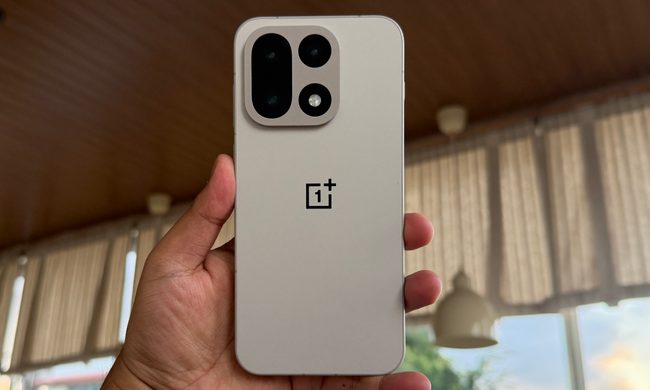
Now, Samsung won’t exactly be setting any new industry standards with the Galaxy S25 Ultra and its 16GB RAM module. Phones such as the Asus ROG Phone 8 Pro, REDMAGIC 8S Pro Plus, and the OnePlus Ace 2 Pro have already touched the overkill 24GB ceiling.
The S25 Ultra will definitely have a 16GB RAM version, this is 100% confirmed, don't worry.
— ICE UNIVERSE (@UniverseIce) September 27, 2024
Of course, you don’t need 24GB on any “normal” smartphone at this moment, unless you need it for cracking those obvious “my phone has more RAM than your PC” jokes.
But jumping from 12GB to 16GB can have some practical benefits, apart from just keeping more apps running in the background and some extra boost at gaming, as smartphone makers proudly claim.
It’s all about AI, probably
The real beneficiary is AI, and specifically, the on-device flavor where tasks are executed by a local AI processing unit rather than offloading it to the cloud. Remember the hoopla around Google limiting Gemini Nano chops to the Pixel 8 Pro and not extending it to the vanilla Pixel 8?

Well, Android VP and general manager Seang Chau later confirmed that the 12GB RAM on the Pixel 8 Pro was more suited for faster and more efficient local AI processing compared to the Pixel 8, which only had 8GB of RAM.
Evidently, four gigs of added memory can make a lot of difference, though the performance gulf may not be as evident as jumping from an already good enough 12GB RAM to 16GB memory capacity.
But at the same time, we are seeing AI models – including Google’s own Gemini kit and Samsung’s GalaxyAI bundle — getting more sophisticated and adding more to their token bandwidth, so it’s always a safe choice to pack in more RAM for future-proofing.
Or, as a certain Obi-Wan Kenobi would concur, having the higher ground is advantageous.

“While current basic AI features use around 100MB of memory on mobile devices, LLM-based features could require up to 7GB of additional RAM,” analysts at Yole Group explain.
For example, the Gemini Nano model handling AI chores on the Galaxy S24 series eats up 2GB memory, as per estimates, but to effectively handle AI models with a 7 billion parameter range, 16GB of RAM is the recommended format.
In fact, experts estimate that advanced LLM-based (Large Language Models) tasks could require an additional 7GB of RAM. Processing and analyzing datasets — imagine AI assessing an image or a PDF research paper — requires a lot of memory for computational tasks.
How fast data processing happens and whether parameters are handled effectively decides how quickly the AI outputs are received. An insufficient amount of RAM can prove to be a serious bottleneck for AI tasks. And given the Galaxy AI push at Samsung, it would make sense if the company’s next flagship offers 16GB of RAM for the best AI experience.