On today’s You Asked: Laser TV versus a huge mini-LED TV. What happens to the TVs after we test them? Breaking in TV speakers — is that a thing? And why are we so obsessed with TV picture quality?
Laser TV or Hisense 110 UX?
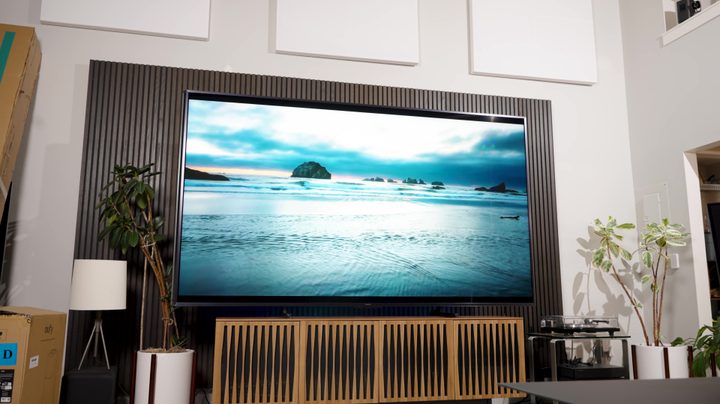
Anand writes that he’s finally building a dedicated media room in a new home and was planning on going with an ultra short throw projector — aka a laser TV — until they saw my video about the Hisense 110 UX. They feel the UX is overpriced right now, but is willing to wait a year if the price might drop to $5,000-$6,000.
Anand, I do not think the Hisense 110 UX TV is going to drop by more than 50% in just a year. I do think next year’s version may come out as less expensive, and this year’s version — if there are still any left (I suspect Hisense isn’t making a ton of those) — may drop by as much as 50%. But I suspect that the TV won’t sell for less than $10,000 until it is gone.
If you want a screen larger than 100 inches, then I suggest you go with your original plan of getting an ultra short throw projector and ALR screen. That’s probably the smarter move all the way around. In your light-controlled mini-theater, that UST projector is going to be plenty bright enough for a thrilling experience.
Getting it all back in the box
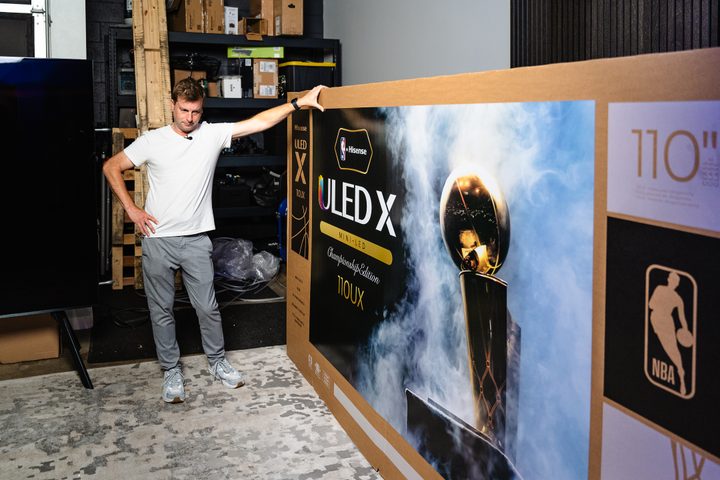
Pat Walsh writes: I was just watching the UX unboxing video and I was wondering: How do you guys box these things back up to return them? I mean, it’s impossible to put all of the wrapping back on. Does it get moved on to another reviewer in its slightly used state? If so, do only certain reviewers rate a pristine tester? Keep up the good work. I love my U8K, which your video helped me decide on.
Pat, you’re right: When we re-box these TVs to go back to the manufacturer, I can’t put the protective film back on the TV. And sometimes the protective sheath or bag gets a little torn up because that material isn’t all that strong to begin with, plus the tape they use to keep it in place tends to rip. So, although we do a great job re-boxing these TVs, they are clearly not factory-fresh when we send them back.
I do know that manufacturers will often check over the TV before sending it out to the next reviewer. However, I have been the recipient of TVs that have been out to another reviewer — not every TV I get is factory-fresh, though most of them are — and, yes, you don’t get the protective film on those.
Most manufacturers are good about resetting the TVs, which is great because I am so bad at resetting them before I pack them up for return. But sometimes a brand so urgently wants to get the TV to another reviewer that it leaves my place bound for the next person. So they get to see me logged into their TV. My apologies to fellow reviewers. Although, to be fair, sometimes they play pranks on me by watching crazy content to mess up my recommended feeds. Guess I deserve that.
What happens to these TVs after they have been reviewed? That depends on the brand and that company’s policy. I’d like to think the TVs land in the hands of someone who can appreciate and enjoy them. But I also know of at least one brand that sticks them in a warehouse. They just sit there doing nothing before eventually getting “recycled,” which is a shame and a waste of a great TV.
And some TVs get damaged enough during shipping that a brand wouldn’t want to put it out into the public, which I understand.
Best way to break in speakers?
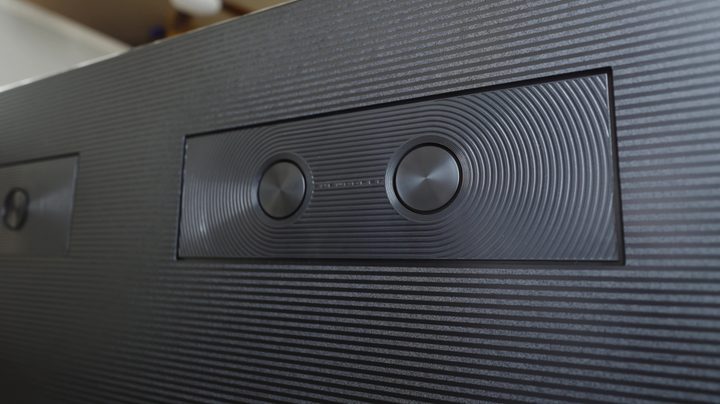
Steve writes: Just finished watching the unboxing video of the Hisense 110 UX and you mentioned “breaking in the speakers.” While I’m not expecting anything amazing from my Bravia without at least a soundbar, I’m now curious what steps I can take to get the most out of what I’ve got. Do you have a particular routine that you carry out every time on new TVs, or does it vary depending on the make and model? Keep up the great work!
Thanks for the question, Steve, and it’s interesting you picked up on that. The notion of speaker break-in is the matter of some debate. Some believe that it provides no audible change to a speaker’s performance, but it has been scientifically proven that a speaker driver’s operation changes a little after several hours of use.
TV speaker break-in might even seem laughable to some because if there is a question about whether high-end tower speakers appreciably change after break-in, then the idea that a tiny TV speaker might sound different after break-in is dubious for sure.
I’ll tell you this: The more elaborate the speaker system in a TV, the more inclined I am to give it a break-in period. The primary reason is that I don’t want to leave any questions as to whether the performance I witness is indicative of the performance a user might get after their TV has been used for a while.
There are speaker break-in videos on YouTube that are basically glorified pink noise, where all frequencies are being produced. Run that for several hours and your TV speakers are likely to get as broken in as they are going to get. I would not expect a dramatic shift in performance, though.
As a parting thought, I’ll just throw it out there that some folks believe breaking in the listener is more important than breaking in the speaker.
Perfect TV quality: Why are we obsessed?
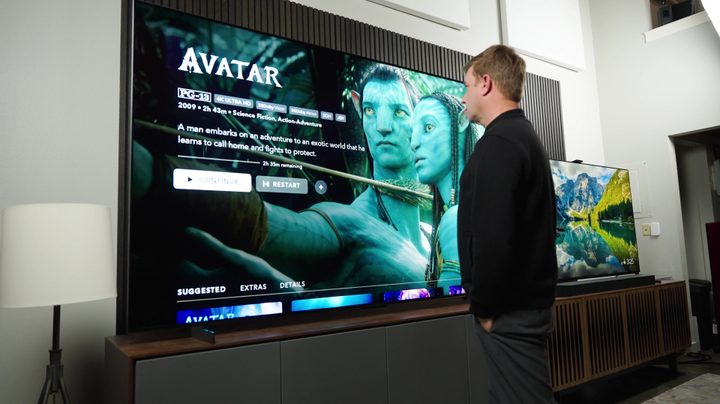
Rick Hall writes: Why are we obsessed with perfect TV quality? When I go to the movies I don’t see inky blacks, nor do I see amazing spectacular highlights like the YouTube demos. I see an amazingly huge picture combined with awesome sound quality, providing an A+ experience!
I love this question. It’s one of those things that make you go hmmmm. It’s one of those questions that almost seems obvious once you’ve heard it out loud. However, very few people have thought about this.
I’ll answer your question with what is basically just my opinion. In several of my super-large-screen TV reviews where the TV was not top-of-the-line (it was a more affordable model that happened to be super huge) I’ve pointed out that a lot of folks are very happy with very good picture quality at a huge size and would take that nine times out of 10, versus excellent picture quality at a smaller size.
There is something really amazing about the massive scale of a commercial movie theater screen and the sound — again, perhaps not as high fidelity as some home systems. It’s just bigger and louder and more expansive due to the scale of the system.
I think there’s a lot of psychology at play here. We want to get the best experience possible, so instead of getting a massive 200-inch or larger screen we go for the best picture quality available. Also, we own our TVs for a long time and we look at them almost every day. It’s a lot easier to hone in on a TV’s weaknesses than to get wrapped up in what a projector is or is not doing in a theater, especially when we’re in and out in just a couple hours — unless it’s a Martin Scorsese film, of course.
Finally, because we can get such great picture quality — that there are levels of awesomeness for us to purchase — it gets us thinking about the return on investment we want.
I also think that just the smell of the popcorn and the excitement of an entertainment destination makes us a little forgiving.
So, add all that up and I think that helps explain why we’re so obsessed with getting the best TV picture quality we can. And I’ll add that I am super excited that that’s how some humans are, because it keeps me in a job that I love very, very much. Thank you guys — no really, I mean it.