  1. Home
  2. Phones
  3. Mobile
  4. News

Android 16’s latest beta promises deeper mobile photography controls

Add as a preferred source on Google
The Android 16 logo on a smartphone, resting on a shelf.
Joe Maring / Digital Trends

Google has started rolling out the second beta update of Android 16 for supported Pixel devices. There are not many user-facing features arriving with this build, but Google is making a few framework changes that will enhance the camera experience for users in the near future.

The most notable change is a new hybrid auto exposure system arriving with the Camera2 API upgrade. So far, users have only had access to rudimentary controls in the auto-mode for capturing stills and videos. For deeper controls, there was no other option than digging into the cluttered Pro mode.

Recommended Videos

With the new hybrid system, users will be able to fine tune the ISO levels and exposure time, while the algorithmic auto-exposure system will handle the remaining aspects. A tighter control over exposure opens the doors for capturing better high dynamic range shots, panoramas, and achieving artistic shots in tricky lighting conditions.

Smartphone makers usually serve their own flavour of automatic exposure adjustment, but the results they produce are not universally appealing. A hybrid approach at least gives you control over a crucial aspect without getting overwhelmed by pro mode dials and scales.

Another neat feature coming with Android 16 is the ability to adjust frame temperature as well as tint levels, thanks to a new color correction pipeline. Once again, it offers a respite from the flubs of an opaque automatic white balance adjustment system.
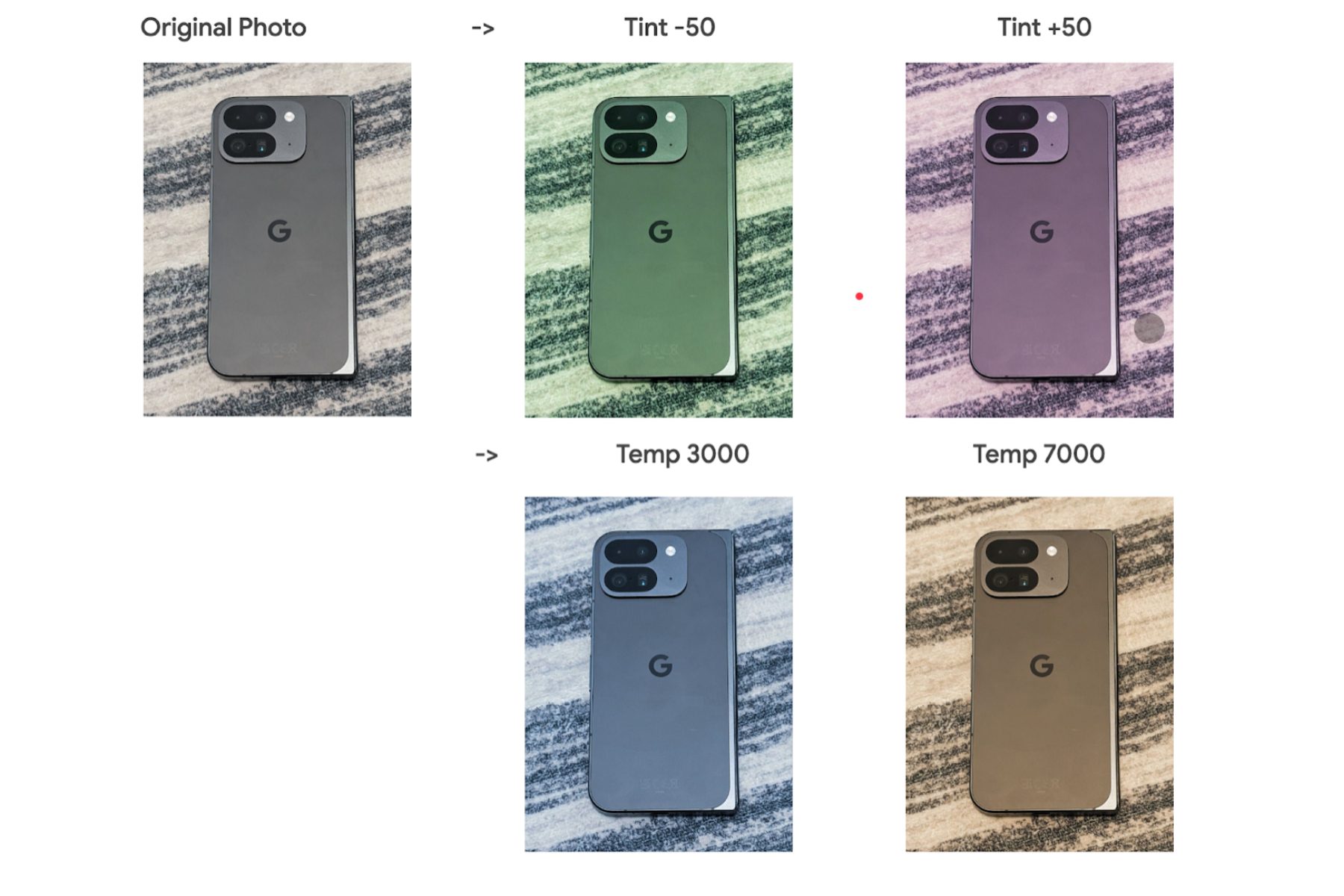
Preview of tint and temperature control in android 16 camera app.
Google

With granular tint and color adjustment controls, users can compensate for any external light disparities and achieve the desired color tone in their videos. And finally, the update also introduces support for capturing motion photos.

Google has served a somewhat similar system for motion photos on its Pixel phones, tying them to the Action Pan and Long Exposure modes. Then there’s Top Shot, which lets users pick the perfect frame from within a clip or photo they captured.

However, it’s not quite the Live Photo system that you see on iPhones, and a similar implementation on a few other smartphones such as the OnePlus 13. With the arrival of Android 16, capturing and viewing of motion photos is getting standardized.

For folks who love capturing UltraHDR shots, they will be glad to see support for the HEIC format, which is less taxing on the internal storage without degrading the quality. Google says it is also working to add support for the AVIF format down the road.

Android 16 will reach platform stability in the coming months, and the stable build will be released sooner than the previous iterations. At the moment, beta testing of Android 16 is limited to Google’s Pixel series of devices.

Nadeem Sarwar
Nadeem is the Managing Editor at Digital Trends.
OnePlus is building another flagship monster for a shrinking audience, and its expected to launch in October
OnePlus 16 could launch in October, but it may not leave China
Rear shell of OnePlus 15.

While OnePlus may have exited the US and Europe, the brand is still alive in its home market and is already working on its next flagship smartphone. A fresh leak from Chinese tipster Digital Chat Station has now revealed more details about the OnePlus 16, including its design and a revised launch timeline.

The tipster previously claimed that the phone would arrive in September 2026, but the latest information points to an October launch in China (via Gizmochina). The global picture is far less clear, and there is now even some doubt over whether the OnePlus 16 will make it to India, which remains the company’s biggest market.

Read more
Samsung has another wild foldable phone lined up for 2027 and it will excite screen connoisseurs
Samsung wants another giant OLED folding inside your pocket
Samsung Galaxy TriFold unfolded

Samsung just gave foldable fans a wider 4:3 canvas with the Galaxy Z Fold 8. But that still isn't enough screen for the company. Samsung has reportedly begun early development of a successor to the Galaxy Z TriFold, its dual-hinged phone that unfolds into something much closer to a proper tablet.

According to Korean publication ETNews, Samsung has already shared information about the next-generation project with suppliers, but its final specifications have yet to be decided. One detail should immediately grab the attention of anyone who buys a foldable primarily for its display. A source familiar with the project told ETNews that Samsung is currently targeting a screen size similar to the original TriFold.

Read more
Android’s most powerful app permission could soon come with a much scarier warning
New Android 17 language spells out how trusted apps may interact with your screen while your device remains locked
Electronics, Mobile Phone, Phone

Android 17 could make one of its most powerful app permissions harder to approve without a second thought. New warning text explains that trusted apps may view and interact with screen content, even while the phone is locked.

Nerd’s Chalk uncovered the language in an APK teardown of Android 17 QPR2 Beta 1. The feature isn’t active, but Google’s description now leaves considerably less to the imagination.

Read more