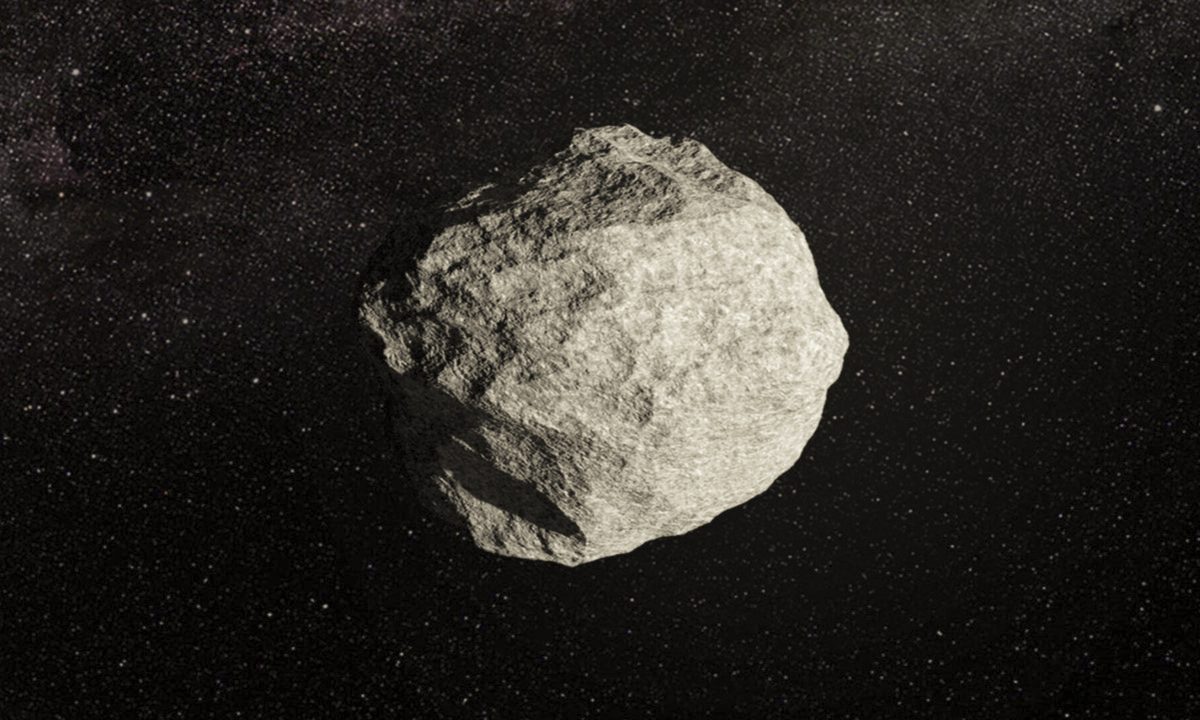
It seems that Earth isn’t likely to be struck by an incoming asteroid after all, as scientists have revised the impact likelihood of object 2024 YR4. The asteroid which has a length of around 130 to 300 feet was spotted at the end of last year, and was originally projected to have a 1% chance of hitting the Earth in 2032. That probability went as high as 2.8%, but has now dropped considerably given new data.
Further observations were made this week, with data from the night of February 19 – 20 showing that the impact chance has dropped to 0.28%, according to NASA. The European Space Agency (ESA) announced today that the impact likelihood had dropped even further and was now just 0.16%.
☄️ 🔭 The impact probability of asteroid 2024 YR4 has dropped from 2.8% to 0.16%. Thanks to new observations, Earth is now at the edge of our shrinking ‘uncertainty window.’ If this trend continues, the risk may soon reach 0%.
— European Space Agency (@esa.int) 2025-02-21T10:09:02.447Z
These kinds of changes in impact probability are to expected, due to the way that asteroid observations work. As more data is collected, the uncertainty about an asteroid’s trajectory is reduced, so scientists can more accurately predict its orbit and whether it threatens Earth.
With asteroids, “The very first observation of an asteroid is ‘just’ a single dot of light in the sky,” ESA explains. “At this point, it’s not clear what it is or where it’s going. A second observation is needed to reveal an object in motion, and it is generally agreed that at least three are needed to determine an orbit – how quickly our asteroid is going and where it is headed. Further observations refine the orbit a little more, reducing uncertainties until we can be sure of where it won’t go: to Earth.”
With the new observations, NASA has warned that there is around a 1% chance that the asteroid could impact the moon. That probably may well drop over time as well, but experts say that even if the asteroid were to impact the moon, it is unlikely to cause any problems on Earth as debris from such an impact would burn up in Earth’s atmosphere.
Scientists are getting better and better at spotting Earth-threatening asteroids, as technology improves and more telescopes are observing the sky. The aim of protecting Earth from potentially dangerous objects such as asteroids or comets, also known as planetary defense, has become an important topic with projects like the upcoming NEO Surveyor spacecraft designed specifically to spot near-Earth objects (NEOs), and tests like NASA’s DART mission where a spacecraft was deliberately crashed into an asteroid to change its trajectory.