1. Home
  2. Audio / Video
  3. Features

Don’t sleep on the LG B5 in 2025

Add as a preferred source on Google
A lineup of TVs at LG's 2025 reviewer workshop.
John Higgins / Digital Trends

Last week, Caleb Denison and I got the chance to spend some time at LG headquarters for closer looks at the 2025 models announced at CES in January. Sure, the majority of the excitement the past couple months has been around WOLED technology taking a pretty big step forward. The G5 is getting rid of MLA (Micro Lens Array) technology and the existing three layer structure — consisting of a single yellow/green/red layer between two blue layers — and instead using a four-layer stack with separate red, green, and (two) blue layers. It’s right for this kind of news to get top headlines in the AV world, but after last week, I’m equally interested in the oft-forgotten LG OLED series — the B series.


The best of the best G series steals attention because it debuts the new tech each year and is the best OLED, and the C series is the best mix of performance and value, while the B series patiently waits its turn for coverage. There’s only so many days in the year, and only so may TVs that can be reviewed in that time. But the B5 looks very intriguing, and it worthy of a bit of a callout.
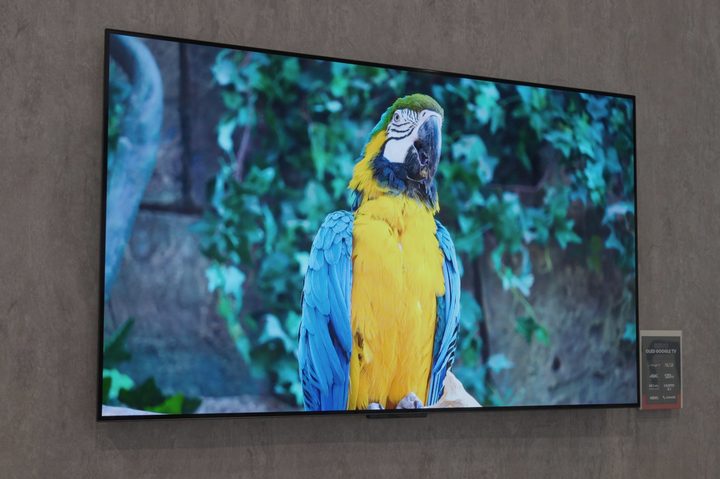
Sansui 65-inch OLED 65VO
The 65-inch Sansui OLED. Chris Hagan / Digital Trends

Year-over-year improvements aren’t as drastic as they used to be even five years ago. TVs, from budget to high-end, are all at least pretty good. And the trickle down of performance has real impact on the lower tiers. Look at the surprise, inexpensive introduction of the Sansui OLED last year, or the newly announced Philips OLED Roku TV. What used to be a market that didn’t exist, or wasn’t worth recommending, now has multiple players.

Recommended Videos

Judging by some of the numbers we saw this week, an OLED tier is a few years behind the tier above it. So the LG C5 performance looks possibly comparable to the LG G2, which would put the B5 on par with the LG C2 — a very good OLED TV. When people asked me what TV they should buy in 2022 (and even into 2023 before it left the market), the C2 was the quick, easy, and obvious answer. I’d still be happy with it today (and my friends who bought it, are).
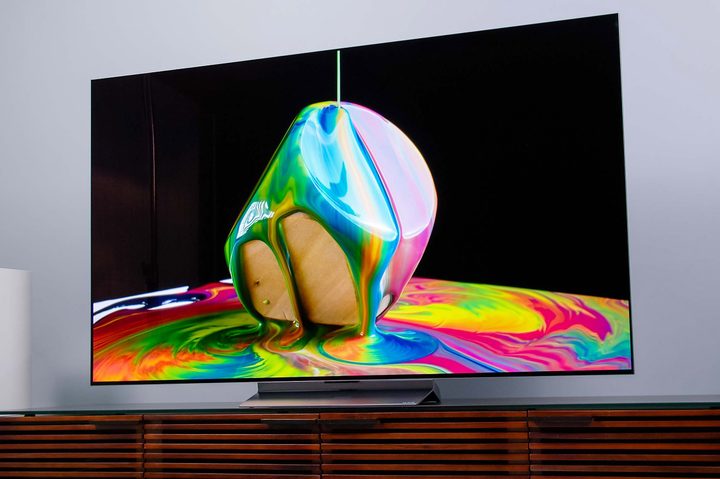
A colorful image on the LG C2 OLED's screen.
An LG C2 from 2022. Dan Baker/Digital Trends / Digital Trends

During the opening presentation, we learned that the B5 would be available in an 83-inch model and…that’s it. No other size was listed in the powerpoint. Fast forward an hour, and there we were, looking at a gaming demonstration on a B5 that was most certainly 77 inches and not 83. After some questions, we found out that, yes, the B5 will be available in sizes ranging from 55 to 83 inches — the question is availability. Smaller sizes will only be available from certain retailers, but LG was not prepared to reveal which retailers just yet. We’ll likely get the news in coming weeks (or a couple months, at most).

Once pricing is released (I don’t expect the recently announced EU prices to accurately represent the North American B5 pricing) we’ll get a better sense of where things stand and how the B5 will stack up against the Philips and Sansui OLEDs (or maybe something that hasn’t been revealed yet). Going by my eyes last week, though, entry-level OLED competition is about to get heated.

John Higgins
Former Former Senior Editor, A/V
John Higgins is the former Senior Editor of A/V at Digital Trends.
Stop joining group projects with a blurry laptop webcam and buy one of these instead
Your laptop webcam is sabotaging your first impression. These five can fix it
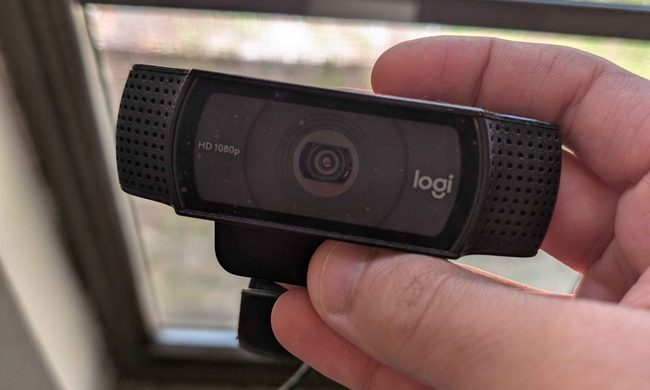
I'm holding my Logitech C920 1080p webcam in my hands.

The webcam built into your laptop might be good enough for a quick call with friends and family. But its shortcomings become much harder to ignore when you are presenting a semester project, interviewing for an internship, or maybe if you're planning to stream for fun.

Laptop cameras also tend to sit far too low, especially when the computer is placed directly on a desk. Meanwhile, a dedicated webcam lets you position the camera closer to eye level. This improves the framing and brings larger sensors, better microphones, and more effective low-light processing.

Read more
I desperately want a new classic Walkman, but Sony probably can’t give me one
Tech minimalism is begging for a new Walkman. Though rebuilding it may be close to impossible
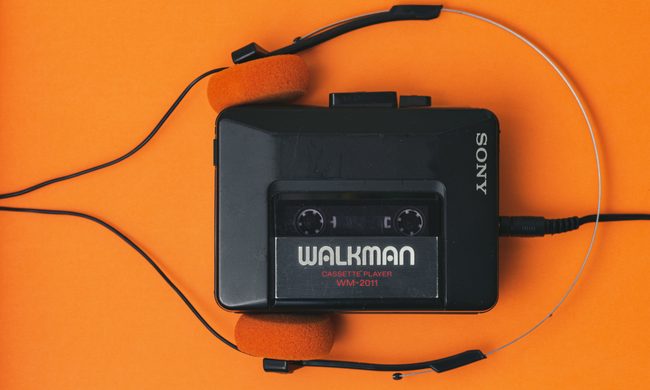
Sony Walkman WM2011

Every few months, another piece of tech that seems obsolete crawls out of a drawer and becomes cool again. The age of minimalism has revived the popularity of iPods among younger buyers. Dumbphones have become an escape hatch from endless notifications. Similarly, digital cameras are dangling from bags again. Physical media keeps attracting people who want something they can actually hold instead of another frustrating subscription.

All of this makes it the perfect time for Sony to bring back the classic Walkman, which was a phenomenon during the 80s and 90s. I would love one. Give me a compact cassette player, physical buttons, and wired headphones. Keep the apps, notifications, and algorithms that shape your taste of music. No more AI assistants or personalzied feeds, just you and your Walkman. There is only one problem though. Recreating the Walkman that people love and remember, would be far harder than putting an old design back into production.

Read more
Proton reveals how smart TVs track you and the escape situation is pretty grim 
Modern smart TVs fingerprint your screen content at the chipset level.
Google TV applications on the Sony A95K TV.

Your smart TV may know far more about your viewing habits than you realize, even if you rarely use its smart features. In a new privacy explainer, Proton warns that many modern TVs quietly collect data about everything displayed on the screen and share it with manufacturers, advertisers, and analytics companies.

The worrying part is that escaping this tracking is becoming increasingly difficult because many privacy controls are buried deep in settings or enabled by default. Proton argues that buying a smart TV today often means accepting a level of surveillance that most people never knowingly signed up for.

Read more