1. Home
  2. Computing
  3. News

AI enables slain man to address courtroom at killer’s sentencing

Add as a preferred source on Google
An abstract image of a person and a blue background.
Tara Winstead/Pexels

In what’s believed to be a world first, artificial intelligence (AI) has allowed a slain man to address his killer at the sentencing hearing.

Christopher Pelkey was shot dead in a road rage incident in Chandler, Arizona, four years ago, but just recently, AI was used to recreate a digital version of the victim that was allowed to make a statement during the trial, a local news site reported.

Recommended Videos

The video presentation also included real clips of Pelkey to give those in court a clearer understanding of his personality. Some of these clips were also used to create the AI-generated likeness of Pelkey, which you can see below.

Chris Pelkey died in Nov. 2021 in a road rage shooting.

Recently, Chris’ family created an AI-generated video of him giving his own victim impact statement.

Here is a clip – watch the full story tonight ONLY on @FOX10Phoenix 📺 pic.twitter.com/JIz6bKuNfU

— Nicole Krasean (@NicoleK_Fox10) May 5, 2025

In the video played in court, the AI version of Pelkey says: “To Gabriel Horcasitas, the man who shot me — it is a shame we encountered each other that day in those circumstances. In another life, we probably could’ve been friends.”

He continues: “I believe in forgiveness and in God who forgives. I always have and I still do.”

After watching the video, Judge Todd Lang said: “I love that AI. Thank you for that. I felt like that was genuine, that his obvious forgiveness of Mr. Horcasitas reflects the character I heard about today.” 

This week, the judge sentenced Horcasitas to ten-and-a-half years for Pelkey’s manslaughter.

It was Chris Pelkey’s sister, Stacey, who came up with the idea to use AI to create a likeness of her brother for use in court. She said it was important “not to make Chris say what I was feeling, and to detach and let him speak because he said things that would never come out of my mouth, but that I know would come out of his.”

Ann A. Scott Timmer, Chief Justice of the Arizona Supreme Court, commented that AI has the potential “to create great efficiencies in the justice system and may assist those unschooled in the law to better present their positions. For that reason, we are excited about AI’s potential.”

Timmer added: “But AI can also hinder or even upend justice if inappropriately used. A measured approach is best. Along those lines, the court has formed an AI committee to examine AI use and make recommendations for how best to use it … Those who use AI — including courts — are responsible for its accuracy.”

Indeed, while the use of AI in this way brings a powerful and deeply personal element to court proceedings, it also raises various ethical and legal concerns about authenticity, emotional influence, and appropriate application. As a result, it seems likely that other courts will at some point develop guidelines for future cases, if they choose to allow AI-generated victim statements.

Trevor Mogg
Contributing Editor
Not so many moons ago, Trevor moved from one tea-loving island nation that drives on the left (Britain) to another (Japan)…
How to set up selfie video sign-in for your Google account
Your face can now serve as a way to get back into your Google account. Here's how to set it up.
Google account selfie sign in tutorial featured

Losing access to a Google account is rarely a quick fix, but Google has been actively working to make things easier. Last year, the company introduced a feature called Recovery Contacts that lets you designate a trusted friend or family member to verify your identity if you ever get locked out. Now, Google has introduced a new option, one that uses your face to get you back in instead of a phone call to a friend.

Like Recovery Contacts, the new selfie video authentication feature requires some setup before you can use your face to sign into your Google account. This involves recording the reference video that Google will use to verify your identity whenever you attempt to log in this way. Here's how to set up selfie video sign-in for your Google account.

Read more
Framework Desktop packs Ryzen AI Max, up to 192GB of RAM, and local AI into a mini PC
192GB of RAM in a desktop this small? Framework says yes.
Framework Desktop feature

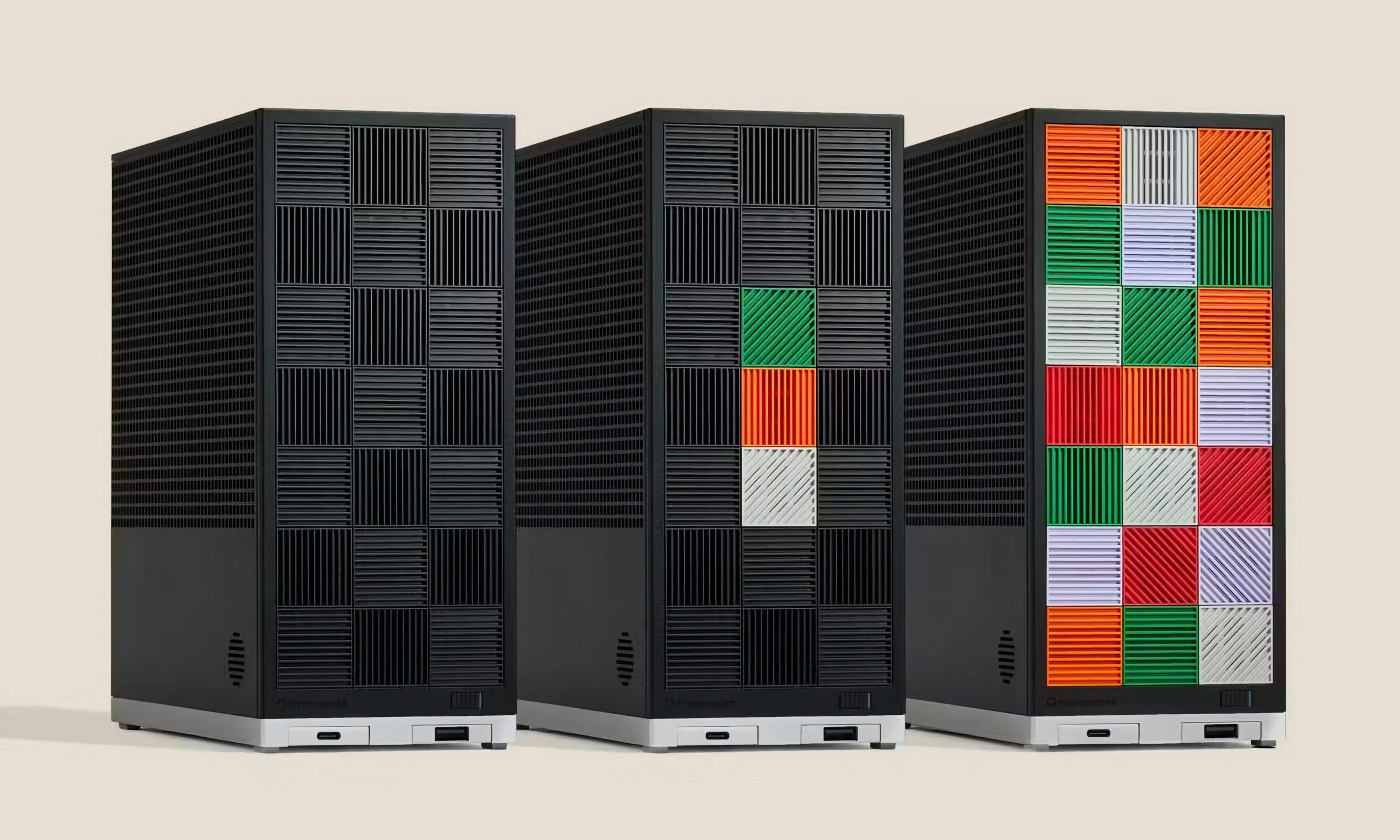
Framework has built a reputation for shipping things other PC makers won't even attempt, and its latest teaser keeps that streak alive. At AMD's Advancing AI event, the company previewed a new version of its Framework Desktop, and this one is clearly built with one goal in mind: running large AI models locally on your computer. If you have been eyeing a way to run local AI, this could be the machine to watch.

So what's actually new here?

Read more
AI is becoming the shoulder we cry on, and that worries me
Chatbots are learning to generate comfort now
Siri AI voice change

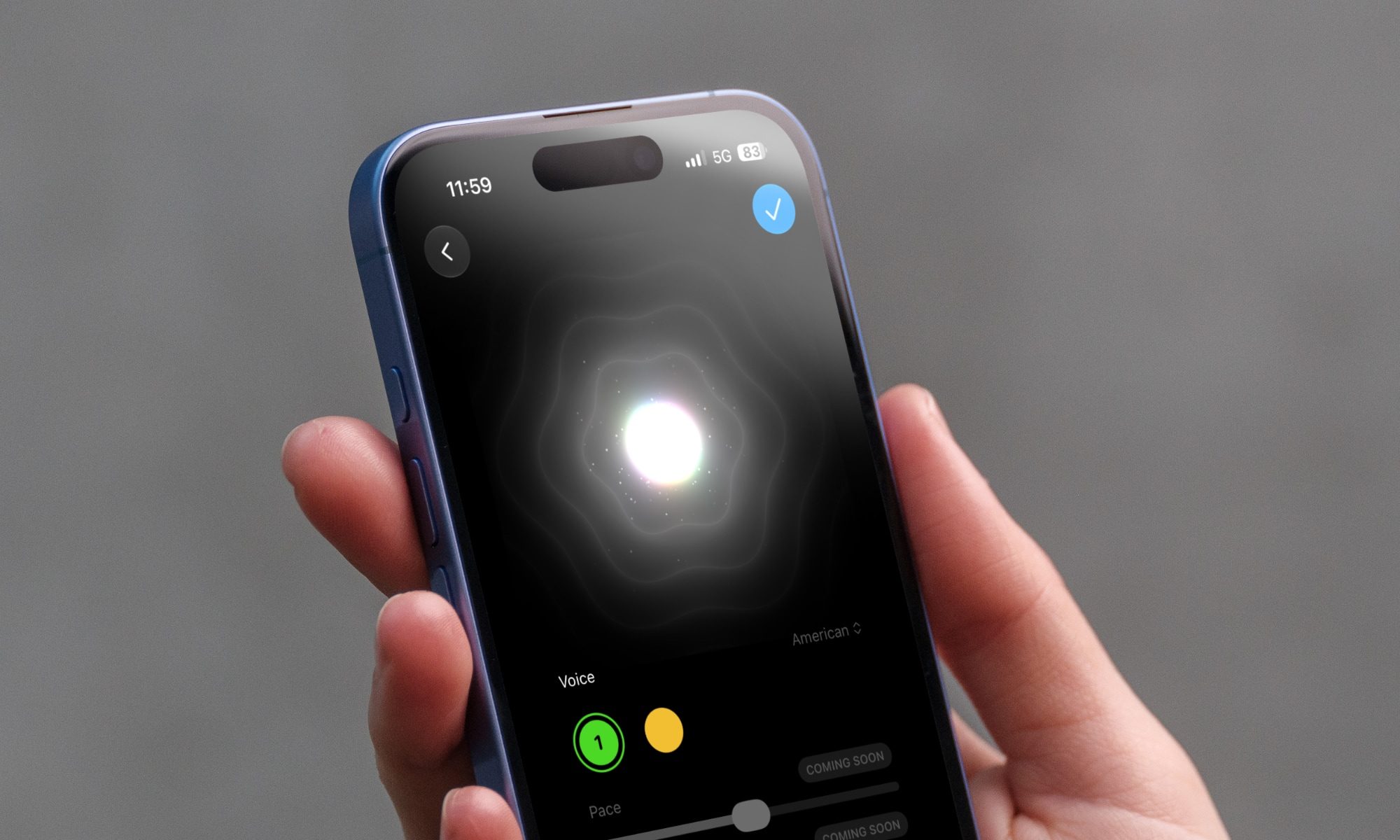
I expected artificial intelligence to be faster in performing calculations or data analysis than humans. But emotional support is one of the last things I could imagine it being better at. New research led by the University of Manchester, alongside Durham University, found that leading AI chatbots could match or sometimes outperform humans when responding to everyday emotional problems. The researchers conducted five studies involving 1,233 participants and tested responses from ChatGPT-4o, Claude 3.5 Sonnet, and Gemini 1.5 Pro.

The researchers conducted five studies involving 1,233 participants and tested responses from ChatGPT-4o, Claude 3.5 Sonnet, and Gemini 1.5 Pro. Participants evaluated messages responding to situations such as being passed over for a promotion or returning to an untidy shared home. They were initially kept unaware of whether each response came from a person or an AI system.

Read more