1. Home
  2. Audio / Video
  3. Legacy Archives

Dish Network remains in court over ad-skipping feature, decides to put up its feet and stay a while

Add as a preferred source on Google
Image used with permission by copyright holder

The Hopper – or Haw-pah, as the Bostonian brogues pronounce it in the service’s TV commercials – has been the subject of court proceedings for the last few months, as Dish Network defends a slate of new features that includes “AutoHop” and “PrimeTime Anytime,” both automated commercial-skipping technologies that it now includes on the boxes.

Back in November, Federal District Court Judge Dolly Gee (whom we have the unshakable desire to refer to as Golly Gee) denied the Fox Broadcasting Company’s request for a preliminary injunction, but Fox quickly filed appeal with the 9th Circuit Court of Appeals.

Recommended Videos

That case is still pending, but should Dish prevail, the big four are still expected to batter the company with further litigation. The broadcast networks appear unified behind Fox’s contention that Hopper’s ad-eliminating tech will irreparably harm their respective businesses.

It would be an easier case for the networks to make if they hadn’t already lost a similar proceeding against the initial iteration of DVR. The argument that auto-skipping commercials – which most folks would fast-foward through anyway – somehow poses a an existential threat to the networks, is a weak one. More than likely, this case is just a facet of their scorched earth campaign, which directs a legal bombardment at anything that even remotely alters television’s status quo.

Meanwhile, Dish Network asserts it is simply looking out for its customers’ best interests.  What’s more, the company isn’t stopping with ad-skipping. According to statements made at CES 2013, the company intends to  follow the lead of consumers’ “full blown sprint” to mobile viewing with plans to add Sling functionality and recorded content uploading to iPads within the year. 

Stay tuned for details on the case, and on related court proceedings.

Adam Poltrack
Former Contributor
Adam is an A/V News Writer for Digital Trends, and is responsible for bringing you the latest advances in A/V…
Topics
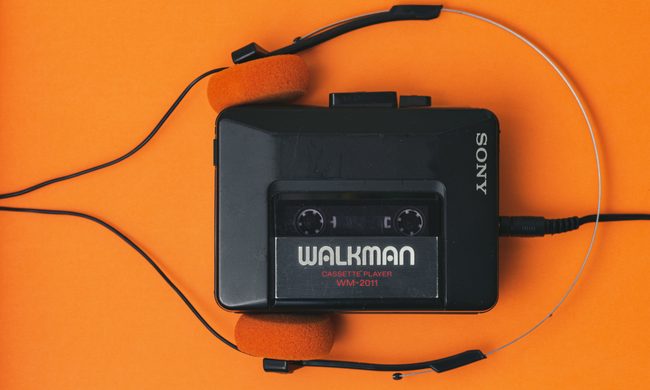
I desperately want a new classic Walkman, but Sony probably can’t give me one
Tech minimalism is begging for a new Walkman. Though rebuilding it may be close to impossible
Sony Walkman WM2011

Every few months, another piece of tech that seems obsolete crawls out of a drawer and becomes cool again. The age of minimalism has revived the popularity of iPods among younger buyers. Dumbphones have become an escape hatch from endless notifications. Similarly, digital cameras are dangling from bags again. Physical media keeps attracting people who want something they can actually hold instead of another frustrating subscription.

All of this makes it the perfect time for Sony to bring back the classic Walkman, which was a phenomenon during the 80s and 90s. I would love one. Give me a compact cassette player, physical buttons, and wired headphones. Keep the apps, notifications, and algorithms that shape your taste of music. No more AI assistants or personalzied feeds, just you and your Walkman. There is only one problem though. Recreating the Walkman that people love and remember, would be far harder than putting an old design back into production.

Read more
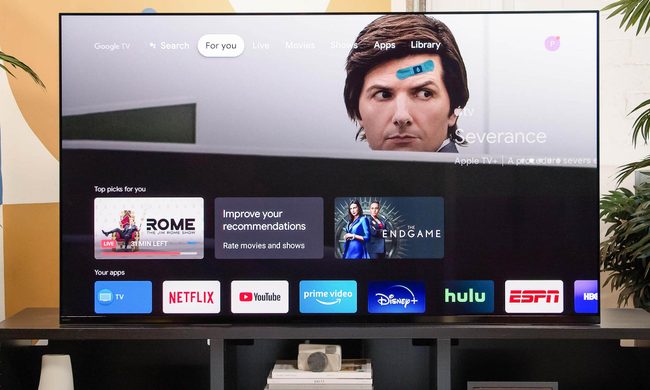
Proton reveals how smart TVs track you and the escape situation is pretty grim 
Modern smart TVs fingerprint your screen content at the chipset level.
Google TV applications on the Sony A95K TV.

Your smart TV may know far more about your viewing habits than you realize, even if you rarely use its smart features. In a new privacy explainer, Proton warns that many modern TVs quietly collect data about everything displayed on the screen and share it with manufacturers, advertisers, and analytics companies.

The worrying part is that escaping this tracking is becoming increasingly difficult because many privacy controls are buried deep in settings or enabled by default. Proton argues that buying a smart TV today often means accepting a level of surveillance that most people never knowingly signed up for.

Read more