 We’ve been reporting on a lot of up-and-coming autonomous vehicle technologies as of late and these stories got us to thinking: “How many vehicles on sale right now already feature some autonomous safety features and technologies?” The deeper we dug, the more tech we found.
We whittled the list down to the four vehicles in no particular order with autonomous tech that impressed us most.
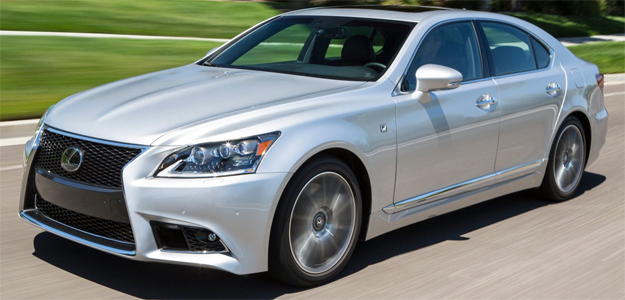
2013 Lexus LS
The 2013 Lexus LS that debuted last October is chockfull of tech, including safety technology. Like most luxury automakers, Lexus includes adaptive cruise control, which uses information gathered by a front-mounted millimeter-wave radar system to adjust vehicle speed based upon the traffic ahead.
Unlike some automakers, however, Lexus uses this technology to also prevent or lessen the effects of a collision. In a split second the vehicle looks at vehicle speed, obstacles in front of the car, steering angle, and yaw-rate to assess collision likelihood. Should the system determine a collision is imminent, the LS will increase the force of the braking system as soon as the driver applies it. It will also instantly increase the steering ratio, giving the driver a better chance of steering out of the potential collision.
When in the city, two forward-facing stereo cameras in addition to the millimeter-wave radar system monitor the road ahead, specifically watching for pedestrians crossing in front of the path of the vehicle. This system is called Advanced Pre-Collision System (APCS). Should the APCS detect a pedestrian or nonmetallic object, it will warn the driver with a beep and a flashing light. If the driver does not react and the vehicle continues to close in on the object, the vehicle will gently apply the vehicles brakes, even bringing the vehicle to a full stop if travelling no more than 24 mph.
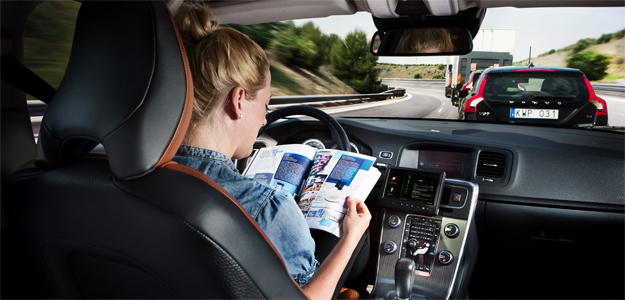
2013 Volvo S60
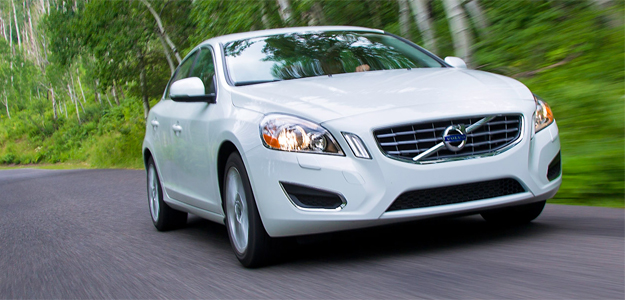
Volvo has always been obsessed with safety, so it’s no surprise it was the first automaker to unveil Pedestrian Detection and City Safety systems.
City Safety is a system that first debuted on the XC60 crossover but has been included on the S60 as well. Additionally, the S60 sedan has received another safety technology called Pedestrian Detection.
These systems are similar to the LS but a few years ahead. First debuted in 2010, Pedestrian Detection was a first of its kind. Up to 22 miles per hour, the system uses two forward facing cameras and a radar system to detect both vehicles and pedestrians. Should both radar and cameras detect a pedestrian crossing in front of the car, a collision is calculated as imminent, and the driver does not apply the brake, the Pedestrian Safety system will brake the car with Full Auto Brake, bringing the vehicle to a complete and sudden stop.
The Pedestrian Detection with Full Auto Brake will activate above 22 mph, however it will not be able to fully bring the vehicle to a stop above that speed. It will slow the vehicle as much as possible, thereby limiting the damage of the collision.
While this system will detect pedestrians up to 32 inches tall and cars in front of the S60, it will not recognize, say, a bear or a moose. Volvo designers explained that the programming for vehicle and specifically pedestrian detection was so complicated that programming for another creature with a different radar signature would have been unrealistic. Volvo does have plans, however, to expand the repertoire of its Pedestrian Detection system in the future to detect all kinds of obstacles.
2013 Mercedes S-Class
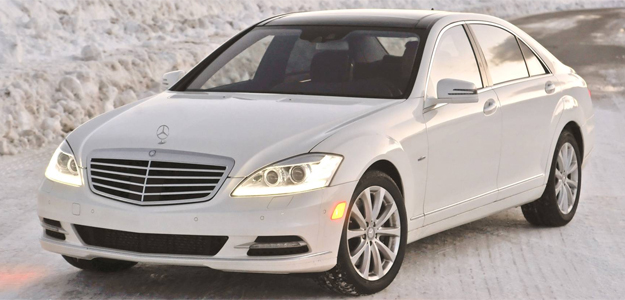
While the next generation S-Class will have more autonomous safety technologies than you can shake a stick at, the current one only has a few. Mercedes’ technology is called PRE-SAFE and the original form was debuted in 2002. Over the years, it’s changed a bit to include more safety and more technology.
In its current form, the PRE-SAFE works in tandem with the DISTRONIC PLUS adaptive cruise control, which works similarly to the Lexus LS system detailed above. It uses short-range 24GHz radar that sweeps the first 33 yards of the road ahead in a fan-shaped 80-degree pattern, working in tandem with a narrower nine-degree beam of 77GHz radar. As Mercedes puts it, “the two radar frequencies complement each other to cover a full range of more than 160 yards – more than one and half football fields.”
When PRE-SAFE detects a collision, the system will produce three warning sounds. At that point if the collision is not avoided by the driver, PRE-SAFE will automatically partially brake the vehicle 1.6 seconds before the collision. Should the driver be unable to avoid the collision at that point, PRE-SAFE will then apply full braking force 0.6 seconds before collision. Mercedes calls this an “electronic crumple zone.”
2013 Infiniti M
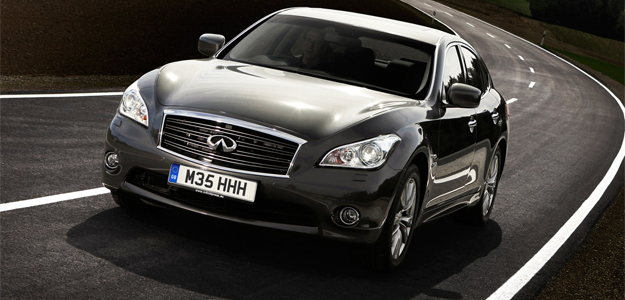
For now it’s called the M. But by next year, it’ll be called the Q70, and it has a rather distinctive autonomous safety technology called Blind Spot Intervention or BSI.
BSI is paired with the Blind Spot Warning (BSW) system within the optional technology package on the Infiniti M. Infiniti brags that BSI is a world first. Using the same sensors as the BSW system, BSI watches the lane markers to see if the vehicle is going to leave the lines. Should BSI detect the Infiniti crossing the lane lines and another vehicle is detected in that space, BSI will flash warning lights on the instrument cluster, emit audible warning sounds to the driver, and – if necessary – apply the brakes on one side of the vehicle, helping the driver center the car back into the lane. Notably, the BSI system will also activate whether or not the turn signal has been activated.