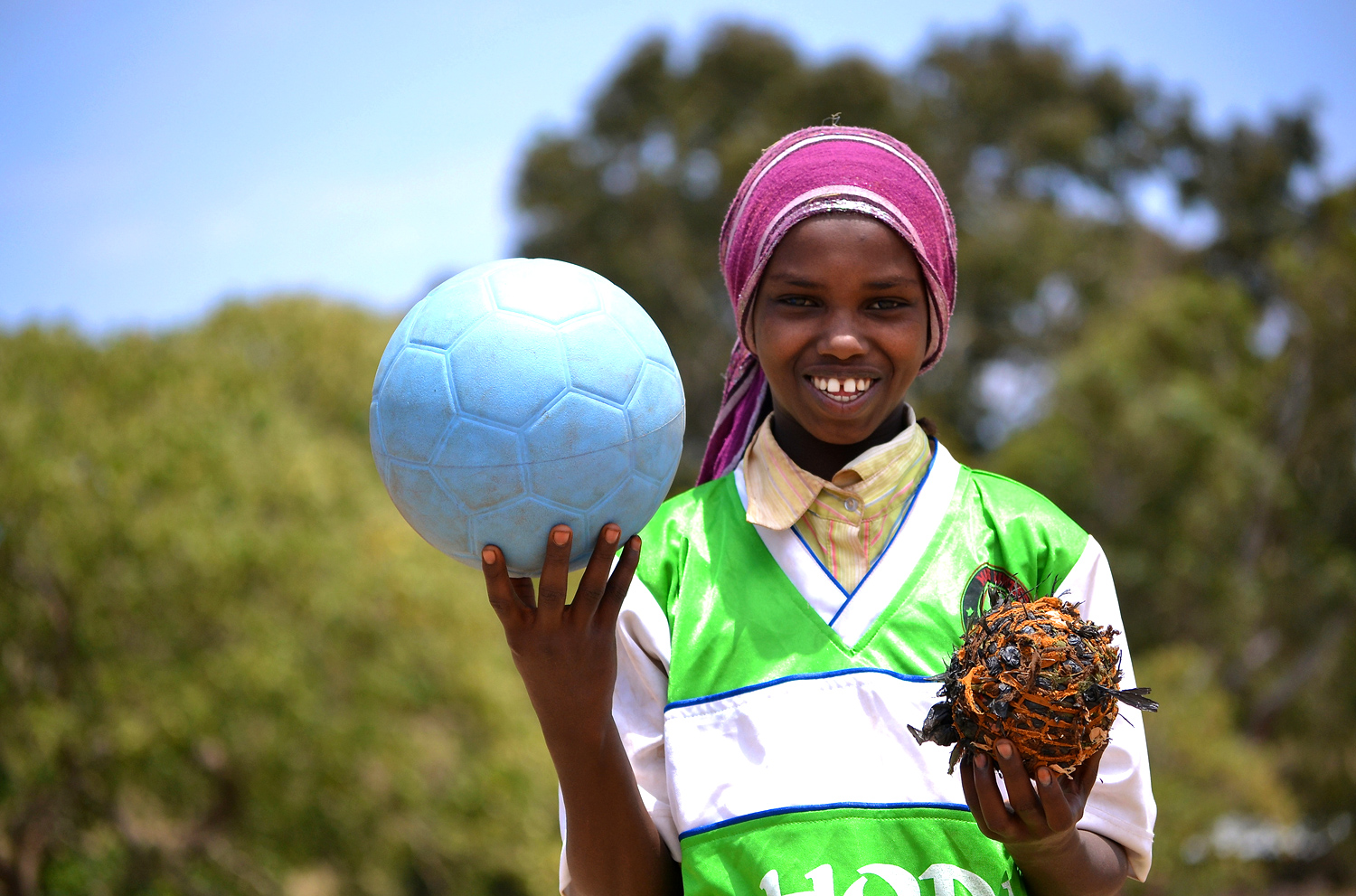
Soccer is the sport of the masses. It’s just as easily played in modern temples to the game like Arsenal’s Emirates London, where the knockout stages of the fabled Champions League began this week, as it is on the hardscrabble streets of Marseille, France, where legends like Zinedine Zidane first learned to kick a ball. In America, children playing youth soccer are less likely to get involved in gangs or drugs. In poverty-stricken countries like Somalia and Haiti, it can provide them with a focus that saves lives.
All you need is a ball.
Surprisingly, this isn’t always as simple it sounds. A typical soccer ball is really just sewn-together leather filled with air, and they aren’t exactly durable. The tiniest puncture renders the entire thing useless; a defect made all the more problematic when the primary use of the thing (being kicked as hard as possible) occurs on the shredded landscapes of the third world.
The ball is so durable, it was tossed into a lion’s den and emerged structurally perfect…
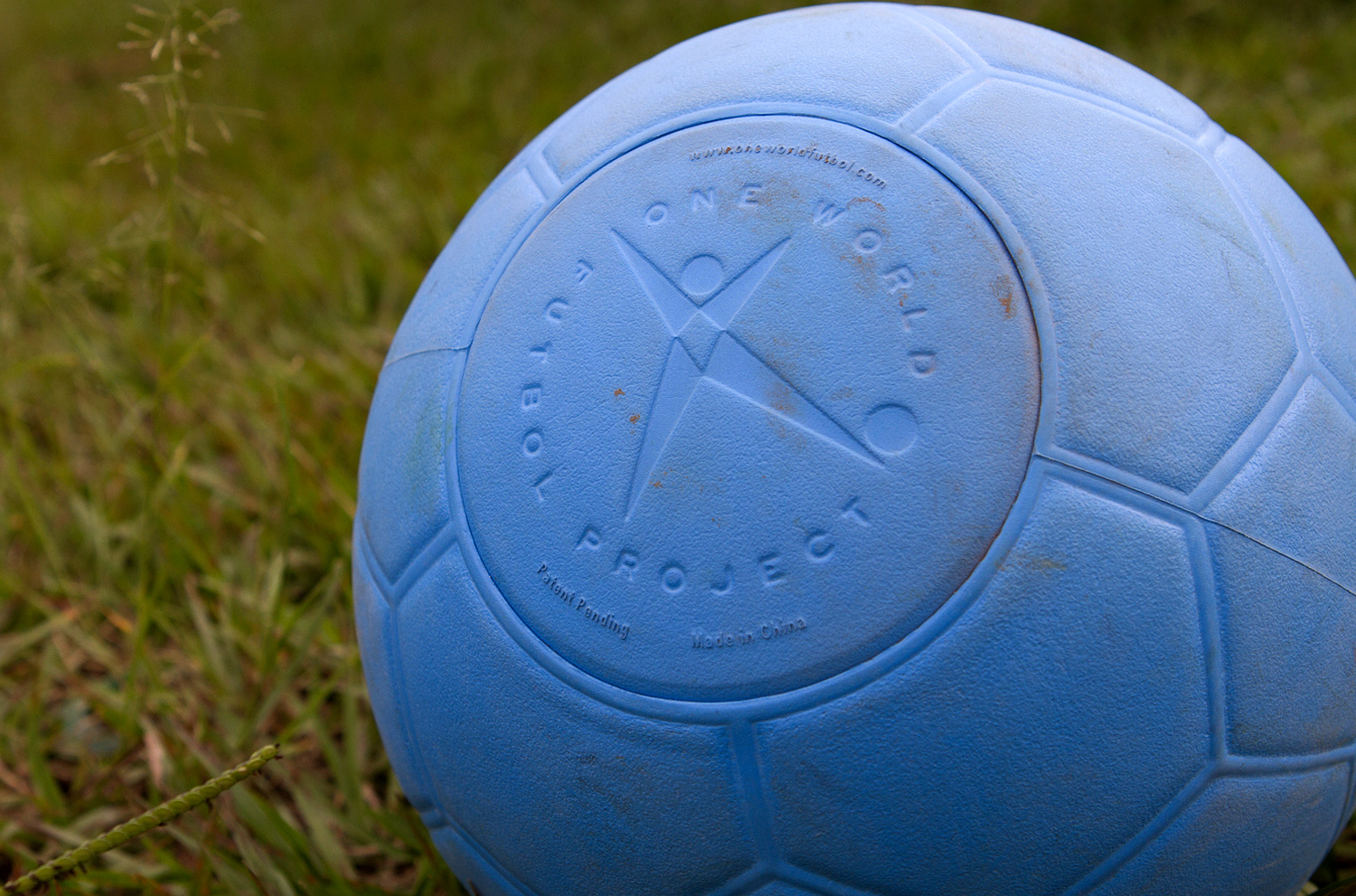
That’s why an organization called One World Futbol has set out to create an indestructible ball – something that is far easier said than done. It turns out, making something that doesn’t need to ever be inflated but still retains the performance characteristics of a ball filled with air is a high tech feat. And just a few years ago, it may have been impossible.
“Had I pursued the idea in ’06 when I first had the vision for an ultra-durable ball, it is likely to not have happened,” One World Futbol co-founder Tim Jahnigen tells Digital Trends. “Even when we finally got started in ’08, we were told that it was highly unlikely that we’d have a viable ball in terms of roundness and quality.”
Years earlier, Jahnigen had met the founders of Crocs, the gone-viral footwear known for its vivid colors, extreme comfort, and lighter-than-air quality. He’d even tested an early prototype of the shoe. Crocs, which had recently exploded in mainstream popularity to the horror of fashionistas everywhere, are constructed from a proprietary foam resin known for its durability.
But just because they had a potential compound didn’t mean One World Futbol had a ball. Jahnigen explains that, initially, none of the firms then experimenting with the brand new material could provide the technical skill to fulfill their vision–creating something that was not only round but could mimic the characteristics of an actual soccer ball.
One World Futbol secured financial support from the musician Sting, and Jahnigen began experimenting with a company called PopFoam to create a soccer ball out of similar material – an ethyl vinyl acetate (EVA) blend compounded with microcellular agents.
Turning the “super cool, NASA-worthy” compound they had developed into a perfectly round ball that mimicked a “classic” ball required CAD engineering, tweaking the chemistry of the compound, and developing all manner of proprietary processes that One World Futbol now holds as trade secrets. Over three and a half years of prototyping and field testing in places like Haiti and Iraq, they turned out five iterations of the ball and Jahnigen believes he and his team have finally achieved what they set out to do.
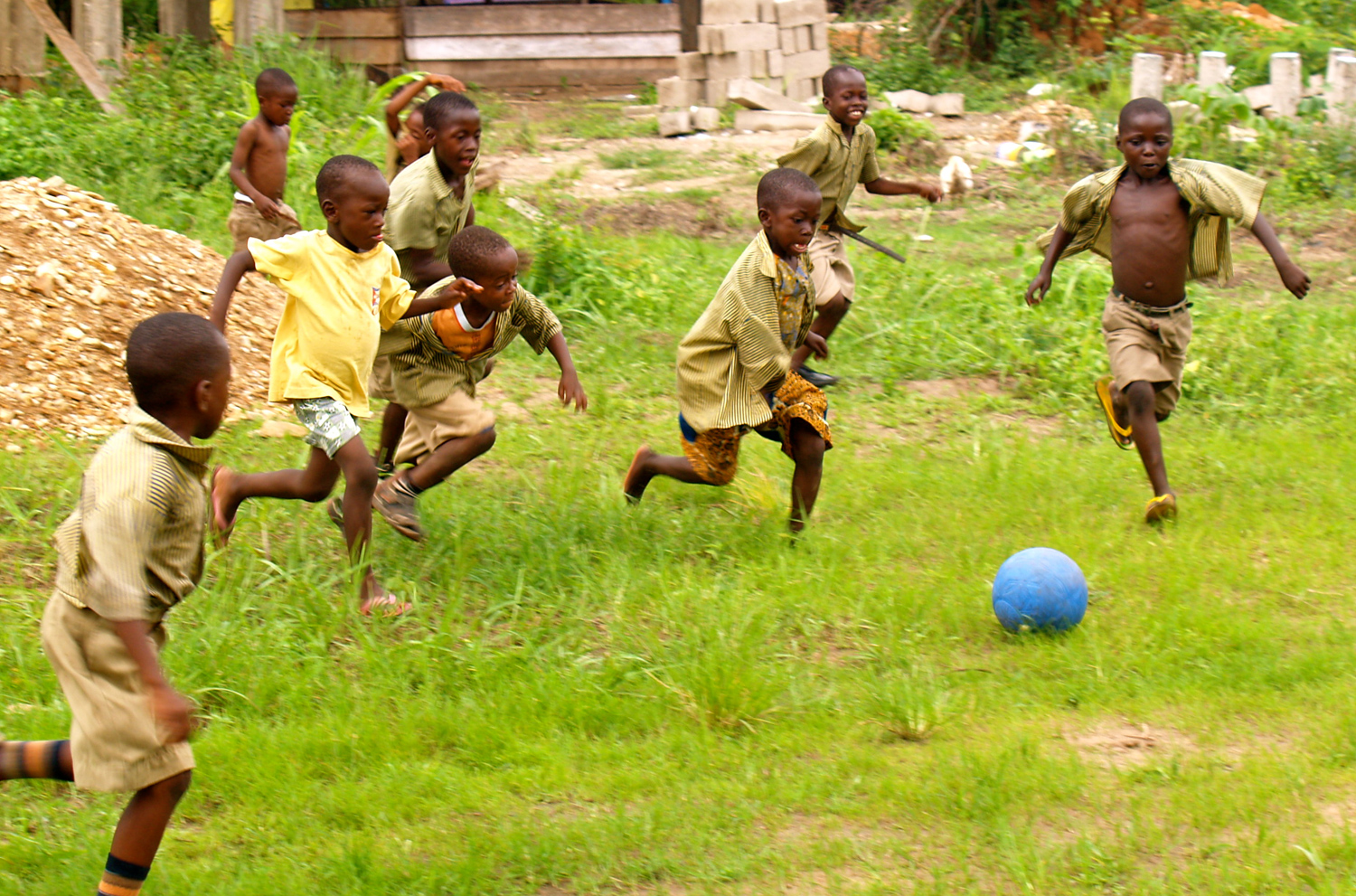
“The result is a rubber-like substance that is lighter, stronger, more flexible, resistant to tearing and abrasion and is completely inert, non-toxic to work with. Yet unlike rubber, it is impervious to sun, water and chemicals,” Jahnigen says. “The feel and performance of the One World Futbol and a standard inflatable streetball are virtually the same.”
The only difference? You can drive a car over the One World Futbol – an act Jahnigen is known to eagerly demonstrate – and it will regain its original shape, instantly ready for another round of kickabout. The ball is so durable, it was tossed into a lion’s den and emerged structurally perfect, save for a few teeth marks. Jahnigen believes the One World Futbol should last at least 30 years, if not forever.
In our own field testing, the blue indestructible ball performed admirably. It has a hard plastic feel but is still soft enough to comfortably kick around with bare feet. Given its materials and lack of air, the ball doesn’t bounce quite like a normal ball, but considering the variety of terrain the ball is meant to be played on, a uniform bounce is unimportant. It won’t be mistaken for the real leather deal, but nor does it prove distracting in the flow of a game.

The concept isn’t perfect; at $17 each, the balls are expensive. Unicef bought 5,200 to distribute to schools in Africa last year, but told the New York Times that, compared to $2.50 they spend on traditional balls, the One World Futbol is cost prohibitive. And shipping a ball that won’t deflate has proved vexing. “We’re not talking about retail packaging here,” says Jahnigen. “We’re taking about what is needed for these virtually indestructible balls to arrive undamaged after weeks in steel containers on the water and possibly months on a dock somewhere with internal temperatures rising as high as 180 degrees.”
Such burdens have limited the potential scope of the project so far, but the program got a big boost last May when Chevrolet agreed to buy 1.5 million balls over three years. An order of that scale has the potential to bring the cost of manufacturing down, which may ultimately alleviate the price concerns of organizations like Unicef. After all, proprietary compounds and manufacturing processes are impressive, but One World Futbol won’t have accomplished anything until their ball is where it belongs: on the feet of poor kids all over the world.