
 PayPal will on Thursday launch a new initiative to, as it puts it, “tackle payments in space”. Because you’ve been wondering how you were going to do that, haven’t you.
OK, you might believe there isn’t much call for making off-planet transactions because, to put it simply, most of us are on the planet, but PayPal believes the emergence of space tourism programs in recent years is about to change all that.
Astronauts need to pay bills too, y’know
In fact, the money transfer and payment service says on its website that there’s “already the need for a payment system off Earth,” citing astronauts on space stations who “still need to pay for life’s necessities — from their bills back on Earth to their entertainment, like music and e-books, while in space.”
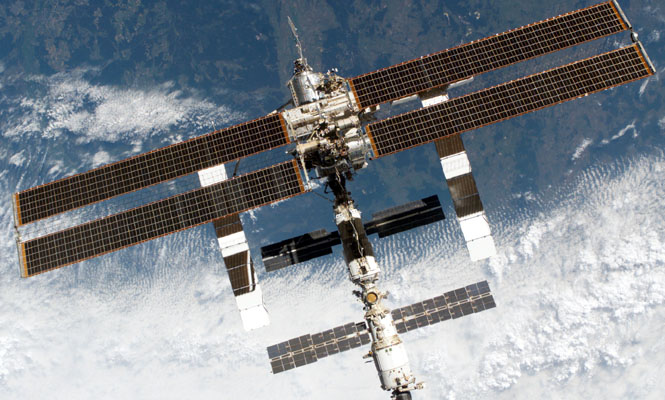
That may be so, but surely Chris Hadfield’s Earth-based other half was taking care of those kinds of chores while he was on board the International Space Station earlier this year. He did, after all, have far more important things to do, like tweeting aerial photographs of various countries, posting YouTube clips explaining why it’s hard to smell things in space and making music videos of old Davie Bowie songs.
Interplanetary payments?
If you’re starting to wonder if PayPal has finally taken leave of its senses, read through the details of its PayPal Galactic announcement and you’ll quickly discover the company is not alone on this – you see, it’s also got the SETI Institute on board. And the Space Tourism Society. Even almost-the-first-man-on-the-moon-but-not-quite Buzz Aldrin is getting involved.
“The enabling infrastructure pieces are starting to come together, and as we start planning to inhabit other planets, the practical realities of life still need to be addressed,” PayPal says on its website, adding, “The time has now come for us to start planning for the future.” That’s all well and good, but I can’t help thinking it’s a future when everyone alive today will actually be, well, dead.
But perhaps the eBay-owned company is onto something; it sounds pretty serious about the whole endeavor, after all. “It is our intention to make PayPal the leading resource to address the challenges that these new and exciting times present,” the company says, adding, “We want to be not only the world’s most loved way to pay but also the preferred money transfer system off Earth – in space and between space and Earth.”
Big questions
Pondering “the big questions around the commercialization of space”, the earthlings at PayPal have come up with a list of areas it wants to address, including:
– What will our standard currency look like in a truly cash-free interplanetary society?
– How will the banking systems have to adapt?
– How will risk and fraud management systems need to evolve?
– What regulations will we have to conform with?
– How will our customer support need to develop?
PayPal says that “creating a secure and functional commerce system that can operate in space at scale will not be easy,” (you betcha!), “but with the support of the scientific community, other technology companies and the public at large, we hope to find the solutions to address these challenges.”
I don’t know, but if I was on a mission to Mars I’m pretty darn sure I’d be too busy printing pizzas, drinking urine, moving poop around and looking out the window to find time to log into PayPal to pay a gas bill. How about you?
You can watch the company giving more details of its initiative live at 9am PT Thursday here (page not loading at the time of writing). A video of the announcement will be available after the event on the same webpage.
[Top image: Edouard Coleman / Shutterstock]


